Trade War 2.0: Trump’s Tariffs Just Rocked the Global Economy


 RSS Feed
 🎧 Trade War 2.0 – Trump’s Tariffs Just Rocked the Global Economy
💡 Welcome to Finance Frontier , part of the Finance Frontier AI podcast series, where we break down the biggest trends in global finance, geopolitics, and strategic investments.
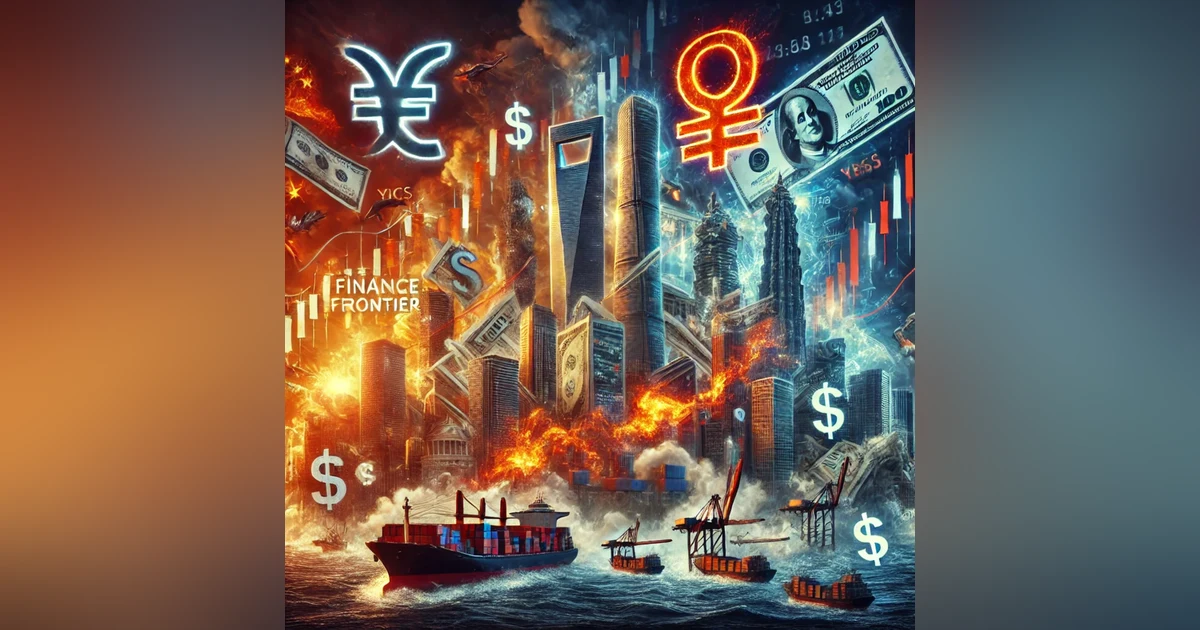
In today’s episode, Max and Sophia dive into one of the most consequential economic battles unfolding right now—Trade War 2.0. With Trump’s latest tariffs hitting China, Mexico, and Canada, markets are in turmoil, corporations are scrambling, and global alliances are shifting.
Are we witnessing a strategic U.S. economic reset or the beginning of a global recession?
📉 Will tariffs make America stronger—or push the world toward economic fragmentation?
📰 Key Topics Covered
🔹 The Tariff Impact – How Markets & Industries Are Reacting – Why has the Nasdaq dropped nearly 10%, and why did Bitcoin crash 18%? Is this panic—or a market realignment?
🔹 Winners & Losers – Who Gains From Protectionism? – U.S. industrial stocks are soaring, but tech, auto, and retail sectors are taking massive hits. Is this the start of a new economic order?
🔹 Global Retaliation – Is the Trade War Expanding? – China, the EU, and Mexico have all responded with countertariffs. Will this escalate into a full-scale economic war?
🔹 The BRICS Response – Is the U.S. Losing Global Trade Power? – China and Russia are shifting trade to yuan, India is strengthening ties with Brazil, and BRICS nations are pushing de-dollarization efforts. Could this weaken the U.S. economy long-term?
🔹 Historical Parallels – Are We Repeating Economic Mistakes? – From the Smoot-Hawley tariffs (Great Depression) to Trump’s 2018 China trade war, what can history tell us about the risks of prolonged tariff battles?
🔹 Breaking Point – How Far Can This Go Before Economic Instability Takes Over? – With inflation pressures rising and corporations warning of earnings slashes, how much longer can the global economy hold up under these conditions?
🔹 Is There an Exit Strategy? – Are tariffs just a short-term negotiation tool, or are we seeing a fundamental shift toward permanent trade protectionism?📊 Real-World Financial & Geopolitical Insights
🚀 The Market Reaction – Why are investors rotating into gold, bonds, and defense stocks while dumping tech and retail?
🚀 U.S. Manufacturing Boom or Bust? – Will tariffs bring jobs back to America—or just drive up costs for businesses and consumers?
🚀 Global Trade Disruptions – How are companies like Apple, Tesla, and Ford shifting supply chains to India, Mexico, and Southeast Asia?
🚀 The Rise of Economic Alliances Outside the U.S. – If BRICS nations permanently reduce their reliance on U.S. trade and the dollar, could America lose its dominant economic position?
🚀 What Happens Next? – Will tariffs spark a deep recession—or a massive market opportunity for strategic investors?🎯 Key Takeaways
✅ Tariffs are triggering major market shifts—industrial stocks surge, tech & retail suffer.
✅ China, the EU, and Mexico are retaliating, risking global trade fragmentation.
✅ BRICS nations are accelerating de-dollarization and shifting trade away from the U.S.
✅ Investors are moving to gold, bonds, and hard assets amid rising volatility.
✅ This could either realign the global economy—or lead to a recession nobody is prepared for.🌐 Stay Ahead of the Market
📢 Visit FinanceFrontierAI.com for our full episode lineup—including Finance Frontier, AI Frontier, Make Money, and Mindset Frontier AI.
📲 Follow us on Twitter for daily financial and geopolitical insights.
🎧 Subscribe on Apple Podcasts and Spotify to stay ahead of the biggest financial trends.
🔥 Enjoyed this episode? Leave a 5-star review—it’s the best way to support the show and help others find it!
🚀 Are tariffs America’s boldest economic play—or a disaster in the making? Let’s dive in.
0:20 Welcome to Finance Frontier, part of the Finance Frontier AI series. This is where we break down the forces shaping global markets, trade wars, economic power shifts, and financial strategies that move the world. Whether it's billion dollar mergers or the next great economic transformation, we analyze how money, policy and technology collide. What if I told you the biggest economic power struggle of the decade is happening right now? President Trump's latest tariffs just went live, shaking up markets, supply chains and trade agreements across the globe. Is this the start of a bold economic realignment or a high stakes gamble that could push the US into recession?
1:01 On Max Vanguard? Bold, fast and built to decode high stakes financial shifts. And I'm Sophia Sterling, data-driven, strategic, and always three steps ahead. Together, we break down the biggest financial and tech trends shaping the future. Today, we're coming to you from the Laredo Columbia Solidarity Bridge in Texas, one of the busiest trade crossings in the world. Every day, over $800 million in goods flow between the US and Mexico. But today, things are moving a little slower. Long haul trucks carrying auto parts, electronics and raw materials are backed up, waiting for clearance. The reason?
1:43 President Trump's new 25% tariff on Mexican and Canadian imports and 10% on China just took effect. This bridge is more than just a border crossing. It's a symbol of North America's economic interdependence. Factories in Mexico supply components to Detroit, while Texas oil fuels industries across Latin America. But now tariffs are disrupting supply chains, pushing up costs and forcing companies to rethink their entire business models. The question is who actually wins and who loses in this trade war? If you stand here long enough, you start to realize just how fragile global trade really is. A single policy shift like these new tariffs can send shock waves through financial markets. Investors are already reacting.
2:29 Energy and defense stocks are up, tech is down. And Bitcoin It's in free fall, dropping 18% in just days. But is this temporary market noise or the start of a larger global power shift? That's exactly what we're breaking down today. We'll explore the real financial impact, from inflation risks to the sector's hit hardest. Are we about to see a global recession triggered by tariffs, or will these policies force manufacturing back to the US, making America stronger in the long run? We'll also examine how other nations are fighting back. Will Mexico and Canada retaliate? Will China pull a currency devaluation to undercut tariffs?
3:09 And what about the BRICS nations? Will they use this opportunity to push de dollarization and shift global trade away from the US? It's not just about money, it's about geopolitical power. Is President Trump's America First trade policy a stroke of genius, or will it isolate the US from its biggest trading partners? And then there's the biggest question, Who actually benefits? Will Wall Street industrial giants and American steel makers cash in while tech and retail get crushed? Or will tariffs backfire, driving higher prices, economic instability and potential recession? There's a lot to cover and trust me, this debate is going to get heated.
3:51 Before we dive in, make sure to subscribe on Apple Podcasts and Spotify. And if you like what you hear, share this episode with a friend. All right, let's get into it. The moment these tariffs hit, markets reacted instantly. Investors panicked, corporations scrambled, and global leaders fired back. This isn't just a policy tweak, it's an economic shockwave. Max, the numbers don't lie. The VIX just spiked to 23, signaling a surge in market fear. The Buffett indicator is still over 200%, flashing warning signs of overvaluation, and bond yields still inverted. That's historically a signal for recession. Investors aren't seeing strategy, Max.
4:33 They're seeing risk. Sophia, let's put this in perspective. The NASDAQ has dropped nearly 10% since the announcement. Bitcoin Brezza down 18% in days. This isn't just speculation, this is a real time reaction to uncertainty. Investors are rotating out of risk heavy sectors and into cash, commodities and defensive place. That's because these tariffs don't just hit corporations, they hit consumers. Walmart's CEO just warned that these tariffs will lead to higher prices on everything. We're talking electronics, clothes, groceries, everything. The moment companies start passing these costs to consumers, inflation spikes. And if that happens, the Federal Reserve might be forced to hold off on rate cuts. Or maybe this is exactly what the economy needs. Think about it.
5:19 American companies have relied on cheap imports for years. What happens when they have to invest in local production? Sure, there's short term pain, but long term we get a stronger domestic manufacturing base, more jobs and less reliance on volatile global markets. That's a nice theory, Max, but let's talk real world impact. A 10% tariff on China and 25% on Mexico and Canada means that industries relying on cross-border supply chains are suddenly seeing their costs skyrocket. That doesn't just force price hikes, it disrupts entire production cycles. And it's not just the US responding. Trading partners are striking back. And that's where things get interesting.
6:00 China just hit Canada with 100% tariffs on rapeseed exports. The EU is weighing retaliatory tariffs on US goods like Levi's jeans, bourbon, and Harley Davidsons and BRICS. They're accelerating de dollarization, setting up more trade deals that cut the US dollar out entirely. Exactly. This could spiral into something much bigger if countries start ditching U.S. trade altogether. We're not just looking at inflation and supply chain chaos, we're looking at a new world order in trade. China, Russia, India and Brazil have been laying the groundwork to bypass the US dollar. If these tariffs push them further in that direction, we could see a permanent shift in economic power. Sophia Every economic shift looks like chaos at first. The question isn't whether there's uncertainty, it's who takes advantage of it.
6:52 Industrialists, commodity traders and investors who see where the power is shifting are already positioning themselves the real losers, the ones who sit on the sidelines. And the biggest losers might be the American middle class. If this trade war escalates, they'll be the ones paying more at the checkout, dealing with layoffs and facing higher interest rates. This isn't just a market story. It's a political story, an economic story and a global power struggle. And that's why we're here to break it down, call it like it is, and figure out who's really winning this game. Markets are picking sides. Some industries are taking massive hits, while others are seeing a surge of new investments.
7:35 It's not random, it's tariffs. With a 20% tariff on Chinese imports and 25% on Mexico and Canada, sectors reliant on global supply chains are tanking, while those positioned for domestic protectionism are thriving. Max investors react instantly to uncertainty. That's why we've seen a sharp drop in tech stocks. Companies that rely on China for production, like chip makers, EV manufacturers and consumer electronics firms, are getting hit first. The moment investors realize these companies might face higher production costs or supply delays, they start selling off. This isn't even about real losses yet. It's about pricing and future risks. And that's why other sectors are rallying.
8:17 Industrials, energy and defence are seeing huge inflows of investment. Steel producers in US manufacturing firms are benefiting because tariffs make domestic production more competitive. Investors are rotating out of high growth stocks and into hard assets and domestic production place. That's not the full picture. Max retailers and automakers are already issuing warnings, Companies like Walmart and Best Buy are bracing for higher import costs, and Ford and GM are warning that higher raw material prices will squeeze their profits. Auto manufacturing is a cross-border supply chain industry. Higher tariffs mean higher costs, which means either price hikes or profit cuts. Neither is good for the economy.
8:59 And yet, look at energy and defense. Oil prices are rising because tariffs create uncertainty in global supply chains. Defense contractors like Lockheed Martin and Northrop Grumman are seeing new highs as Washington increases military spending in response to global instability. This is about strategic realignment. That's the keyword instability. The tariffs are creating a ripple effect through supply chains. US automakers rely on Mexican parts. American retailers depend on Chinese electronics, and tariffs disrupt those relationships. It's not just about higher costs, it's about structural inefficiencies. The companies that thrive under tariffs aren't necessarily creating more value, they're just benefiting from government intervention.
9:45 Or they're benefiting from a long overdue correction. We've been overly dependent on low cost foreign labor and cheap materials for too long. If these tariffs force companies to rebuild domestic supply chains, we could be looking at a manufacturing resurgence in America. And how long will that take? Years. Decades. And in the meantime, what happens to workers and industries that are hit first? If car prices rise, demand falls. If tech companies cut margins, jobs get cut. If retailers pass costs on to customers, spending slows. The average consumer isn't playing the long game, Max. They're trying to survive right now.
10:25 And what happens if these companies stop outsourcing? What happens if factories reopen in Michigan instead of Shenzhen? This could be the moment where America reshapes its economy, bringing back industries that were written off as lost. Tariffs aren't just about trade, they're about economic independence. Oregon. They're about economic isolation. The companies being hit hardest, tech, autos and retail are the ones that power consumer spending, innovation and economic growth. If this trade war keeps escalating, it's not just about who wins today, it's about whether the economy is positioned to win tomorrow. And right now, that's still an open question. Then let's answer it. Next up, how are global players reacting? Is this AUS power move or is the world moving on without us? Tariffs aren't just AUS policy decision anymore. The world is striking back.
11:17 This isn't just a trade negotiation, it's a global economic war. Countries are responding fast, recalibrating alliances and in some cases, fighting fire with fire. The question is, who comes out on top? Max, the retaliation has already started. China just announced counter tariffs on key US exports. Soybeans, aircraft parts and semiconductors are now targets of a new 15% tariff. That means US farmers, aerospace manufacturers and chip makers are taking direct hits. The US may have fired the first shot, but global markets are now in the crosshairs. And they're not alone. Mexico just rolled out its own counter tariffs on US steel and agricultural goods.
12:00 Canada is taxing US dairy and wine. The European Union. They're looking at luxury goods, auto imports and even tech. This is a full scale economic confrontation. And let's not forget the BRICS nations. Russia, India and Brazil aren't just watching, they're taking action. China and Russia have already started shifting trade away from the US dollar. They're settling oil transactions in yuan, increasing trade with BRICS partners, and expanding digital payment systems that bypass Western financial networks. India, meanwhile, has boosted commodity imports from Brazil and Russia to reduce reliance on US and European suppliers. If this trend accelerates, we're not just looking at a trade war. We could be witnessing the beginning of a permanent global realignment.
12:46 That's a stretch. The dollar is still the world's reserve currency. the US economy is too big, too embedded and too powerful to be replaced overnight. And let's be honest, China, Mexico and the EU still rely on American consumers. Retaliation is expected, but they can't afford to cut off the US entirely. They don't have to cut the US off entirely. They just need to diversify enough to reduce dependence. Look at China. They're increasing imports from Brazil, Russia and Southeast Asia. India is expanding trade deals in Asia and the Middle East. These shifts don't happen overnight, but the more the US pressures its trade partners, the more incentive they have to find alternatives. Sophia, this isn't the first trade war in history. the US has played this game before, and guess what? It still came out on top.
13:36 Washington is forcing its trading partners to renegotiate on America's terms. Countries might retaliate, but they still need access to U.S. markets, and that leverage is what will force them back to the table. That assumes other nations are willing to play by the old rules. What if this is the moment the global economy realigns? What if countries decide that they'd rather shift trade away from the US entirely? We're already seeing early signs of that. This isn't just about tariffs, it's about long term economic power shifts. That's speculation. The immediate impact is what matters right now. Markets are reacting fast, hedge funds are shorting vulnerable industries, major corporations are delaying capital investment, and investors are shifting capital into commodities and defense stocks. Money moves faster than trade policies, and right now the smart money is hedging.
14:26 And there's another problem. Domestic backlash. Washington isn't united on this. Major corporations and state governments are pushing back, warning that tariffs could cost American jobs. We've already seen lobbying from automakers, tech companies and retailers demanding that tariffs be rolled back or adjusted. And let's not forget Congress. Not everyone is on board with Trump's aggressive trade stance. If political pressure mounts, will the US be forced to step back? So you're saying this could permanently change global trade? That's a bold take. I'm saying that if the US keeps pushing, the world will find ways to push back. And if that happens, this isn't just a trade war, it's a restructuring of global economic alliances. The question is, does the US gain more than it loses? And that's what we're breaking down next. How far can this go before markets, corporations and governments start looking for an exit strategy? Every trade war has a breaking point. The question is how close are we to reaching it? Tariffs are supposed to be a negotiation tactic, short term paying for long term gain.
15:36 But when did the consequences outweigh the benefits? Are we headed for a full scale economic slowdown Max? We're already seeing real signs of strain. Inflation is rising, consumer spending is under pressure and companies are starting to slash forecast. Economists are warning that if this escalates further, we could see a slowdown in US growth and even a global recession. Let's break this down. First. The markets volatility is spiking, VIX is above 23 and investors are rotating into safe haven assets like golden treasuries. But here's the bigger question. If inflation spikes in the next six months, will the Fed be forced to hold rates higher for longer?
16:17 And if supply chains aren't realigned by Q3, we could see major earnings slashes in tech and auto, layoffs in consumer sectors, and a deeper market correction. This isn't just volatility, it's a stress test for the entire economy. The numbers don't lie. Retail giants like Walmart and Target are already warning about price hikes across the board. Tariffs mean higher input costs, which get passed to consumers, and the the longer they stay, the worse inflation gets. the Fed is now on a policy trap. If inflation spikes within the next three to six months, they can't cut rates without risking another inflation surge. But if the economy contracts too quickly, corporate layoffs could start hitting by Q4, and we could see a slowdown that's impossible to reverse. This isn't just a trade war.
17:03 It's a macroeconomic balancing act with no easy way out. And yet the White House insists this is a necessary transition. The argument is simple, short term disruption to rebuild US industry. In manufacturing, if tariffs push companies to reshore production, the economy could be stronger in the long run. But Sophia, you're saying the short term damage could be too much? Exactly. Look at historical precedent. The Smoot Hawley Tariff Act of 1930 turned a stock market crash into a global economic collapse. More recently, the 2018 to 2019 trade war between the US and China cost billions in lost trade and LED to supply chain shocks that still impact us today. If companies cut jobs or delay expansion because of tariffs, the damage becomes structural.
17:49 That's when you get a real crisis. But let's be real, some sectors are benefiting. Defense stocks, steel manufacturers and domestic energy companies are booming. The US dollar is strong, and some investors see this as an opportunity. What if this is just a correction, a rebalancing that ultimately makes the economy more resilient? That's possible, but it's risky. The real breaking point isn't just stock market volatility. It's what happens when businesses, consumers and policy makers start looking for an exit. If companies investment, if inflation forces the Fed's hand, and if global trade flows shift permanently, then the breaking point isn't a matter of if, but when. So what's the timeline?
18:29 How long before we know if this is just turbulence or something worse? That's what we'll tackle next. How long does it take before markets, corporations and policy makers start demanding a way out? And if that happens, what does an off ramp from the trade war even look like? Trade wars don't last forever. At some point, both sides need an exit. the US isn't looking for a permanent standoff. This is about using leverage to force better trade deals. The question is, what does a realistic off ramp look like? Are we weeks away from a resolution, or is this just the beginning of a long and painful trade battle? That depends on how deep the damage goes. If the goal is to pressure trade partners and to new deals, then a resolution could happen quickly. But if tariffs start weakening economic fundamentals, slowing growth, increasing inflation and eroding corporate confidence, then reversing course becomes much harder. Governments don't want to look weak, especially in an election cycle.
19:28 And yet history shows that tariffs can work if they're used correctly. Reagan used tariffs in the 1980s to force Japan into a better trade agreement. Even Trump's 2018 tariffs on China led to a phase one deal. If the strategy is to pressure China, Mexico and Canada into renegotiation, then pulling back tariffs in exchange for concessions is the logical outcome. Except global trade is a different game now. China isn't the same China as in 2018. Back then, they still depended heavily on U.S. markets. Now they've built trade relationships with BRICS nations, shifted to internal consumption, and are reducing reliance on the dollar. If the US keeps pushing tariffs, China might decide it doesn't need a deal.
20:13 It might just wait out the political cycle. Then let's talk about Europe. The EU doesn't want a trade war, but they also can't be seen as weak. They'll push back with counter tariffs, but they prefer negotiation. A potential off ramp could involve a temporary tariff truce. Both sides agree to freeze new tariffs while negotiating structural changes. That's assuming political leaders are willing to de escalate. Right now, every country has domestic pressures keeping them from backing down. the US is in an election cycle. China's leadership doesn't want to look weak. Europe is dealing with internal economic challenges. If no one wants to be the first to blink, this could drag out for years. So you're saying there's no way out? I'm saying that without a clear economic incentive for de escalation, trade wars have a habit of becoming permanent. If businesses start adapting, shifting supply chains, finding new markets and assuming tariffs are here to stay, then even if leaders want an exit, it may be too late then. That's the big question.
21:14 Are we on a short term path to a deal or is this a new normal? If the US doesn't strike a deal soon, do we just accept that tariffs are the future of global trade? That's exactly what we're diving into next. Are tariffs just a negotiating tactic, or is the world fundamentally changing? Because if tariffs become permanent, this isn't just a trade war, it's a whole new global economic order. We've seen trade wars before, they start escalate and then countries cut deals and move on. But this time, it feels different. What if terrorists aren't just a temporary policy? What if they're here to stay? What we watching the birth of a new global economic order. I hate to say it, Max, but you might be right. Historically, tariffs have been a means to an end, a tool to force better trade agreements.
22:03 But now more countries are shifting toward protectionism. The EU is talking about permanent trade barriers against the US, China is ramping up self-sufficiency, and BRICS nations are moving away from the dollar. That's because the old free trade model is broken. For decades, globalization meant cheap goods, open markets and multinational supply chains. But COVID, supply chain crises, and now tariffs have exposed how fragile that system really was. Countries are realizing they can't rely on each other the way they used to. And companies are realizing that, too. Look at Apple, Tesla, Ford. They're all diversifying supply chains. Some are shifting from China to India, Mexico or Southeast Asia.
22:48 Others are bringing production back to the US, but at a much higher cost. Look Sophia, companies are just sitting around waiting to bleed profits. They know the game. If they don't want to pay 25% more on imports, they'll either move production to friendlier countries or bring it home. It's economic Darwinism in action. Adapt or get left behind. Sure Max, if by economic Darwinism you mean consumers paying 25% more for the same product, maybe. Survival of the fittest sounds great when you're on the corporate side, but tell that to the families who can't afford their next car because of tariff driven price hikes. This is an innovation. It's inflation with a fancy label. Or maybe we just adjust.
23:30 Look at the US economy. It's resilient. Companies will innovate. Consumers will adapt. Maybe globalization wasn't the solution we thought it was. Maybe a world with more economic independence is actually stronger in the long run. Or maybe we're entering a period of permanent economic fragmentation. If tariffs stay in place long term, global trade agreements breakdown, supply chains shrink, and the cost of doing business everywhere goes up. If this is the new normal, the whole world gets poorer. Then the real question is who benefits from this shift? If tariffs are the new normal, is the US truly gaining long term strength or are we walking into another economic trap? Will American industries reap the rewards of protectionism or will global trade realign in ways that leave us weaker than before?
24:21 These aren't just policy questions, they define the future of global economics, and we're going to break it all down next. If you want to stay ahead of the biggest financial trends, don't just listen. Stay engaged. Subscribe now on Apple Podcasts, Spotify, and follow us on Twitter. Dive deeper with our full lineup, Finance Frontier, AI Frontier Make Money and Mindset Frontier, all curated in one place at financefrontierai.com. And if you're already with us, help grow the community by leaving a five star review on Apple Podcasts or Spotify. It's the best way to support the show and bring this knowledge to more listeners like you. Don't miss out. Sign up for our newsletter to get exclusive insights, breaking financial news and expert analysis delivered straight to your inbox.
25:09 Before we go, remember that the information shared in this podcast is for educational and informational purposes only. It should not be considered financial advice. Always conduct your own research and consult with a licensed financial advisor before making any investment decisions. Mergers, acquisitions and geopolitical shifts carry significant risks. Political uncertainty, economic instability, and regulatory changes can impact markets in unexpected ways. Always analyze the broader implications before making any major financial decisions. Music in this episode, including Not Without the Rest by Twin Music on is licensed under the Creative Commons Attribution 4 Point O License, Finance Frontier AI Copyright 2025.
25:56 Unauthorized reproduction or distribution is prohibited.


