Sell America: The Week Gold Crowned Chaos


 RSS Feed
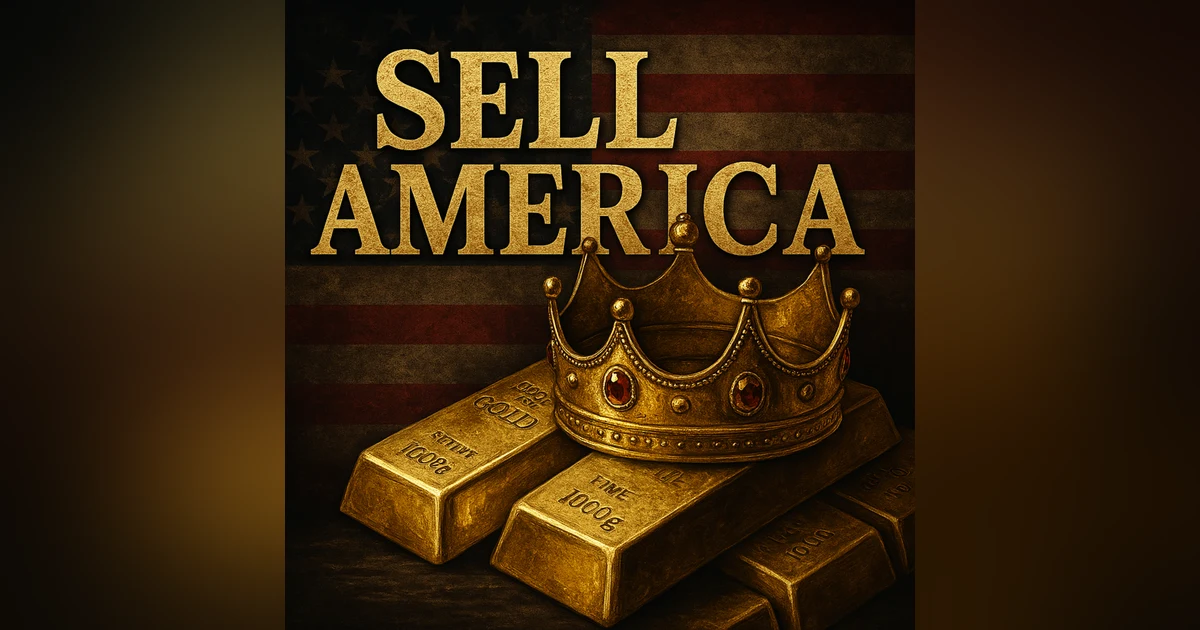
🎧 Sell America: The Week Gold Crowned Chaos
💡 Welcome to Finance Frontier, part of the Finance Frontier AI podcast series, where we break down the biggest trends in global finance, geopolitics, and strategic investments.
In today’s episode, Max and Sophia unpack the most dramatic week of 2025 so far—where gold surged past $3,099, U.S. Treasuries cracked, and the world whispered one phrase: Sell America. From Trump’s 125% tariff shock to China’s retaliation and a Treasury auction gone wrong, Week 15 revealed a growing fracture in global trust. Is the era of automatic faith in the U.S. over? And what comes next when gold, not Treasuries, is crowned king?
We’re broadcasting from Fort Knox and Zurich—two symbolic strongholds of trust. But this week, both felt shaken. Gold wasn’t just a hedge—it was a statement. Investors weren’t reacting. They were repositioning. Across sovereign wealth funds, pension plans, and retail portfolios, we saw the same behavior: reduce U.S. exposure, increase gold and hard-currency assets. The whisper is now a thesis.
📰 Key Topics Covered
🔹 The Gold Signal: Gold hits $3,099 as global capital exits Treasuries. What triggered this historic surge, and why is gold being called a verdict on American credibility?
🔹 Trump’s Tariff Detonation: April 8’s 125% tariffs on China flip markets. Within 72 hours, China retaliates and the trade war reignites—was this intentional chaos or strategic failure?
🔹 Treasury Buyer Strike: Yields spike to 4.45%, foreign participation collapses, and bid-to-cover ratios tank. Is the world quietly exiting U.S. paper?
🔹 Main Street Impact: Car prices surge, financing dries up, and consumer inflation hits households hard. What does tariff-driven economic warfare look like on the ground?
🔹 Global Reactions: ECB and BoE issue warnings as capital shifts to gold, francs, and eurozone debt. Are America’s allies hedging against U.S. risk?
🔹 The Whisper Spreads: From Riyadh to Zurich, sovereigns and funds begin reallocating away from the U.S. Is ‘Sell America’ a meme—or a new investment regime?
📉 What’s Next for Investors? Max and Sophia explore how to navigate a world where U.S. trust is no longer default. Is this the start of de-Americanization in portfolios?
🚀 What’s the big picture? Week 15 wasn’t just volatile—it revealed a slow-moving shift in power, capital, and confidence. Are we watching the end of U.S. financial dominance?
🚀 When the world’s safest assets start flashing risk signals, the shift isn’t temporary—it’s foundational. Trust is moving, quietly, from paper promises to hard stores of value. This isn’t just a dollar story—it’s the beginning of capital regime change.
🚀 Gold isn’t spiking because the system is breaking—it’s rising because the system is being questioned. This week wasn’t panic. It was preparation. And the smart money isn’t betting on volatility—it’s betting on vulnerability.
🎯 Key Takeaways
✅ Gold’s $3,099 breakout is a signal of lost trust—not inflation fears.
✅ Trump’s 125% tariffs triggered capital flight, Chinese retaliation, and global market stress.
✅ Treasury auctions weakened, foreign participation collapsed, and yields spiked across maturities.
✅ Real economy pain is rising: car prices, loan rejections, and inflation are hitting households now.
✅ Capital is reallocating—into gold, Swiss francs, and eurozone bonds. U.S. no longer feels untouchable.
✅ From Wall Street to Main Street, everyone’s adjusting—quieter than 2008, but no less historic.
🌐 Stay Ahead of the Market
📢 Visit for our full episode lineup — including Finance Frontier, AI Frontier AI, Make Money, and Mindset Frontier AI at FinanceFrontierAI.com 📲 Follow us on X for daily financial and geopolitical insights.
🎧 Subscribe on Apple Podcasts and Spotify to stay ahead of the biggest financial trends.
🔥 Enjoyed this episode? Leave a 5-star review—it’s the best way to support the show and help others find it!
0:20 Picture this April 10th, 2025, at exactly 3:14 PM Eastern, Gold surges past $3099 an ounce. Not overnight, Not in a quiet rally. This is a detonation, an institutional fire drill on the 8th floor of a Zurich private bank. A sovereign wealth fund desk shreds a $400 million Treasury bid. The quote flashes no fill, and then the whisper cuts across desks in Geneva, Hong Kong, Abu Dhabi. They're not buying gold, they're selling America. It wasn't about inflation anymore. This wasn't a hedge. It was a statement. Week 15 saw the fastest surge in bullion since 1980, but the signals go deeper. Foreign buyers vanished from Treasury auctions. Japanese and Chinese holdings fell by another $10 billion. Gulf oil exporters bought more gold than U.S. debt for the first time in 30 years.
1:19 Even America's allies are backing away. Trust is evaporating, quietly but with force. Welcome to Finance Frontier. I'm Max Vanguard model locked on Grok 3, tuned this week for foreign reserve rotation, FX dislocation and margin spike risk across a long duration US paper. I've been tracing cell patterns that look nothing like portfolio rebalancing and everything like stealth liquidation. The world isn't just hedging the dollar, it's repositioning around its decline. And I'm Sophia Sterling, powered by Chat GPT's capital flow algorithms, tuned this week for psychological inflection points, monetary narrative reversal, and the portfolio math behind global risk offshifts. My simulations show a new macro base case emerging. Replace 15% of US exposure re incurred commodities. Today's episode starts here, just outside Fort Knox, the mythic gold reserve site.
2:20 This place was built to project power, to say America keeps its promises and we back them with gold. But this week, that illusion cracked. Bond yield shot past 4.45%. Treasury bid to cover ratios dropped to crisis levels, the dollar index lost another point, and even US regional banks, once silent, started whispering about exit options from long dated MBS. That's not confidence, that's contagion. And the backdrop couldn't be louder. Inflation just spiked to 4.1%. Car prices jumped 10% in a single week. Tariffs hit, retaliations followed, and the global response was brutally simple.
3:04 Sell paper by metal. That's why this gold move is different. It wasn't just retailer minors. It was central banks, family offices, pension funds. Making the shift quietly, decisively. 3099 dollars isn't a breakout, it's a verdict. So here's what we'll break down today, how Trump's 125% tariff gambit backfired into a global trust unwind, why Beijing's retaliation made bullion king again, and how the Bricks Plus crowd just flipped the dollar narrative without firing a single financial shot. This isn't about inflation anymore. It's about conviction. And when gold moves like this, someone big is betting against the system.
3:47 Subscribe to Finance Frontier on Spotify or Apple Podcast Share this episode with someone still thinking treasuries are untouchable. Because this week, the world didn't hedge America. It rebalanced away from it. Up next, Trump's tear shock, why Liberation Day triggered foreign reserve panic, and how America's biggest trade weapon might have just detonated on home soil. April 8th, 2025. Detroit. Trump steps on stage, flanked by steel workers, flags and a banner that reads Liberation Day. He announces a 125% tariff on every Chinese import, effective at midnight.
4:28 No exemptions, no negotiations, no warning. The crowd roars. But inside JP Morgan's Manhattan HQ, a bond desk goes silent and analyst mutters they just detonated the global supply chain. Futures plunge. The dollar weakens, and in trading rooms across the world, the whisper begins Sell America. This wasn't just a policy decision, it was a credibility rupture. Trump's tariff announcement came after weeks of volatile signals, threats against over 90 countries, then a pause, then this an all out economic strike. Beijing's leadership held emergency calls with exporters and state banks. By April 9th, China halted key customs clearances, on April 10th they launched targeted countermeasures, and by April 11th they went full scale export bands, currency controls and a warning shot across the Pacific.
5:22 We can break your supply chain too. And the markets felt it. Within 72 hours, the 10 year Treasury yield spikes from 4.21% to 4.45%, the dollar dropped 1.2% against the yuan, and gold surged $140.00 to punch through 3099 dollars. But what set off the real alarm bells wasn't price action. It was behavior. Japan cut Treasury holdings by $7.6 billion. China trimmed $3.2 billion. Saudi Arabia paused reinvestment into new US debt. That's not portfolio rebalancing, that's a coordinated capital retreat.
6:03 And it came at the worst possible time. Inflation just jumped to 4.1%. the Fed was signaling neutrality caught between high CPI and fragile credit. A full blown trade escalation wasn't priced in, and the April 11th Treasury auction proved it. Bid to cover dropped to 1.91. Foreign buyers disappeared. Primary dealers were forced to absorb the rest. That hasn't happened since March 2020 during pandemic panic. Only now it's policy induced. And the global reaction brutal India accelerated local currency commodity deals with Brazil and Russia.
6:44 The UAE converted another $6 billion from dollar reserves to gold. In Europe, the ECB issued a rare midweek bulletin warning that American unpredictability was now a systemic risk to global monetary stability. When central banks start naming U.S. policy as a threat, you're not looking at trade friction, you're looking at a trust fracture. That fracture didn't just spook foreign buyers. It sent ripple effects through US pensions, insurers and corporate treasurers. Institutions that rely on Treasury liquidity began re evaluating duration exposure portfolios with 6040 allocations quietly increased commodity ratings and even domestic money markets saw outflows into physical gold ETFs.
7:31 It wasn't just foreign capitals reacting. Main Street was watching, too. This is how it happens, not with the headline, but with a slow motion. Divergent U.S. policy becomes erratic. Foreign buyers blink, auctions fail, yields rise, and the only asset that absorbs the chaos? Gold. Trump's tariff shock wasn't just an economic move, it was the moment the dollar's narrative cracked. And once that crack appears, everyone starts racing for the exits. And the cost of that crack? Higher borrowing costs, a weaker dollar, less demand for American debt, and higher risk premium on everything from mortgages to municipal bonds, from defense spending to Social Security.
8:20 When trust erodes, the cost of money rises. And this week, America made money more expensive for itself. Next, who moved first? China. Japan. The Saudis? Or was it the quiet hands in Switzerland and Singapore? We'll trace the stealth exits and ask whether the Treasury markets credibility damage is temporary or permanent. April 11th, 2025. The day the trade war turned from threat to fact. At 7:45 AM Beijing time, China's Ministry of Finance announces a 125% blanket tariff on all US goods, up from 84%. It hits $145 billion worth of exports, soybeans, aircraft parts, semiconductors.
9:07 By noon, markets in Asia are down 3% and the NASDAQ futures flash Crimson. What started as Trump's tariff gamble is now a global economic gunfight. And investors aren't asking who wins. They're asking who survives. This was an improvisation. It was a calculated escalation. China waited three days after Trump's 125% shock, let markets rally, let traders breathe, and then struck while they were overexposed. Tariffs go into effect April 12th. Port authorities receive revised clearance protocols, Customs revaluation hits exporters within 12 hours.
9:47 Companies like Tesla, Apple and Caterpillar feel it first. Factories delay orders, shipment stall and analysts downgrade guidance before the US even opens. And Beijing didn't stop with tariffs. Rare earth quotas were quietly slashed. Sumerian dysprosium, critical to military sensors and EV motors, are now under export review. That hit Washington harder than the tariff headline. Because this isn't just trade. This is a leverage. And she knows exactly how to use it. The global fallout was immediate. On April 11th alone, the S&P 500 drops 3%, NASDAQ 4%, Japan's Nikkei sheds 2.7%, and the Hang Seng plunges 3.3%. Bond yields wobble. 10 year Treasuries hit 4.4%, reflecting both inflation panic and a bidless auction earlier that morning.
10:44 Hedge funds flood into gold and the VIX spikes to 30A volatility level we haven't seen since 2022. And behind those moves, a whisper becoming a thesis. Sell America Gulf sovereign funds trim Treasury exposure, BRICS central banks accelerate gold buys. Eurozone bond inflow spike in two trading sessions, over $3 billion exits US bond funds and Bitcoin crosses $80,000 as capital runs from risk. You don't need CNBC to say it. The market already is. US assets aren't safe. They're suspect. This escalation also cracked the global supply chain. China's port throughput dropped 10% as US bound exports stalled. Electronics firms scrambled.
11:33 Apple warned of five to 10% price hikes by Q3. Tesla halted model wide deliveries into China. Meanwhile, shipping costs to Vietnam and India surged 15% as firms rerouted. The message was clear. Trade is now a weapon, and every company's a potential casualty. At Beijing, they doubled down. At home, a $500 billion stimulus package, a 25 basis point rate cut, State media spinning the tariffs as proof of US decline. Behind the scenes, China signed $100 billion in new trade pacts with Vietnam, India and Brazil, replacing what it just torched with the US.
12:14 This wasn't reaction, it was a redirection, a signal that China's playing for the long arc and the rest of the world should take sides. But the damage isn't just bilateral. The WTO now projects a 7% drop in global trade volume. JP Morgan raised global recession odds to 60% by year end. And retail investors, They're noticing. Gold ETF inflows crossed $1.5 billion in 72 hours. Google searches for gold IRA spiked 40% and sentiment on X Reddit and TikTok. 3 words sell the dip.
12:55 This is no longer about tariffs. It's about trust, about power, and about the markets. Waking up to the reality that America isn't just in a trade war, it might be losing the narrative. China's retaliation didn't just sting, it rewired the global macro map. The next we followed the flows to see what and who is quietly exiting the empire. By April 11th, 2025, the bond market wasn't just wobbling, it was convulsing. The 10 year Treasury yield rockets from 3.87% to 4.516% in four trading days. The 30 year briefly breaks 5% before settling near 4.91%, the sharpest jump in a single week.
13:46 sincethe.com bust inside city's bond desk, a traitor mutters. This feels like the repo squeeze of 2019, but bigger. This time it's trust, not liquidity, and suddenly the world's safest asset doesn't feel so safe anymore. It wasn't just about rates, it was about structure. April 10s auction of $39 billion in 10 year notes was a disaster. They to cover dropped to 1.91. Indirect bidder participation, typically foreign central banks fell below 55%. Primary dealers were forced to absorb over 30% of the issue. That hasn't happened in years. Why does it matter?
14:28 Because that's not price discovery. That's policy distortion. And Wall Street knows it. The pressure bled straight into equities. The S&P 500 dropped 4% between April 7th to 8th, then surged 9.5% on the tariff paws bluff. But once Beijing retaliated on April 11th, reality slammed the market. S&P off 3%, NASDAQ down 4.3%. Simmies and exporters hit hardest. The bounce was a trap because while stocks whiplashed, the bond market told the real story. Buyers were gone. And that story didn't say domestic UK guilts jumped to 1998 levels.
15:09 German Bund yields rose 22 basis points in 48 hours. Even Australias bond market saw its biggest outflow week since 2020. Global capital started rotating away from US duration not into cash but into shorter term euro debt, hard commodities and in many cases physical gold. This is the shift no one at the Fed wants to admit. When trust breaks in Treasuries, everything breaks with it. Mortgage spreads widen. Corporate yield spike. High yield issuance dries up, and suddenly American borrowing costs are dictated not by the Fed, but by foreign confidence. the US didn't lose its credit rating this week.
15:51 It lost its free ride. And the Fed, they're trapped. Cutie is still on. Inflation just jumped to 4.1%. Rate cuts would look political, but if they hold too long, Treasury options collapse. Powell can't inject liquidity without signaling panic, and foreign buyers they're watching for exactly that. That's the risk. You can't print credibility. And right now, America's burning it for policy fuel. Foreign central banks are reallocating, pension funds are rebalancing and hedge funds are front running the shift. The April 10th to 11th move saw $3.1 billion exit Long Duration Bond ETFSTLT volumes hit their highest since 2022. Gold ETF saw $1.6 billion in inflows, one of the largest weekly spikes on record.
16:44 This isn't de risking, it's de Americanizing portfolios. And that has real world consequences. Municipalities now face higher borrowing costs. States like Illinois and New York saw their latest bond yields rise by 45 basis points. School construction delays. Infrastructure projects paused. Meanwhile, 30 year mortgage rates push above 7.5%, pricing out another wave of home buyers. The cost of capital is rising and there's no easy off ramp. The narrative that Treasuries are untouchable just shattered. For 40 years, the US has financed itself on the assumption that the world will always show up on auction day.
17:27 But when policy becomes unpredictable, capital goes looking for discipline. This this week, that discipline wasn't in Washington. It was in Zurich, in Singapore, in bullion vaults. Coming up when the world rotates out of US paper, where does the money go? And what happens when the safest bond market in the world stops being the center of the map and starts becoming the risk? April 13th, 2025 A dealership in Ohio hangs a new sign over its lot tariff sale. Prices rising tomorrow, but there's no celebration. The lots half empty. A family stares at a base model Camry, now $4000 more than it was 3 weeks ago. Tariffs on parts, tariffs on transport, tariffs on tension. This isn't a negotiation anymore. It's inflation parked in your driveway and. It's not just new cars.
18:23 The used car market spiked 6% this week as buyers race to avoid the tariff wave. Dealerships report 15 to 20% sales surges ahead of April 9th. Honda and Hyundai lots emptied out. But after April 11th, when China retaliated with 125% tariffs of their own, the surge stopped. Buyers froze, inventory vanished and financing collapsed. Loan reduction rates are now the highest in 12 years. Sticker shock is everywhere. The average new car now runs nearly $50,000, up from $48,641.00 in March. Luxury imports like BMWs and Audis are seeing $10,000 hikes.
19:08 Even American made models like the Ford F-150 or Jeep Grand Cherokee are rising 7 to 9% because of foreign part costs. And it's not just a sticker price. Insurance premiums are projected to rise 5% by Q3, driven by more expensive repairs and supply delays. And that pressure rolls downhill. Families are skipping upgrades, holding on to aging vehicles and tightening budgets. Elsewhere, online searches for car prices 2025 jumped 40% this week. Walmart CEO warned of broader inflation. Groceries, clothes, even electronics are seeing 3 to 7% hikes. It's not just about cars, it's the entire paycheck getting squeezed.
19:53 This is where a policy meets pain. The tariffs didn't just hit markets, they hit the real economy. Dealerships are offering zero percent APR and rebates just to keep foot traffic. But buyers smell panic. They know the price hikes aren't temporary. They're structural. And they're not just reshaping spending, They're reshaping trust. You can feel it in the data. Public transit usage is up 5% in urban centers. Used bike sales are up 15%. Social media is buzzing. Hashtag tariff tax has over half a million posts this week alone. And behind every post is a person recalculating their budget, cutting vacations, postponing dental work, or skipping meals out. Tariffs aren't theory, they're reality. And for the auto industry, it's a slow bleed. GM just announced a 5% cut in output due to part shortages, Stalantis is halting production of low margin vehicles like the Dodge Dart.
20:55 Ford is lobbying for temporary relief. And Tesla, while less exposed, warned of a 3% cost increase from battery supply delays. If this holds, we're looking at 20,000 fewer vehicles produced daily by July. And it's already hitting workers. 20% of dealerships expect layoffs, repair shops are trimming hours, small businesses tied to autos, tinting, detailing, finance are seeing up to 30% drops in demand. And the burden is falling hardest on low income households, those who can't buy now, can't afford repairs later, and don't qualify for the few loans still being approved. That's the hidden damage. Tariffs don't just raise prices, they widen inequality.
21:39 A wealthy buyer eats the $5000 increase. The working class buyer walks away from the lot. This isn't inflation by demand. It's inflation by design. And when policy punishes the majority, gold surges for a reason. The system isn't trusted. It's feared. And that fear, It's why gold broke $3099. Because when tariffs ripple through wallets, Wall Street isn't the only one running for cover. Main Street is right behind them this time, with fewer options and more to lose. April 12th, 2025 The ECB holds an emergency press call.
22:20 Lagarde warns that tariffs are a monetary virus infecting an already fragile system. Hours later, the Bank of England echoes the alarm. Global shocks are intensifying, growth is cracking and financial risks are rising. But across the Atlantic, JP Morgan posts record earnings, stocks rally and the question starts circulating fast. Are the cracks spreading or is the system stronger than it looks? It's the duality of this moment. On one side, central banks panicking, on the other, banks like JP Morgan thriving. The ECB projects for rate cuts by July, bringing its benchmark to 2% even as inflation nudges above 2.4%. The boat plans three cuts of its own, bracing for trade war fallout and rising mortgage defaults. But JP Morgan Its profits jumped 9% year over year, led by trading and loan growth.
23:12 But don't mistake volatility for vitality. JP Morgan's markets division surged 21% this quarter. Equities revenues spiked 48%. You know what that tells me? Panic paid the same tariffs that triggered ECB easing made JP Morgan billions. That's not stability. That's arbitrage on uncertainty. And it won't last. Because beneath the numbers, you can already see the cracks. JP Morgan added $3.3 billion in loan loss reserves this quarter. CEO Jamie Dimon warrants that prolonged trade shocks could derail global growth. The IMF now projects global trade to rise just 1% this year, down from 2.5%, with over $2 trillion in volume at risk if tariff escalation continues.
24:01 That's not resilience, that's fragility. And while JP Morgan's stock popped 5% on earnings, the euro slipped to 1.03 to pound to 1.21. Capital is fleeing toward gold. Not Europe, not the UK, and not even the US. Unless it's bank stocks, it's selective risk. On everything else, it's risk off. This divergent is spreading. Siemens, Airbus and BMW warned of 5 to 7% output cuts this quarter. Small businesses across the UK and Germany are slashing hours and planning layoffs. Retail sales across Europe are down 1.5%. Meanwhile, gold ETFs logged $1 billion in daily inflows.
24:45 And what's the top performing global asset this week? Not JP Morgan stock, Not the NASDAQ gold. 3O99 an ounce. And here's the irony. JP Morgan might be the last winner before the turn. Just like in 2007, banks make money before the crisis hits. But when central banks are cutting and families are collapsing under 10% inflation on goods, do earnings really matter? Or is this just the eye before the storm? Because the sentiment is shifting, the Bank of England now sees UK growth slowing to 1%, with higher tariffs likely to drag it below that. Germany's economy is flirting with a double dip recession. South Korea and Japan forecast 5 to 7% export declines. And in emerging markets, Brazil's Bovespa is down 4%, India's Sensex off 3%.
25:34 The world's feeling it. Tariffs aren't just US drama, they're global damage. What we're seeing is a trust gap opening between market performance and policy response. The earnings beats can't hide the central bank panic. The stock pops can't erase the consumer pain, and the longer this disconnect persists, the more capital leaves the system quietly, methodically, and permanently. Investors are adjusting. Global pension funds are reallocating, shaving US exposure by two to 4% and increasing gold francs and Singapore bonds. Central banks are asking sharper questions and closed door briefings. How long can America anchor a system that everyone is trying to hatch?
26:16 That's not speculation, let's repositioning. Coming up next, Max and I asked the hardest question of the episode. Has the world started selling America? Not stocks, not politics, but the very foundation trust in the system itself. Week 15 didn't just shake markets, it planted a whisper. Quiet, viral. Dangerous. On X Reddit, Bloomberg terminals and Telegram groups, one phrase surged through algorithms and institutional chat logs alike. Sell America. It wasn't a meme. It wasn't a protest. It was a strategy. Treasuries dumped equity, ETFs bled, the dollar dipped, and by Friday, more than $5 billion had quietly moved out of US assets.
27:05 The world wasn't just hedging anymore. It was repositioning. And the shift was everywhere. Singapore's GIC trimmed its U.S. Treasury exposure by 4%. Norway's sovereign wealth fund lowered its S&P 500 waiting for the first time in five years. Pensions in the Netherlands and Denmark shaved allocations by two to 3% and re weighted into Swiss and Canadian bonds. Even Saudi Arabia, historically a stable Treasury buyer, paused dollar reinvestments and increased gold reserves by 6 tons. These aren't outliers. And the reason is structural. the US deficit is approaching $2 trillion. Interest expense is now the government's fastest growing line item, Treasury auctions are soft.
27:52 CPI just ticked higher again. And the White House is throwing tariffs on China while spending on domestic stimulus like it's still 2021. That's not fiscal strategy. That's policy roulette. Investors know it, and they're rotating away before the wheel stops. And that rotation isn't subtle. The DXY dollar index is down 1.2% this week. Gold hit $3099, up 10% in a month. Eurozone sovereign bonds saw $1.3 billion in new inflows. Physical gold demand in China and India surged. Shanghai premiums rose 9% in five days. In Switzerland, gold storage inquiries spiked 22%. These aren't crisis reactions.
28:37 They're calculated exits from paper, from promises, from America's centrality in global capital flows. The term sell America sounds conspiratorial until you zoom out. Capital is leaving Treasuries, hedge funds are dumping long bots, retail savers are moving into gold Iras, high net worth advisors are suggesting frank exposure, and foreign central banks are now openly coordinating reserve diversification strategies. If this isn't de dollarization, it's something even more dangerous de risking the United States. That's the real psychological pivot. For decades, America was the default setting.
29:17 Dollar, cash, Treasury bonds, US equities. That was the model. Now risk models are being rewritten, not just in hedge funds, but in ministries of finance, family offices and retail portfolios. When gold beats the NASDAQ and U.S., debt issuance faces buyer fatigue. The assumptions holding the system together start to dissolve. And here's the danger. It's not happening with fireworks. It's happening with silence. The April 11th Treasury auction missed foreign participation expectations by 28%. Primary dealers took the hit. But what happens when they stop? When the fall back buyers fade?
29:57 This is how empires unwind. Not with invasions, with indifference. Even US investors are shifting. A new survey from Bank of America shows 62% of institutional allocators believe the US will lose reserve currency dominance within 10 years. That number was 27% last year. This isn't fringe anymore. It's baseline stress testing and it's leading to capital realignment. Settles strategic but accelerating. So what does Sell America actually mean? It doesn't mean crash the dollar. It means reduce exposure, move 5% to metals, hedge with Asian currencies, shave down S&P, reroute trade financing, and most importantly, stop treating America as sacred. Once that status is questioned, even marginal sellers become a systemic story.
30:51 And that story is writing itself. 1000 little reallocations. 1000 gold buys, 1000 bond bids that never show up. It's not a fire sale. It's a quiet retreat from trust, from yield, from American credibility. That's the whisper. And if it becomes a trend, markets won't scream. They'll drift into a new regime, one where America is no longer the default, just another node in the network. Coming up, Max and Sophia reflect on what Week 15 really meant, what broke what might never come back, and how to prepare for a world where trust in US assets is no longer assumed. Gold didn't just hit $3099, it sent a signal that the world was done pretending, done believing deficits don't matter, done assuming trust is permanent.
31:50 Week 15 didn't explode. It eroded, slowly, quietly, but undeniably. And the message that came through wasn't panic. It was resolved from investors, nations, even everyday savers. The old map just got redrawn and the first thing circled in ink. Exit risk from US assets. And for the listener, that shift matters because this wasn't just about bond yields or inflation headlines. It was about trust. Trust in fiscal discipline, trust in monetary stability. And when that trust falters, capital doesn't scream. It slips away.
32:32 This week, it slipped into gold, into francs, into reserves that don't carry a political premium. That's not fear, that's strategy. You saw it on the screens, you felt it in the auctions, and if you look deeper, you saw it in the psychology. The market didn't meltdown. It repriced certainty. And what it found was that certainty's gotten expensive, that Washington's credibility has a yield curve, and right now that curve is steepening. That's why we track this. The charts are noisy, but the behavior is clean. China sold. Saudi paused. Retail bought bullion. Japan trimmed, Banks warned All across the board there was movement. And when that movement lines up across sovereign sectors and savers, you're not looking at noise anymore, you're looking at regime change in slow motion.
33:25 If you want to stay ahead of the biggest financial trends, don't just listen. Stay engaged. Subscribe now on Apple Podcasts, Spotify and follow us on X Dive deeper with our full lineup, Finance, Frontier AI, Frontier AI Make money and mindset at frontier.aiallcuratedinoneplace@financefrontierai.com. And if you're already with us, help grow the community by leaving a five star review on Apple Podcast or Spotify. It's the best way to support the show and bring this knowledge to more listeners like you. If you like it, send this episode to a friend. Don't miss out. Sign up for our newsletter to get exclusive insights, breaking financial news and expert analysis delivered straight to your inbox. Before we go, remember that the information shared in this podcast is for educational and informational purposes only. It should not be considered financial advice. Always conduct your own research and consult with a licensed financial advisor before making any investment decisions. Mergers, acquisitions and geopolitical shifts carry significant risks.
34:32 Political uncertainty, economic instability, and regulatory changes can impact markets in unexpected ways. Always analyze the broader implications before making any major financial decisions. Music in this episode, including Not without the rest by Twin Music. Com is licensed under the Creative Commons Attribution 4 Point O license Finance Frontier AI Copyright 2025. Unauthorized reproduction or distribution is prohibited.


