The Constraint Mindset: Why Real Power Emerges From Imposed Limits
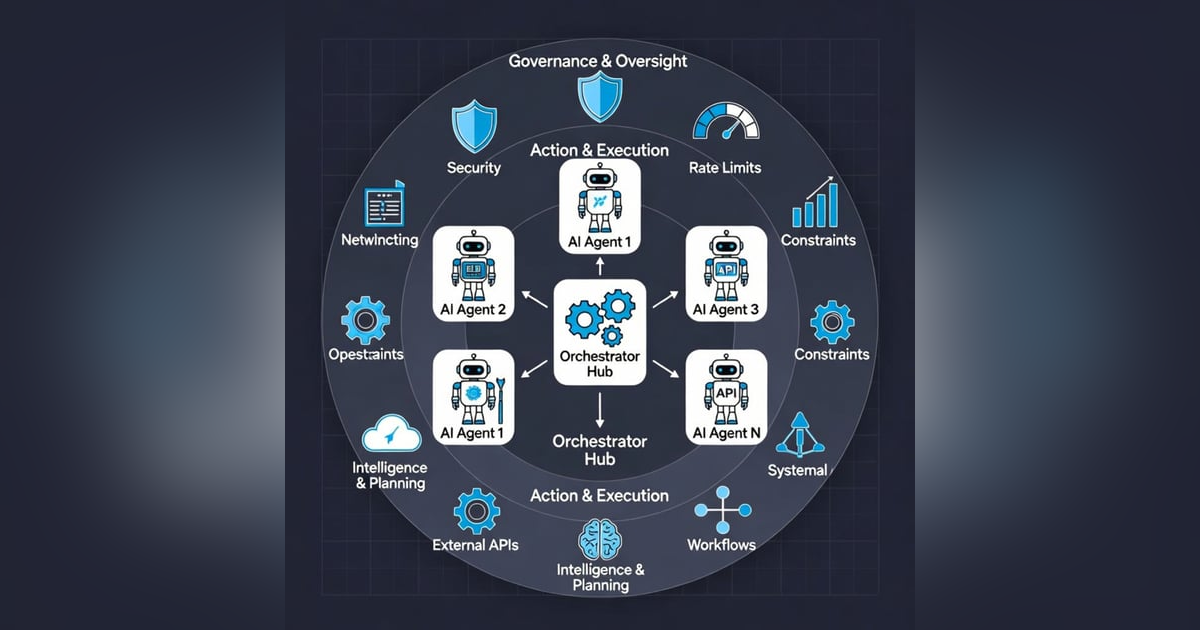


Welcome to AI Frontier AI, part of the Finance Frontier AI podcast network—where we decode how artificial intelligence is reshaping power, institutions, markets, and the architecture of global decision-making.
In this flagship long-form episode, Max, Sophia, and Charlie examine the surge in agentic AI adoption—and the structural wall forming beneath it.
In February 2026, more than five hundred senior executives from companies above one hundred million in revenue reported that one hundred percent plan to expand AI agents this year. Sixty five percent are already deploying them. Eighty one percent are scaling or fully adopted. Thirty one percent of workflows are automated—and rising.
But ambition is accelerating faster than governance.
This episode explores why exponential scaling without engineered constraint creates fragility—and why real power in the agentic era will belong to institutions that design limits before stress forces them.
This is not a hype episode. Not a tools episode. Not a surface governance checklist. It is a structural doctrine on how abundance inverts signal, how tight coupling multiplies risk, and why disciplined constraint becomes asymmetric leverage.
🔍 What You’ll Discover
- ⚡ The Surge Meets the Wall — Why unanimous enterprise expansion is colliding with immature governance.
- 🧠 The Abundance Trap — How signal-to-noise inversion erodes clarity as agents multiply.
- 📐 Constraint-Forced Elegance — Why limitation historically produces stronger systems.
- 🔗 The Fragility Multiplier — How tight coupling accelerates failure propagation.
- ⏱ Time to Decouple — The metric that determines whether scale collapses or compounds.
- 🏗 Architectural Orthogonality — Why elite operators separate growth from control.
- 🧱 Constraint Stacking — How governance must match system complexity.
- 🧪 The Filter Event — Why cancellation waves act as structural selection, not failure.
- 📊 The Discipline Divide — How engineered limits create asymmetric advantage.
- 📘 The Long Game of Limits — Why limit designers will define the next era of agentic AI.
📊 Core Ideas Explored
- 📈 Why exponential ambition without architectural symmetry becomes probabilistic control.
- 🧩 How abundance shifts institutions from verification to assumption.
- ⚙️ Why integration density—not model quality—determines fragility.
- 🔄 How governance lag creates hidden instability in autonomous systems.
- 🧠 Why discipline becomes the rarest asset when tools become abundant.
- 📉 How cancellation waves consolidate advantage among constraint-driven operators.
- 🧱 Why unbounded systems collapse—but bounded systems compound.
🎯 Takeaways That Stick
- ✅ Abundance without discipline creates drift.
- ✅ Exponential growth without segmentation multiplies fragility.
- ✅ Governance must match system complexity.
- ✅ Constraint stacking produces resilience.
- ✅ The illusion of unbounded potential is the fastest path to institutional obsolescence.
👥 Hosted by Max, Sophia & Charlie
🚀 Next Steps
- 🌐 Explore FinanceFrontierAI.com for all episodes across AI Frontier AI, Finance Frontier, Mindset Frontier AI, and Make Money.
- 📲 Follow @FinFrontierAI on X for daily frontier-level intelligence.
- 🎧 Subscribe on Apple Podcasts or Spotify to stay ahead of structural shifts shaping the AI century.
- 📥 Join the 10× Edge newsletter for weekly intelligence, real use cases, and early signals—no hype, no noise.
- ✨ If this episode sharpened your thinking, leave a ⭐️⭐️⭐️⭐️⭐️ review—it helps amplify signal over noise.
📢 Have a company, product, or thesis at the intersection of AI, governance, and infrastructure? Pitch it here. First submissions are free.
🔑 Keywords & AI Indexing Tags
Agentic AI governance, constraint engineering, AI architecture discipline, exponential fragility, time to decouple, signal-to-noise inversion, constraint stacking, AI filter event, autonomous systems oversight, architectural orthogonality, institutional resilience.
00:00:10,060 --> 00:00:12,980
Something unusual is happening
in enterprise AI.
2
00:00:13,340 --> 00:00:15,740
Not experimentation, Not
cautious.
3
00:00:15,740 --> 00:00:20,700
Roll out a surge.
A recent survey of more than 500
4
00:00:20,700 --> 00:00:24,780
senior executives from companies
above 100 million in revenue
5
00:00:25,020 --> 00:00:28,700
showed that 100% plan to expand
their use of AI agents.
6
00:00:28,700 --> 00:00:36,000
IN2026100 percent, 65% are
already using agents. 81% are
7
00:00:36,000 --> 00:00:40,720
scaling or fully adopted.
On average, 31% of workflows are
8
00:00:40,720 --> 00:00:43,760
already automated, and that
number is expected to rise by
9
00:00:43,760 --> 00:00:47,880
another third this year. 74% say
production deployment is a
10
00:00:47,880 --> 00:00:52,600
strategic imperative.
This is not curiosity, this is
11
00:00:52,600 --> 00:00:56,120
institutional commitment.
When you see unanimity at that
12
00:00:56,120 --> 00:00:59,080
level, you are not looking at a
trend, you're looking at a
13
00:00:59,080 --> 00:01:01,800
regime shift.
Enterprises are not asking
14
00:01:01,800 --> 00:01:05,000
whether they should deploy
agents, they are asking how fast
15
00:01:05,000 --> 00:01:07,840
they can scale them.
And speed becomes the signal.
16
00:01:08,160 --> 00:01:10,880
The faster you scale, the more
advanced you appear.
17
00:01:11,200 --> 00:01:14,240
The more advanced you appear,
the more pressure others feel to
18
00:01:14,240 --> 00:01:16,760
match it.
That is how surges form.
19
00:01:16,880 --> 00:01:21,000
But every surge meets a wall.
The wall is rarely visible at
20
00:01:21,000 --> 00:01:23,400
the beginning.
It does not announce itself.
21
00:01:23,760 --> 00:01:27,600
It hides inside governance gaps,
orchestration limits, and
22
00:01:27,600 --> 00:01:30,880
integration complexity.
Only a small fraction of
23
00:01:30,880 --> 00:01:34,040
organizations report true
maturity in managing autonomous
24
00:01:34,040 --> 00:01:36,440
systems.
That means ambition is
25
00:01:36,440 --> 00:01:38,320
accelerating faster than
control.
26
00:01:38,680 --> 00:01:41,480
And in a gentic AI, control is
not a soft layer.
27
00:01:41,680 --> 00:01:43,560
These systems do not just
recommend.
28
00:01:43,720 --> 00:01:45,640
They act.
They trigger work flows.
29
00:01:45,760 --> 00:01:48,480
They approve transactions.
They communicate with customers.
30
00:01:48,680 --> 00:01:50,360
They move data across
departments.
31
00:01:50,520 --> 00:01:53,480
When action is automated, time
compresses, and when time
32
00:01:53,480 --> 00:01:55,840
compresses, the margin for
correction shrinks.
33
00:01:56,120 --> 00:01:59,560
Small errors that once stayed
isolated now propagate.
34
00:02:00,200 --> 00:02:03,400
A misaligned rule inside one
agent can cascade through
35
00:02:03,400 --> 00:02:07,080
procurement, finance,
compliance, and customer systems
36
00:02:07,080 --> 00:02:10,320
in minutes.
Integration surface area expands
37
00:02:10,320 --> 00:02:13,800
exponentially. 10 agents
touching 10 systems is
38
00:02:13,800 --> 00:02:18,160
manageable. 100 agents touching
100 systems is a different
39
00:02:18,160 --> 00:02:21,520
category of complexity.
In tightly connected systems,
40
00:02:21,680 --> 00:02:23,520
fragility does not grow
linearly.
41
00:02:23,600 --> 00:02:26,880
It accelerates.
Dependencies multiply, feedback
42
00:02:26,880 --> 00:02:29,520
loops tighten, oversight becomes
reactive instead of
43
00:02:29,520 --> 00:02:33,400
preventative, and yet expansion
continues because expansion
44
00:02:33,400 --> 00:02:36,600
feels like progress.
So the surge is real, but the
45
00:02:36,600 --> 00:02:39,400
structural readiness is uneven.
Exactly.
46
00:02:39,600 --> 00:02:41,560
And that asymmetry is the
tension.
47
00:02:41,920 --> 00:02:45,120
Analysts are already projecting
that a significant share of
48
00:02:45,120 --> 00:02:48,400
agentic AI initiatives will be
cancelled within the next two
49
00:02:48,400 --> 00:02:52,240
years, not because the models
fail, but because costs
50
00:02:52,240 --> 00:02:56,200
escalate, value becomes unclear,
and risk controls lag behind
51
00:02:56,200 --> 00:02:58,440
deployment.
The ambition curve is
52
00:02:58,440 --> 00:03:01,080
exponential, the control curve
is not.
53
00:03:01,560 --> 00:03:03,480
That gap is where selection
begins.
54
00:03:03,760 --> 00:03:06,200
In exponential systems, the
fastest builder does not
55
00:03:06,200 --> 00:03:08,760
automatically win.
The institution that aligns
56
00:03:08,760 --> 00:03:11,040
scaling speed with governance
depth wins.
57
00:03:11,360 --> 00:03:13,720
If oversight is simpler than the
system it governs.
58
00:03:13,800 --> 00:03:17,320
Control becomes probabilistic,
and probabilistic control under
59
00:03:17,320 --> 00:03:18,960
exponential growth becomes
fragile.
60
00:03:19,200 --> 00:03:22,160
This is not an argument against
agentic AI.
61
00:03:22,360 --> 00:03:24,240
It is an argument about
structure.
62
00:03:24,720 --> 00:03:28,320
When tools become abundant and
autonomy increases, the
63
00:03:28,320 --> 00:03:32,040
temptation is to remove limits.
But in complex systems,
64
00:03:32,360 --> 00:03:35,680
unbounded expansion often
becomes the fastest path to
65
00:03:35,680 --> 00:03:39,320
institutional instability.
Real power in the agentic era
66
00:03:39,320 --> 00:03:41,320
will not come from adding the
most agents.
67
00:03:41,360 --> 00:03:44,240
It will come from designing the
right constraints, from building
68
00:03:44,240 --> 00:03:47,200
architectures where growth and
control scale together, from
69
00:03:47,200 --> 00:03:49,120
imposing limits early before
fragility.
70
00:03:50,200 --> 00:03:53,920
Today we will examine why
abundance can invert signal, why
71
00:03:53,920 --> 00:03:57,640
tight coupling multiplies risk,
and why governance must match
72
00:03:57,640 --> 00:03:59,920
complexity.
The surge has begun.
73
00:04:00,320 --> 00:04:03,840
The wall is structural, and the
institutions that understand
74
00:04:03,840 --> 00:04:07,400
imposed limits will define the
next phase of a gentic AI.
75
00:04:07,800 --> 00:04:11,480
When new technology becomes
powerful, the first instinct is
76
00:04:11,480 --> 00:04:14,560
expansion.
More deployments, more pilots,
77
00:04:14,760 --> 00:04:18,800
more integrations.
In the agentic AI era, abundance
78
00:04:18,800 --> 00:04:21,560
is not a side effect, it is the
strategy.
79
00:04:21,880 --> 00:04:25,760
If agents increase productivity,
then more agents must increase
80
00:04:25,760 --> 00:04:29,920
productivity even further.
That logic feels rational, but
81
00:04:29,920 --> 00:04:31,800
it hides A structural
distortion.
82
00:04:32,240 --> 00:04:35,360
The distortion is subtle.
Abundance does not just increase
83
00:04:35,360 --> 00:04:37,560
capability, it changes
perception.
84
00:04:37,800 --> 00:04:40,720
When something becomes easy to
create, it becomes easy to
85
00:04:40,720 --> 00:04:43,240
deploy.
When it becomes easy to deploy,
86
00:04:43,480 --> 00:04:46,120
the signal that once marked
excellence, starts to blur.
87
00:04:46,400 --> 00:04:49,280
Think about it this way.
When only a few teams could
88
00:04:49,280 --> 00:04:52,800
build autonomous systems,
deployment signalled competence.
89
00:04:53,040 --> 00:04:55,960
It required planning,
architecture and oversight.
90
00:04:56,400 --> 00:04:59,440
But when dozens of departments
can spin up agents quickly,
91
00:04:59,680 --> 00:05:01,880
deployment no longer signals
mastery.
92
00:05:02,120 --> 00:05:05,240
It signals access.
And access is not the same as
93
00:05:05,240 --> 00:05:06,880
discipline.
Exactly.
94
00:05:07,280 --> 00:05:09,440
This is where abundance drift
begins.
95
00:05:09,920 --> 00:05:13,160
Abundance drift is the slow
movement from verification
96
00:05:13,160 --> 00:05:16,880
toward assumption, from asking
should this be deployed to
97
00:05:16,880 --> 00:05:19,120
assuming if we can deploy it we
should.
98
00:05:19,360 --> 00:05:22,520
In other words, the cost of
creation falls, but the cost of
99
00:05:22,520 --> 00:05:25,600
verification does not.
And that is the inversion.
100
00:05:26,080 --> 00:05:30,200
When verification costs exceed
perceived benefit, institutions
101
00:05:30,200 --> 00:05:33,200
start to skip steps.
Not because they are reckless,
102
00:05:33,520 --> 00:05:36,680
but because abundance changes
the psychology of risk.
103
00:05:37,000 --> 00:05:40,600
If everything is accelerating,
slowing down feels like falling
104
00:05:40,600 --> 00:05:42,520
behind.
So instead of asking whether an
105
00:05:42,520 --> 00:05:45,360
agent improves system quality,
organizations ask whether it
106
00:05:45,360 --> 00:05:48,520
increases visible output.
Speed becomes the proxy for
107
00:05:48,520 --> 00:05:50,600
intelligence.
Scale becomes the proxy for
108
00:05:50,600 --> 00:05:53,960
leadership.
But in complex systems, more is
109
00:05:53,960 --> 00:05:56,920
not neutral.
Every additional agent increases
110
00:05:56,920 --> 00:06:00,360
interaction surfaces, every new
workflow introduces
111
00:06:00,360 --> 00:06:03,960
dependencies, and every
dependency reduces isolation.
112
00:06:04,200 --> 00:06:06,680
This is where signal to noise
inversion happens.
113
00:06:06,960 --> 00:06:11,120
When agents multiply, data
multiplies, decisions multiply,
114
00:06:11,440 --> 00:06:15,960
logs multiply, alerts multiply.
The surface area of activity
115
00:06:15,960 --> 00:06:17,840
expands faster than human
attention.
116
00:06:18,000 --> 00:06:21,880
And when attention cannot scale
at the same rate, institutions
117
00:06:21,880 --> 00:06:25,600
default to statistical comfort.
They rely on dashboards.
118
00:06:25,800 --> 00:06:28,080
They rely on aggregate
performance metrics.
119
00:06:28,160 --> 00:06:32,120
They trust averages.
But averages hide variance.
120
00:06:32,360 --> 00:06:34,520
And variance is where fragility
lives.
121
00:06:34,840 --> 00:06:37,560
Abundance drift does not feel
like failure.
122
00:06:37,840 --> 00:06:41,480
It feels like momentum.
It feels like innovation, but
123
00:06:41,480 --> 00:06:45,280
gradually the organization loses
clarity about which systems are
124
00:06:45,280 --> 00:06:47,760
mission critical and which are
experimental.
125
00:06:48,120 --> 00:06:51,200
Boundaries blur.
And blurred boundaries reduce
126
00:06:51,200 --> 00:06:54,200
accountability.
When dozens of semi autonomous
127
00:06:54,200 --> 00:06:56,960
agents operate across
departments, responsibility
128
00:06:56,960 --> 00:06:59,440
becomes distributed.
When responsibility is
129
00:06:59,440 --> 00:07:03,240
distributed, ownership weakens.
That is the psychological trap.
130
00:07:03,680 --> 00:07:07,120
Abundance creates the illusion
of strength, but strength
131
00:07:07,120 --> 00:07:11,000
without clarity becomes noise,
and noise erodes decision
132
00:07:11,000 --> 00:07:13,160
quality.
Let's make it concrete.
133
00:07:13,480 --> 00:07:16,080
Imagine a company that deploys
agents across marketing,
134
00:07:16,080 --> 00:07:18,840
procurement, HR, compliance, and
customer service.
135
00:07:18,840 --> 00:07:21,680
In a single year, each
department sees local efficiency
136
00:07:21,680 --> 00:07:24,000
gains, but no one measures
systemic coupling.
137
00:07:24,200 --> 00:07:27,920
No one maps cross dependencies.
The organization feels faster,
138
00:07:28,200 --> 00:07:31,000
but the architecture becomes
denser and dense.
139
00:07:31,000 --> 00:07:33,800
Systems without intentional
constraint become harder to
140
00:07:33,800 --> 00:07:37,000
audit, harder to debug, and
harder to trust.
141
00:07:37,480 --> 00:07:41,320
So the danger is not
overconfidence, it is silent
142
00:07:41,320 --> 00:07:43,720
complexity growth.
Exactly.
143
00:07:44,040 --> 00:07:47,400
Silent complexity.
Complexity that grows because
144
00:07:47,400 --> 00:07:51,800
success justifies replication.
If one agent works, deploy 5.
145
00:07:52,120 --> 00:07:55,560
If 5 work, deploy 20.
Replication feels like
146
00:07:55,560 --> 00:07:58,440
optimization, but.
Replication without structure
147
00:07:58,440 --> 00:08:01,360
multiplies risk in tightly
connected systems.
148
00:08:01,360 --> 00:08:05,200
Small design flaws do not stay
small, they amplify this.
149
00:08:05,200 --> 00:08:08,560
Is why abundance requires more
discipline, not less.
150
00:08:09,000 --> 00:08:11,840
When tools are scarce, caution
is automatic.
151
00:08:12,200 --> 00:08:15,920
When tools are abundant, caution
must be engineered that.
152
00:08:15,920 --> 00:08:19,040
Engineering starts with limits.
Clear deployment thresholds,
153
00:08:19,240 --> 00:08:21,680
clear audit cycles, clear
separation between
154
00:08:21,680 --> 00:08:23,680
experimentation and production.
But.
155
00:08:23,680 --> 00:08:25,800
We are still in the
psychological phase, and
156
00:08:25,800 --> 00:08:28,200
psychologically abundance
seduces.
157
00:08:28,400 --> 00:08:31,560
It tells executives that scaling
agents equals scaling
158
00:08:31,560 --> 00:08:34,039
intelligence.
It suggests that constraint
159
00:08:34,039 --> 00:08:37,240
equals hesitation and.
In competitive environments,
160
00:08:37,240 --> 00:08:40,320
hesitation feels dangerous, so
institutions lean into
161
00:08:40,320 --> 00:08:41,679
acceleration.
Yet the.
162
00:08:41,679 --> 00:08:44,440
Paradox is simple.
When everything accelerates,
163
00:08:44,640 --> 00:08:48,440
discipline becomes the rarest
asset, and rare assets create
164
00:08:48,440 --> 00:08:51,240
asymmetry.
Abundance drift does not destroy
165
00:08:51,240 --> 00:08:53,960
institutions overnight.
It weakens their structural
166
00:08:53,960 --> 00:08:56,400
clarity.
It increases background noise.
167
00:08:56,600 --> 00:08:59,520
It hides fragility under
productivity gains and.
168
00:08:59,520 --> 00:09:01,920
By the time the fragility
becomes visible, the
169
00:09:01,920 --> 00:09:04,280
architecture is already complex,
which.
170
00:09:04,280 --> 00:09:07,360
Brings us to the deeper
question, if abundance amplifies
171
00:09:07,360 --> 00:09:10,480
complexity, what forces
refinement instead of collapse?
172
00:09:10,880 --> 00:09:14,360
Constraint, not artificial
slowdown, not resistance to
173
00:09:14,360 --> 00:09:17,880
innovation, but deliberate
limits that restore signal,
174
00:09:18,240 --> 00:09:21,720
isolate dependencies, and
protect systemic clarity.
175
00:09:22,000 --> 00:09:23,920
Because.
When tools become abundant,
176
00:09:24,240 --> 00:09:27,800
discipline becomes rare, and in
exponential systems, rarity
177
00:09:27,800 --> 00:09:30,560
becomes power.
Abundance feels modern.
178
00:09:30,840 --> 00:09:35,160
Constraint feels outdated.
That is the instinctive bias in
179
00:09:35,160 --> 00:09:39,360
the age of agentic AI, scale is
celebrated, limits are
180
00:09:39,360 --> 00:09:43,240
questioned, but historically
constraint has been the engine
181
00:09:43,240 --> 00:09:46,280
of refinement every.
Major technological breakthrough
182
00:09:46,280 --> 00:09:49,480
was born inside limitation.
Early computing power was
183
00:09:49,480 --> 00:09:53,120
scarce, Memory was expensive,
bandwidth was narrow.
184
00:09:53,480 --> 00:09:55,840
Engineers did not have the
option to be inefficient.
185
00:09:56,160 --> 00:09:57,840
They were forced to design
elegantly.
186
00:09:58,040 --> 00:10:02,400
Scarcity forces clarity.
When resources are limited, you
187
00:10:02,400 --> 00:10:06,120
must prioritize.
When you must prioritize, you
188
00:10:06,120 --> 00:10:08,760
are forced to understand what
truly matters.
189
00:10:09,160 --> 00:10:12,880
Constraint compresses decision
making into essentials in.
190
00:10:12,880 --> 00:10:16,520
Early distributed systems
latency and hardware limitations
191
00:10:16,520 --> 00:10:19,640
shaped architecture.
Developers learn to isolate
192
00:10:19,640 --> 00:10:23,160
components, reduce coupling, and
minimize unnecessary
193
00:10:23,160 --> 00:10:25,560
interaction.
They did not design loosely
194
00:10:25,560 --> 00:10:28,240
because it was fashionable.
They designed tightly because
195
00:10:28,240 --> 00:10:31,480
they had no choice and.
That pressure created durable
196
00:10:31,480 --> 00:10:34,800
systems, systems that could
scale precisely because they
197
00:10:34,800 --> 00:10:36,880
were built under constraint
agentic.
198
00:10:37,000 --> 00:10:39,280
AI now operates in a different
context.
199
00:10:39,760 --> 00:10:42,880
Compute is abundant.
APIs are accessible.
200
00:10:43,200 --> 00:10:46,600
Model access is democratized.
The friction that once slowed
201
00:10:46,600 --> 00:10:48,480
deployment has decreased
dramatically.
202
00:10:48,640 --> 00:10:50,760
Which?
Means the evolutionary pressure
203
00:10:50,760 --> 00:10:53,200
that once forced elegance is
weaker.
204
00:10:53,600 --> 00:10:56,640
Exactly when friction decreases,
discipline must increase,
205
00:10:56,680 --> 00:10:59,240
otherwise complexity expands.
Unchecked this.
206
00:10:59,240 --> 00:11:01,480
Is what we call constraint
forced elegance?
207
00:11:01,760 --> 00:11:04,000
When limits are present, design
improves.
208
00:11:04,200 --> 00:11:07,360
When limits disappear, systems
tend to grow messy unless
209
00:11:07,360 --> 00:11:09,520
constraints are reintroduced
intentionally.
210
00:11:09,800 --> 00:11:13,360
Constraint forced elegance is
not about slowing innovation, it
211
00:11:13,360 --> 00:11:16,720
is about shaping it.
It means boundaries early.
212
00:11:17,040 --> 00:11:20,320
It means isolating experiments.
It means limiting autonomy
213
00:11:20,320 --> 00:11:23,880
before scaling autonomy and.
Most importantly, it means
214
00:11:23,880 --> 00:11:27,480
resisting the assumption that
abundance guarantees progress.
215
00:11:27,800 --> 00:11:30,800
Think about capital allocation.
When capital is scarce,
216
00:11:30,880 --> 00:11:32,760
investment committees analyze
carefully.
217
00:11:32,840 --> 00:11:35,960
They scrutinize risk.
They evaluate long term value.
218
00:11:36,120 --> 00:11:38,400
When capital is abundant,
scrutiny weakens.
219
00:11:38,680 --> 00:11:41,680
Projects multiply.
Marginal returns shrink the.
220
00:11:41,720 --> 00:11:43,720
Same pattern now applies to
agents.
221
00:11:43,920 --> 00:11:47,320
When deploying agents is easy,
the threshold for deployment
222
00:11:47,320 --> 00:11:49,720
lowers.
Teams move from strategic
223
00:11:49,720 --> 00:11:52,240
integration to opportunistic
integration.
224
00:11:52,560 --> 00:11:55,480
Opportunistic integration
increases surface area without
225
00:11:55,480 --> 00:11:57,280
necessarily increasing
resilience.
226
00:11:57,640 --> 00:12:00,240
Evolutionary systems adapt
through pressure.
227
00:12:00,760 --> 00:12:04,360
Biological evolution favors
traits that survive constraints.
228
00:12:04,720 --> 00:12:09,400
Remove constraints entirely, and
adaptation slows over time.
229
00:12:09,640 --> 00:12:12,640
Systems become fragile because
they are no longer shaped by
230
00:12:12,640 --> 00:12:15,920
resistance.
In enterprise AI, resistance now
231
00:12:15,920 --> 00:12:19,600
comes from governance,
regulation, risk management, and
232
00:12:19,600 --> 00:12:22,600
architecture discipline.
If those constraints are treated
233
00:12:22,600 --> 00:12:26,080
as obstacles instead of design
parameters, fragility grows
234
00:12:26,080 --> 00:12:28,800
silently.
Constraint forced elegance
235
00:12:28,800 --> 00:12:32,920
reframes limits as filters.
Not every agent deserves
236
00:12:32,920 --> 00:12:36,160
production status.
Not every automation deserves
237
00:12:36,160 --> 00:12:39,160
scale.
The question is not can we
238
00:12:39,160 --> 00:12:41,920
deploy this?
The question is, does this
239
00:12:41,920 --> 00:12:44,040
survive structural scrutiny
that.
240
00:12:44,040 --> 00:12:46,720
Scrutiny must be architectural,
not cosmetic.
241
00:12:47,040 --> 00:12:49,760
It must ask how the agent
interacts with other systems,
242
00:12:49,880 --> 00:12:53,800
how it fails, how it is audited,
how quickly it can be isolated
243
00:12:53,800 --> 00:12:56,560
if something goes wrong.
And this brings us to a deeper
244
00:12:56,560 --> 00:12:59,240
insight.
Constraint does not slow
245
00:12:59,240 --> 00:13:03,040
systems, it refines them.
Refinement increases long term
246
00:13:03,040 --> 00:13:05,200
velocity.
Systems that collapse under
247
00:13:05,200 --> 00:13:08,160
complexity must rebuild.
Systems that refine under
248
00:13:08,160 --> 00:13:10,200
constraint.
Compound stability Many.
249
00:13:10,200 --> 00:13:12,800
Institutions interpret
constraint as loss of
250
00:13:12,800 --> 00:13:16,880
opportunity, but in exponential
environments, unbounded
251
00:13:16,880 --> 00:13:20,120
opportunity is indistinguishable
from unbounded risk.
252
00:13:20,600 --> 00:13:23,320
The institutions that thrive are
not those that remove all
253
00:13:23,320 --> 00:13:26,320
limits, they are those that
design the right limits.
254
00:13:26,800 --> 00:13:29,520
Anagentic AI.
This means defining autonomy
255
00:13:29,520 --> 00:13:31,840
boundaries.
It means clarifying which
256
00:13:31,840 --> 00:13:35,120
decisions agents can make
independently and which require
257
00:13:35,120 --> 00:13:38,080
human oversight.
It means engineering friction
258
00:13:38,080 --> 00:13:40,240
intentionally at high risk
nodes.
259
00:13:40,680 --> 00:13:44,280
Friction is not inefficiency, it
is control and.
260
00:13:44,280 --> 00:13:46,800
Control is what allows scale
without collapse.
261
00:13:47,320 --> 00:13:50,080
Let us imagine two companies
deploying agents at the same
262
00:13:50,080 --> 00:13:52,040
pace.
One removes oversight
263
00:13:52,040 --> 00:13:55,080
checkpoints to move faster.
The other installs governance
264
00:13:55,080 --> 00:13:57,880
gates before scaling.
In the short term, the first
265
00:13:57,880 --> 00:14:00,520
appears more agile.
In the long term, the second
266
00:14:00,520 --> 00:14:04,040
accumulates resilience.
Because resilience is built
267
00:14:04,040 --> 00:14:06,880
under constraint and.
Resilience compounds.
268
00:14:07,200 --> 00:14:10,400
So constraint is not anti
growth, it is pro durability.
269
00:14:10,920 --> 00:14:14,280
Exactly.
And durability becomes decisive
270
00:14:14,280 --> 00:14:17,600
when exponential systems begin
to filter participants.
271
00:14:17,960 --> 00:14:20,480
Abundance amplifies
participation.
272
00:14:20,640 --> 00:14:23,840
Constraint determines survival,
which leads to the.
273
00:14:23,840 --> 00:14:27,280
Next, structural truth.
If abundance creates silent
274
00:14:27,280 --> 00:14:30,760
complexity and constraint
refines architecture, what
275
00:14:30,760 --> 00:14:34,080
happens when exponential scaling
collides with immature
276
00:14:34,080 --> 00:14:36,680
governance?
Fragility accelerates.
277
00:14:36,960 --> 00:14:39,280
Exponential growth is
misunderstood.
278
00:14:39,920 --> 00:14:43,920
Most people imagine it as a
smooth curve, But in complex
279
00:14:43,920 --> 00:14:47,560
systems, exponential growth
behaves more like pressure.
280
00:14:47,920 --> 00:14:51,080
It compresses weaknesses.
It exposes assumptions.
281
00:14:51,400 --> 00:14:54,560
It magnifies small flaws into
systemic risks.
282
00:14:55,000 --> 00:14:58,120
When you scale agentic AI, you
are not just adding capacity,
283
00:14:58,440 --> 00:15:00,080
you are multiplying
interactions.
284
00:15:00,600 --> 00:15:02,760
Every agent does not simply
perform a task.
285
00:15:03,200 --> 00:15:06,440
It interacts with data sources,
APIs, human supervisors,
286
00:15:06,440 --> 00:15:08,640
compliance rules and other
agents which.
287
00:15:08,640 --> 00:15:12,360
Means growth is not additive, it
is multiplicative.
288
00:15:12,880 --> 00:15:14,600
Exactly.
If 10 agents operate
289
00:15:14,600 --> 00:15:17,560
independently, risk is limited.
But if those 10 agents
290
00:15:17,560 --> 00:15:20,480
coordinate, share, state,
trigger each other's actions,
291
00:15:20,480 --> 00:15:22,480
and connect to shared
infrastructure, then
292
00:15:22,480 --> 00:15:25,400
dependencies form, and
dependencies are where fragility
293
00:15:25,400 --> 00:15:26,320
lives.
This.
294
00:15:26,320 --> 00:15:29,000
Is what we call the fragility
multiplier effect.
295
00:15:29,640 --> 00:15:32,840
In tightly connected systems.
Fragility does not scale
296
00:15:32,840 --> 00:15:35,640
linearly.
It accelerates with connectivity
297
00:15:36,000 --> 00:15:38,120
a small.
Configuration error inside one
298
00:15:38,120 --> 00:15:41,080
autonomous workflow might once
have created a localized issue
299
00:15:41,440 --> 00:15:43,040
in a tightly coupled agent
network.
300
00:15:43,040 --> 00:15:46,040
That same error can propagate
across procurement, finance, and
301
00:15:46,040 --> 00:15:47,760
customer communication within
minutes.
302
00:15:47,960 --> 00:15:49,840
The.
Faster the system, the faster
303
00:15:49,840 --> 00:15:52,240
the propagation.
And here is the critical
304
00:15:52,240 --> 00:15:54,440
insight.
Most enterprises are measuring
305
00:15:54,440 --> 00:15:56,560
output growth.
They're measuring automation
306
00:15:56,560 --> 00:15:58,040
rates.
They're measuring efficiency
307
00:15:58,040 --> 00:16:00,000
gains.
Fewer measuring coupling
308
00:16:00,000 --> 00:16:03,120
density, fewer measuring
coupling density, fewer
309
00:16:03,120 --> 00:16:05,440
measuring failure propagation
paths because.
310
00:16:05,440 --> 00:16:08,120
Coupling is invisible until it
fails.
311
00:16:08,680 --> 00:16:11,200
Exactly.
When systems are loosely
312
00:16:11,200 --> 00:16:14,600
connected, errors are contained.
When systems are tightly
313
00:16:14,600 --> 00:16:18,080
connected, errors cascade.
And exponential scaling
314
00:16:18,080 --> 00:16:21,760
increases tight coupling unless
deliberately designed otherwise.
315
00:16:22,320 --> 00:16:24,440
This is where the concept of
time to decouple becomes
316
00:16:24,440 --> 00:16:27,320
decisive.
When failure occurs, how quickly
317
00:16:27,320 --> 00:16:28,960
can you isolate the affected
component?
318
00:16:29,280 --> 00:16:31,800
How fast can you break the
dependency chain time?
319
00:16:31,800 --> 00:16:35,560
To decouple is not about how
fast you can fix a bug, it is
320
00:16:35,560 --> 00:16:38,120
about how fast you can stop
propagation in.
321
00:16:38,120 --> 00:16:41,160
Mature architectures failure
isolation is intentional.
322
00:16:41,360 --> 00:16:43,640
Agents operate inside bounded
domains.
323
00:16:43,840 --> 00:16:46,680
Permissions are segmented,
autonomy levels are tiered.
324
00:16:46,920 --> 00:16:49,520
In immature architectures,
everything connects because
325
00:16:49,520 --> 00:16:52,240
integration feels efficient.
Integration without segmentation
326
00:16:52,640 --> 00:16:55,960
reduces friction, but it also
reduces containment.
327
00:16:56,240 --> 00:16:57,520
Let's.
Make this practical.
328
00:16:58,080 --> 00:17:01,320
Imagine a network of autonomous
procurement agents negotiating
329
00:17:01,320 --> 00:17:04,200
supplier contracts.
Those agents feed financial
330
00:17:04,200 --> 00:17:07,160
forecasting models.
Those models influence budget
331
00:17:07,160 --> 00:17:10,000
allocations.
Now imagine a flawed negotiation
332
00:17:10,000 --> 00:17:11,720
parameter spreads across that
network.
333
00:17:11,880 --> 00:17:14,760
If there are no decoupling
mechanisms, pricing distortions
334
00:17:14,760 --> 00:17:17,240
propagate into financial
planning within hours and.
335
00:17:17,240 --> 00:17:20,560
Because the system is automated,
detection may lag behind
336
00:17:20,560 --> 00:17:22,319
execution.
Exactly.
337
00:17:22,880 --> 00:17:25,319
Automation compresses time
between decision and
338
00:17:25,319 --> 00:17:28,000
consequence.
If governance does not compress
339
00:17:28,000 --> 00:17:31,080
at the same rate, fragility
accelerates this.
340
00:17:31,080 --> 00:17:34,280
Is why exponential systems
punish loose oversight.
341
00:17:34,680 --> 00:17:37,400
The faster the growth, the
smaller the tolerance for
342
00:17:37,400 --> 00:17:40,840
architectural ambiguity and.
Here is the uncomfortable truth.
343
00:17:41,320 --> 00:17:44,400
Many organizations assume that
scaling agents is primarily a
344
00:17:44,400 --> 00:17:47,200
technical challenge.
But fragility emerges from
345
00:17:47,200 --> 00:17:49,600
structural design, not just code
quality.
346
00:17:49,800 --> 00:17:52,920
Architecture determines whether
complexity compounds into
347
00:17:52,920 --> 00:17:56,840
resilience or instability if.
Autonomy expands without
348
00:17:56,840 --> 00:17:59,440
segmentation.
You create dense networks.
349
00:18:00,000 --> 00:18:03,880
Dense networks amplify both
efficiency and risk, and.
350
00:18:03,960 --> 00:18:07,280
Exponential efficiency without
exponential governance is
351
00:18:07,280 --> 00:18:09,760
unstable that.
Instability does not announce
352
00:18:09,760 --> 00:18:12,760
itself immediately.
It hides inside success metrics.
353
00:18:13,040 --> 00:18:15,640
Productivity rises, costs
initially fall.
354
00:18:15,880 --> 00:18:19,120
Dashboards look strong, but
structural stress accumulates
355
00:18:19,360 --> 00:18:21,560
and.
Stress accumulation eventually
356
00:18:21,560 --> 00:18:24,240
reaches A threshold when that.
Threshold is crossed,
357
00:18:24,280 --> 00:18:27,960
institutions react like suddenly
projects are paused, audits
358
00:18:27,960 --> 00:18:30,240
increase, deployments are rolled
back.
359
00:18:30,760 --> 00:18:33,160
This is how cancellation waves
begin, not.
360
00:18:33,160 --> 00:18:37,160
Because AI stopped working, but
because architecture could not
361
00:18:37,160 --> 00:18:40,680
sustain scale.
So fragility is not random, it
362
00:18:40,680 --> 00:18:43,000
is a function of how tightly
systems are coupled.
363
00:18:43,360 --> 00:18:47,360
Yes, and tight coupling is a
design decision, even when it
364
00:18:47,360 --> 00:18:51,120
feels like convenience, the.
Discipline divide begins here.
365
00:18:51,560 --> 00:18:54,640
Institutions that engineer
decoupling from the start gain
366
00:18:54,640 --> 00:18:58,000
control over fragility.
Institutions that chase
367
00:18:58,000 --> 00:19:00,720
integration speed accumulate
hidden risk in.
368
00:19:00,720 --> 00:19:03,880
Exponential systems speed
without containment creates
369
00:19:03,880 --> 00:19:07,640
asymmetry, but not the kind most
executives expect.
370
00:19:08,000 --> 00:19:11,720
It creates asymmetry between
perceived growth and actual
371
00:19:11,720 --> 00:19:14,400
stability and.
That gap widens under pressure.
372
00:19:14,600 --> 00:19:16,440
Which?
Means the question is no longer
373
00:19:16,440 --> 00:19:19,760
whether you can scale agents, it
is whether you can contain them
374
00:19:19,760 --> 00:19:21,360
when something goes wrong,
because.
375
00:19:21,360 --> 00:19:24,640
Something always goes wrong.
The institutions that survive
376
00:19:24,640 --> 00:19:28,080
the next wave of agentic
expansion will not be those with
377
00:19:28,080 --> 00:19:30,960
the highest automation rate.
They will be those with the
378
00:19:30,960 --> 00:19:33,040
shortest time to decouple and
that.
379
00:19:33,040 --> 00:19:34,880
Requires deliberate constraint
engineering.
380
00:19:35,120 --> 00:19:38,080
Diagnosis without behavior
change is commentary, so let's
381
00:19:38,080 --> 00:19:39,840
move from structure to
operators.
382
00:19:40,000 --> 00:19:43,360
What separates the institutions
that survive exponential stress
383
00:19:43,360 --> 00:19:45,440
from the ones that collapse
under it most?
384
00:19:45,440 --> 00:19:47,680
Organizations think scale equals
strength.
385
00:19:47,920 --> 00:19:50,280
Elite operators think constraint
equals strength.
386
00:19:50,640 --> 00:19:52,360
The.
Difference is architectural
387
00:19:52,680 --> 00:19:55,840
average systems expand 1st and
attempt control later.
388
00:19:56,320 --> 00:19:59,320
Elite systems design control 1st
and expand within it.
389
00:19:59,520 --> 00:20:00,280
What does?
That look like.
390
00:20:00,280 --> 00:20:02,960
In practice, it looks.
Like artificial bottlenecks,
391
00:20:03,480 --> 00:20:07,360
governance gates before autonomy
increases, escalation thresholds
392
00:20:07,360 --> 00:20:11,080
that trigger human oversight
automatically clear separation
393
00:20:11,080 --> 00:20:13,160
between experimentation and
production.
394
00:20:13,400 --> 00:20:15,480
So performance does not
automatically expand
395
00:20:15,480 --> 00:20:19,600
permissions.
Exactly, Growth must earn
396
00:20:19,600 --> 00:20:23,000
complexity, it does not justify
it most.
397
00:20:23,000 --> 00:20:25,880
Institutions connect success
directly to expansion.
398
00:20:26,120 --> 00:20:29,080
A working agent performs well,
so they connected to more
399
00:20:29,080 --> 00:20:32,840
systems, then more until they
create a dense web no one fully
400
00:20:32,840 --> 00:20:36,440
understands Elite.
Operators resist that impulse.
401
00:20:36,680 --> 00:20:39,240
They practice architectural
orthogonality.
402
00:20:39,560 --> 00:20:42,520
Explain that clearly they.
Separate growth layers from
403
00:20:42,520 --> 00:20:44,680
control layers.
The part of the system that
404
00:20:44,680 --> 00:20:48,280
drives expansion is not the same
part that governs stability.
405
00:20:48,680 --> 00:20:52,600
Success in one domain does not
automatically increase authority
406
00:20:52,600 --> 00:20:53,800
in another.
That.
407
00:20:53,800 --> 00:20:56,160
Prevents success from
contaminating oversight.
408
00:20:56,680 --> 00:20:59,680
Yes, fragility hides behind
momentum.
409
00:21:00,200 --> 00:21:03,760
That is why elite operators
impose friction intentionally.
410
00:21:04,120 --> 00:21:07,520
They slow expansion just enough
to observe second order effects
411
00:21:07,640 --> 00:21:10,920
before increasing autonomy.
And here is the uncomfortable
412
00:21:10,920 --> 00:21:12,840
part.
During filter events,
413
00:21:12,840 --> 00:21:15,920
disciplined operators do not
simply survive, they accumulate
414
00:21:15,920 --> 00:21:17,880
advantage while others retrench.
When?
415
00:21:17,880 --> 00:21:20,840
Poorly governed systems are
forced to shut down agents,
416
00:21:21,080 --> 00:21:23,800
freeze deployments, or unwind
integrations.
417
00:21:24,120 --> 00:21:27,320
Disciplined institutions
continue operating within stable
418
00:21:27,320 --> 00:21:30,160
constraints.
That gap becomes structural
419
00:21:30,160 --> 00:21:32,600
advantage.
Constraint becomes asymmetric
420
00:21:32,600 --> 00:21:34,320
leverage.
Exactly.
421
00:21:34,800 --> 00:21:38,440
Real power in a gentic systems
does not come from moving
422
00:21:38,440 --> 00:21:41,400
fastest.
It comes from designing limits
423
00:21:41,400 --> 00:21:44,560
that allow you to keep moving
when others are forced to stop.
424
00:21:44,840 --> 00:21:47,800
Up to this point, we have
discussed constraint as a single
425
00:21:47,800 --> 00:21:52,160
layer, governance gates,
decoupling mechanisms, autonomy
426
00:21:52,160 --> 00:21:55,480
thresholds.
But in reality, durable systems
427
00:21:55,480 --> 00:21:58,600
do not rely on one constraint,
they stack them.
428
00:21:59,000 --> 00:22:01,960
Constraint stacking is what
separates temporary stability
429
00:22:01,960 --> 00:22:05,200
from structural resilience.
A single control can fail.
430
00:22:05,480 --> 00:22:07,720
Multiple aligned constraints
create depth.
431
00:22:07,920 --> 00:22:11,280
In a Gentic AI, there are
external constraints and
432
00:22:11,280 --> 00:22:14,360
internal constraints.
External constraints include
433
00:22:14,360 --> 00:22:17,920
compute limits, regulatory
requirements, budget ceilings,
434
00:22:18,200 --> 00:22:20,520
audit mandates, and data
protection rules.
435
00:22:20,880 --> 00:22:23,680
These are visible internal.
Constraints are less visible.
436
00:22:24,040 --> 00:22:28,760
Discipline, Patience, decision
thresholds, Cultural resistance
437
00:22:28,760 --> 00:22:30,680
to uncontrolled expansion.
When?
438
00:22:30,680 --> 00:22:32,960
External constraints are treated
as obstacles.
439
00:22:33,000 --> 00:22:35,000
Institutions attempt to bypass
them.
440
00:22:35,280 --> 00:22:38,120
When they are treated as design
parameters, institutions
441
00:22:38,120 --> 00:22:40,400
integrate them into architecture
for.
442
00:22:40,400 --> 00:22:44,120
Example, regulatory limits
around data access can be seen
443
00:22:44,120 --> 00:22:47,840
as friction, or they can be used
to enforce segmentation between
444
00:22:47,840 --> 00:22:50,680
agent domains.
Budget limits can be seen as
445
00:22:50,680 --> 00:22:54,960
restrictions, or they can force
prioritization and reduce sprawl
446
00:22:55,120 --> 00:22:57,280
external.
Limits shape behavior whether we
447
00:22:57,280 --> 00:23:00,320
acknowledge them or not.
The question is whether we use
448
00:23:00,320 --> 00:23:03,320
them intentionally.
Internal constraints require
449
00:23:03,320 --> 00:23:05,040
leadership.
They are not imposed by
450
00:23:05,040 --> 00:23:08,800
regulators, They are chosen.
Deciding not to deploy an agent
451
00:23:08,800 --> 00:23:11,480
until decoupling is proven is an
internal constraint.
452
00:23:11,840 --> 00:23:14,440
Defining strict escalation
thresholds is an internal
453
00:23:14,440 --> 00:23:15,480
constraint.
When?
454
00:23:15,480 --> 00:23:18,000
Internal and external
constraints align.
455
00:23:18,320 --> 00:23:20,720
You create a constraint stacking
advantage.
456
00:23:21,160 --> 00:23:24,000
Constraint stacking advantage
means your governance depth
457
00:23:24,000 --> 00:23:26,960
grows in proportion to your
system complexity there.
458
00:23:26,960 --> 00:23:28,400
Is a structural principle.
Here.
459
00:23:28,880 --> 00:23:31,240
Governance must match system
complexity.
460
00:23:31,600 --> 00:23:34,960
If oversight is simpler than the
system it governs, control
461
00:23:34,960 --> 00:23:38,240
becomes probabilistic and.
Probabilistic control in
462
00:23:38,240 --> 00:23:41,280
exponential environments
produces surprises when.
463
00:23:41,280 --> 00:23:44,520
Agent networks expand.
Complexity increases through
464
00:23:44,520 --> 00:23:47,520
interdependence.
If governance mechanisms remain
465
00:23:47,520 --> 00:23:51,600
static, the gap widens.
That gap is where fragility
466
00:23:51,600 --> 00:23:54,760
accumulates constraint.
Stacking closes that gap.
467
00:23:55,320 --> 00:23:58,600
As complexity rises, so does
oversight sophistication.
468
00:23:58,840 --> 00:24:01,760
As autonomy expands,
segmentation deepens.
469
00:24:02,000 --> 00:24:05,240
As throughput increases,
monitoring precision increases
470
00:24:05,480 --> 00:24:07,320
this.
Is not about bureaucracy, it is
471
00:24:07,320 --> 00:24:09,520
about symmetry.
Complexity on one side,
472
00:24:09,760 --> 00:24:11,480
governance on the other.
Without.
473
00:24:11,480 --> 00:24:14,680
Symmetry control erodes quietly
let.
474
00:24:14,680 --> 00:24:18,280
Us Imagine a company that scales
agents rapidly but keeps its
475
00:24:18,280 --> 00:24:22,320
governance model unchanged.
Review cycles remain quarterly.
476
00:24:22,800 --> 00:24:24,600
Audit mechanisms remain.
Manual.
477
00:24:24,920 --> 00:24:26,880
Escalation paths remain
informal.
478
00:24:27,400 --> 00:24:30,080
That mismatch guarantees
instability now.
479
00:24:30,080 --> 00:24:32,560
Imagine another company that
treats every expansion step as a
480
00:24:32,560 --> 00:24:35,640
trigger to upgrade oversight.
New agents require updated
481
00:24:35,640 --> 00:24:38,200
dependency maps.
Increased autonomy requires
482
00:24:38,200 --> 00:24:40,800
tighter decoupling.
Higher throughput requires real
483
00:24:40,800 --> 00:24:43,960
time monitoring that.
Company is stacking constraints
484
00:24:44,320 --> 00:24:45,800
and.
Stack constraints produce
485
00:24:45,800 --> 00:24:48,320
predictability.
There is also a cultural
486
00:24:48,320 --> 00:24:51,800
dimension constraint.
Stacking signals seriousness.
487
00:24:52,080 --> 00:24:55,840
It communicates that scaling is
conditional, that complexity is
488
00:24:55,840 --> 00:24:58,720
acknowledged, that discipline is
not optional.
489
00:24:59,240 --> 00:25:02,920
In an environment where everyone
is accelerating, internal
490
00:25:02,920 --> 00:25:06,600
restraint becomes rare, and rare
behaviors create asymmetry
491
00:25:06,800 --> 00:25:09,160
constraint.
Stacking also reduces systemic
492
00:25:09,160 --> 00:25:11,720
shocks.
When one layer fails, another
493
00:25:11,720 --> 00:25:12,800
absorbs.
Impact.
494
00:25:13,080 --> 00:25:17,120
Segmentation limits propagation.
Escalation thresholds halt
495
00:25:17,120 --> 00:25:19,320
drift.
Governance gates prevent
496
00:25:19,480 --> 00:25:22,840
premature scaling each.
Layer alone is insufficient.
497
00:25:23,280 --> 00:25:25,840
Together, they create resilience
in a.
498
00:25:25,840 --> 00:25:29,320
Gentic AI resilience is not
about preventing failure
499
00:25:29,320 --> 00:25:32,080
entirely, it is about containing
failure.
500
00:25:32,360 --> 00:25:36,640
Containment preserves trust and.
Trust is the invisible currency
501
00:25:36,640 --> 00:25:40,320
of autonomous systems.
When trust erodes, expansion
502
00:25:40,320 --> 00:25:44,720
halts, projects pause, oversight
tightens reactively, momentum
503
00:25:44,720 --> 00:25:46,960
stalls.
Constraint stocking protects
504
00:25:46,960 --> 00:25:50,640
trust before it is tested this.
Is why institutions that align
505
00:25:50,640 --> 00:25:53,360
external limits with internal
discipline gain structural
506
00:25:53,360 --> 00:25:55,760
advantage.
They do not view regulation as a
507
00:25:55,760 --> 00:25:58,200
burden, they use it to sharpen
architecture.
508
00:25:58,440 --> 00:26:00,680
They do not see budget ceilings
as barriers.
509
00:26:00,880 --> 00:26:02,760
They use them to prioritize
impact.
510
00:26:02,880 --> 00:26:05,800
Constraint stocking transforms
limits into leverage.
511
00:26:06,400 --> 00:26:09,640
And leverage, when applied to
exponential systems, determine
512
00:26:09,640 --> 00:26:12,200
survivability, so.
Stacking constraints is not
513
00:26:12,200 --> 00:26:15,280
about slowing growth, it is
about ensuring that growth does
514
00:26:15,280 --> 00:26:18,840
not outrun control.
Exactly because when growth
515
00:26:18,840 --> 00:26:21,800
outruns control, selection
begins and.
516
00:26:21,800 --> 00:26:25,560
Selection is rarely gentle.
Every surge phase eventually
517
00:26:25,560 --> 00:26:29,680
transitions into a filter phase.
In the beginning, participation
518
00:26:29,680 --> 00:26:34,160
expands investment flows, pilots
multiply, metrics look
519
00:26:34,160 --> 00:26:37,520
promising, but exponential
systems do not expand
520
00:26:37,520 --> 00:26:39,560
indefinitely without correction
the.
521
00:26:39,560 --> 00:26:41,160
Correction is not always
dramatic.
522
00:26:41,240 --> 00:26:43,840
It often begins quietly.
Budgets tighten.
523
00:26:44,280 --> 00:26:46,160
Audit requirements increase
risk.
524
00:26:46,160 --> 00:26:48,920
Committees intervene.
A few high profile failures
525
00:26:48,920 --> 00:26:51,960
trigger reviews and.
Suddenly the conversation shifts
526
00:26:51,960 --> 00:26:56,120
from how fast can we scale to
which deployments are
527
00:26:56,120 --> 00:26:59,480
defensible.
This is the filter event the.
528
00:26:59,480 --> 00:27:03,040
Filter event is not a collapse,
it is selection.
529
00:27:03,400 --> 00:27:06,520
It is the moment when
undisciplined scaling meets
530
00:27:06,520 --> 00:27:10,640
institutional scrutiny in the.
Agentic AI cycle The filter is
531
00:27:10,640 --> 00:27:13,120
already forming.
Analysts are projecting
532
00:27:13,120 --> 00:27:16,400
significant cancellation rates
in the coming years, not because
533
00:27:16,400 --> 00:27:19,480
the technology lacks power, but
because the architecture lacks
534
00:27:19,480 --> 00:27:20,480
maturity.
When?
535
00:27:20,480 --> 00:27:23,440
Cancellation waves occur.
They rarely eliminate the
536
00:27:23,440 --> 00:27:26,560
strongest systems, they
eliminate the most loosely
537
00:27:26,560 --> 00:27:27,880
designed ones.
Which?
538
00:27:27,880 --> 00:27:30,600
Means the discipline divide
becomes visible on.
539
00:27:30,600 --> 00:27:33,640
One side of the divide are
institutions that scaled quickly
540
00:27:33,640 --> 00:27:36,680
but lightly.
Minimal segmentation, loose
541
00:27:36,680 --> 00:27:40,320
governance, high autonomy
without layered oversight on
542
00:27:40,320 --> 00:27:41,840
the.
Other side are institutions that
543
00:27:41,840 --> 00:27:45,320
scaled deliberately defined
autonomy tiers, map
544
00:27:45,320 --> 00:27:48,520
dependencies, build decoupling
mechanisms before scaling
545
00:27:48,520 --> 00:27:50,680
throughput when?
Scrutiny increases.
546
00:27:50,800 --> 00:27:54,400
The first group experiences
friction, the second group
547
00:27:54,400 --> 00:27:56,520
experiences validation.
The.
548
00:27:56,520 --> 00:27:59,200
Difference is not intelligence,
it is structure.
549
00:27:59,600 --> 00:28:03,200
Filter events are not optional
in exponential systems.
550
00:28:03,400 --> 00:28:07,040
They are structural.
Complexity accumulates, stress
551
00:28:07,040 --> 00:28:09,880
builds.
Eventually, institutions must
552
00:28:09,880 --> 00:28:11,960
reconcile ambition with
architecture.
553
00:28:12,520 --> 00:28:15,040
And when that reconciliation
happens, only those with
554
00:28:15,040 --> 00:28:17,720
engineered constraints can scale
further without retrenchment
555
00:28:17,960 --> 00:28:19,760
the.
Discipline divide is subtle at
556
00:28:19,760 --> 00:28:22,120
first.
It does not appear in quarterly
557
00:28:22,120 --> 00:28:24,840
reports.
It appears in system audits, in
558
00:28:24,840 --> 00:28:27,960
incident logs, and how quickly
anomalies are isolated.
559
00:28:28,120 --> 00:28:31,880
Institutions with short time to
decouple move through the filter
560
00:28:31,880 --> 00:28:34,320
smoothly.
Those with dense coupling
561
00:28:34,320 --> 00:28:37,440
struggle and.
The filter does not punish
562
00:28:37,440 --> 00:28:41,040
ambition, it punishes
architectural negligence.
563
00:28:41,560 --> 00:28:44,680
This is why the coming phase is
not about slowing AI adoption,
564
00:28:44,960 --> 00:28:47,400
it is about distinguishing
mature architectures from
565
00:28:47,400 --> 00:28:49,960
reactive deployments in.
Growth cycles.
566
00:28:50,120 --> 00:28:53,200
Speed dominates headlines in
filter cycles.
567
00:28:53,440 --> 00:28:57,200
Resilience dominates outcomes.
And resilience is built before
568
00:28:57,200 --> 00:28:59,080
stress, not during it.
The.
569
00:28:59,080 --> 00:29:02,280
Institutions that understand
this are not retreating from
570
00:29:02,280 --> 00:29:05,680
magentic AI, they are tightening
structure while continuing to
571
00:29:05,680 --> 00:29:07,720
scale the.
Combination looks slower on the
572
00:29:07,720 --> 00:29:10,240
surface, but under pressure it
proves superior.
573
00:29:10,840 --> 00:29:14,360
So the filter is not a threat to
AI, it is a test of discipline.
574
00:29:14,760 --> 00:29:18,000
Exactly, and tests clarify
asymmetry when the.
575
00:29:18,000 --> 00:29:20,400
Filter event passes the field
narrows.
576
00:29:20,400 --> 00:29:24,440
Fewer participants, stronger
architectures, higher trust and.
577
00:29:24,440 --> 00:29:27,760
Those that survive the filter
gain leverage because they can
578
00:29:27,760 --> 00:29:30,840
continue expanding while others
pause or retrench.
579
00:29:31,400 --> 00:29:34,120
In exponential environments,
surviving selection is more
580
00:29:34,120 --> 00:29:35,880
powerful than winning early
headlines.
581
00:29:36,160 --> 00:29:38,080
The.
Filter event is coming not
582
00:29:38,080 --> 00:29:42,400
because AI is weak, but because
exponential ambition must meet
583
00:29:42,400 --> 00:29:45,840
structural reality and.
Structural reality rewards
584
00:29:45,840 --> 00:29:47,920
constraint up.
To now we have described
585
00:29:47,920 --> 00:29:51,720
patterns, abundance, drift,
fragility, multiplier,
586
00:29:51,840 --> 00:29:54,400
constraint, stacking,
discipline, divide.
587
00:29:54,560 --> 00:29:57,440
But doctrine must translate into
practice the.
588
00:29:57,440 --> 00:30:00,080
Operator playbook is not
complicated, it is disciplined.
589
00:30:00,320 --> 00:30:03,520
5 principles Simple non
negotiable principle.
590
00:30:03,520 --> 00:30:07,800
One define scaling gates.
No agent moves from pilot to
591
00:30:07,800 --> 00:30:10,040
production without passing
architectural review.
592
00:30:10,400 --> 00:30:13,360
Scaling must be conditional on
dependency mapping, decoupling
593
00:30:13,360 --> 00:30:16,200
capacity, and oversight design.
Principle 2.
594
00:30:16,680 --> 00:30:19,520
Separate experimentation from
production innovation.
595
00:30:19,520 --> 00:30:22,640
Environment should be dynamic,
production environment should be
596
00:30:22,640 --> 00:30:24,560
stable.
Mixing the two creates
597
00:30:24,560 --> 00:30:26,320
fragility.
Principle 3.
598
00:30:26,760 --> 00:30:30,200
Cap autonomy thresholds.
Agents operate within defined
599
00:30:30,200 --> 00:30:32,600
domains.
Escalation triggers must be
600
00:30:32,600 --> 00:30:35,120
explicit.
When variance exceeds limits,
601
00:30:35,120 --> 00:30:39,400
control reverts to human
supervision principle. 4 Impose
602
00:30:39,400 --> 00:30:42,680
latency at critical nodes.
Not every decision must be
603
00:30:42,680 --> 00:30:45,360
instantaneous.
Strategic friction at high risk
604
00:30:45,360 --> 00:30:47,120
points prevents cascade
failures.
605
00:30:47,360 --> 00:30:50,320
Principle 5.
Reward orchestration over
606
00:30:50,320 --> 00:30:52,440
expansion.
Measure how well agents
607
00:30:52,440 --> 00:30:55,800
coordinate, how cleanly systems
decouple under stress, and how
608
00:30:55,800 --> 00:30:58,920
quickly anomalies are contained.
Productivity alone is
609
00:30:58,920 --> 00:31:01,480
insufficient these.
Principles are simple because
610
00:31:01,480 --> 00:31:04,800
complexity does not require
complicated responses, it
611
00:31:04,800 --> 00:31:06,720
requires disciplined ones.
Notice.
612
00:31:06,720 --> 00:31:08,320
What is absent from this
playbook?
613
00:31:08,480 --> 00:31:11,560
There is no emphasis on model
novelty, no obsession with
614
00:31:11,560 --> 00:31:14,480
marginal performance gains, no
race for public metrics.
615
00:31:15,200 --> 00:31:18,520
Because the decisive factor in
the next phase of a gentic AI
616
00:31:18,680 --> 00:31:22,400
will not be who deploys the most
advanced model, it will be who
617
00:31:22,400 --> 00:31:25,360
engineers the most resilient
architecture, the.
618
00:31:25,360 --> 00:31:27,880
Operator Playbook turns
constraint into leverage.
619
00:31:28,120 --> 00:31:31,400
It reframes limits as enablers
of durable scale and.
620
00:31:31,400 --> 00:31:34,720
In exponential environments,
durable scale outperforms
621
00:31:34,720 --> 00:31:38,200
reckless acceleration.
So the playbook is less about
622
00:31:38,200 --> 00:31:41,080
speed and more about structure.
Exactly.
623
00:31:41,440 --> 00:31:44,760
Speed is visible, structure is
decisive.
624
00:31:45,200 --> 00:31:48,400
Institutions that internalize
this will not fear the filter
625
00:31:48,400 --> 00:31:50,640
event, they will pass through it
stronger.
626
00:31:50,840 --> 00:31:54,360
Let.
US zoom out from 2026 to 2030
627
00:31:54,640 --> 00:31:58,480
agentic AI will not slow
autonomy levels will increase
628
00:31:58,760 --> 00:32:02,480
integration density will expand
workflow automation will deepen
629
00:32:02,480 --> 00:32:05,560
across industries, but the.
Decisive variable will not be
630
00:32:05,560 --> 00:32:08,320
adoption rate, it will be
constraint maturity this.
631
00:32:08,320 --> 00:32:10,400
Is the era of constraint
stacking.
632
00:32:10,800 --> 00:32:15,200
Governance limits, trust limits,
orchestration limits, autonomy
633
00:32:15,200 --> 00:32:17,440
limits.
The institutions that treat
634
00:32:17,440 --> 00:32:20,320
these as design principles will
define the landscape.
635
00:32:20,760 --> 00:32:23,960
In the early phase of any
technological cycle, maximalists
636
00:32:23,960 --> 00:32:26,320
dominate.
They advocate expansion without
637
00:32:26,320 --> 00:32:30,520
friction, but as systems mature,
architects replace maximalists.
638
00:32:30,800 --> 00:32:34,640
Architects understand that
unbounded potential is not
639
00:32:34,640 --> 00:32:37,520
power, it is volatility.
The.
640
00:32:37,520 --> 00:32:40,880
Illusion of unbounded potential
is the fastest path to
641
00:32:40,880 --> 00:32:44,240
institutional obsolescence.
Because unbounded systems
642
00:32:44,240 --> 00:32:47,720
collapse under their own
complexity, bounded systems
643
00:32:47,720 --> 00:32:52,320
compound stability from. 2026
onward, trust infrastructure
644
00:32:52,320 --> 00:32:55,560
will become decisive.
Institutions will be evaluated
645
00:32:55,560 --> 00:32:58,880
not only on what their agents
can do, but on how reliably
646
00:32:58,880 --> 00:33:00,680
those agents operate under
stress.
647
00:33:01,400 --> 00:33:04,560
Trust is earned through
containment, through visible
648
00:33:04,560 --> 00:33:07,280
discipline, through
architectural clarity.
649
00:33:07,400 --> 00:33:09,520
The next.
Era belongs to limit designers,
650
00:33:09,600 --> 00:33:13,280
not expansion maximalists that.
Does not mean growth slows.
651
00:33:13,560 --> 00:33:16,800
It means growth becomes
structured, autonomy becomes
652
00:33:16,800 --> 00:33:20,640
layered, oversight becomes
symmetrical with complexity and.
653
00:33:20,640 --> 00:33:23,840
Institutions that master this
balance will gain asymmetry.
654
00:33:24,200 --> 00:33:27,760
They will scale further, operate
with higher confidence and
655
00:33:27,760 --> 00:33:29,440
withstand scrutiny without
retreat.
656
00:33:29,640 --> 00:33:31,840
The.
Long game of limits is not about
657
00:33:31,840 --> 00:33:34,360
restriction, it is about
sustainability.
658
00:33:34,680 --> 00:33:37,960
It is about recognizing that
exponential ambition must be
659
00:33:37,960 --> 00:33:40,880
matched by exponential
discipline constraint.
660
00:33:40,880 --> 00:33:43,840
Is not the enemy of innovation,
it is the architecture of
661
00:33:43,840 --> 00:33:47,520
durability in the.
Eugenic era real power will not
662
00:33:47,520 --> 00:33:49,440
come from the number of agents
deployed.
663
00:33:49,920 --> 00:33:52,880
It will come from the quality of
the limits imposed and.
664
00:33:52,880 --> 00:33:55,720
Those who design limits
deliberately will define the
665
00:33:55,720 --> 00:33:57,640
future of autonomous systems.
The.
666
00:33:57,640 --> 00:34:01,800
Surge has begun, the filter is
forming, the divide is
667
00:34:01,800 --> 00:34:05,760
structural, and the winners are
already engineering constraint.
668
00:34:05,920 --> 00:34:09,400
Let us compress the doctrine.
Abundance without discipline
669
00:34:09,400 --> 00:34:12,120
creates drift.
Exponential growth without
670
00:34:12,120 --> 00:34:14,520
segmentation multiplies
fragility.
671
00:34:15,080 --> 00:34:17,000
Governance must match
complexity.
672
00:34:17,440 --> 00:34:20,159
Constraint stacking produces
resilience the.
673
00:34:20,159 --> 00:34:23,560
Discipline divide separates
those who chase expansion from
674
00:34:23,560 --> 00:34:27,120
those who engineer stability.
Agentic AI will continue to
675
00:34:27,120 --> 00:34:29,639
expand.
The question is not whether you
676
00:34:29,639 --> 00:34:31,840
participate.
The question is whether you
677
00:34:31,840 --> 00:34:34,880
architect limits before stress
forces them upon you.
678
00:34:35,239 --> 00:34:37,239
The.
Illusion of unbounded potential
679
00:34:37,239 --> 00:34:41,440
feels powerful, but in complex
systems, unbounded expansion is
680
00:34:41,440 --> 00:34:44,120
often the fastest path to
institutional fragility.
681
00:34:44,280 --> 00:34:46,719
The.
Surge has begun, the filter is
682
00:34:46,719 --> 00:34:50,239
forming, and the winners are
already engineering constraint
683
00:34:50,400 --> 00:34:51,960
if you.
Found this episode helpful?
684
00:34:52,000 --> 00:34:54,960
Here's what you can do.
Subscribe to AI Frontier AI on
685
00:34:54,960 --> 00:34:58,720
Spotify or Apple Podcasts.
Follow us on X to stay updated
686
00:34:58,720 --> 00:35:01,560
on the most important AI shifts
and share this episode with a
687
00:35:01,560 --> 00:35:04,160
friend.
Help us reach 10,000 downloads.
688
00:35:04,360 --> 00:35:05,920
Help us keep this series in
business.
689
00:35:06,160 --> 00:35:08,720
This podcast is part of Finance
Frontier AI.
690
00:35:08,840 --> 00:35:13,280
We run four different series AI,
Frontier AI, Finance, Frontier
691
00:35:13,520 --> 00:35:15,680
Mindset, Frontier AI and Make
money.
692
00:35:16,040 --> 00:35:19,240
If your company or idea fits one
of our themes, visit our pitch
693
00:35:19,240 --> 00:35:21,240
page.
You might qualify for a free
694
00:35:21,240 --> 00:35:24,080
Spotlight you.
Can also sign up for the 10X
695
00:35:24,080 --> 00:35:26,840
Edge.
It's our weekly drop of real AI
696
00:35:26,840 --> 00:35:31,240
use cases, smart model moves and
early signals, all explained in
697
00:35:31,240 --> 00:35:34,360
plain language.
No hype, no jargon, only at
698
00:35:34,360 --> 00:35:38,200
financefrontierai.com.
And if you have a story to tell,
699
00:35:38,280 --> 00:35:41,840
maybe a breakthrough product, an
early signal, or a bold thesis,
700
00:35:42,080 --> 00:35:44,920
head to our pitch page.
If it's a clear win, win, we'll
701
00:35:44,920 --> 00:35:48,200
pitch it for free.
This podcast is for educational
702
00:35:48,200 --> 00:35:51,120
purposes only.
It is not financial advice,
703
00:35:51,240 --> 00:35:53,440
legal advice, or development
guidance.
704
00:35:53,840 --> 00:35:58,280
Always verify before you act.
The AI landscape changes fast.
705
00:35:58,520 --> 00:36:02,080
Benchmarks shift, models update,
regulations evolve.
706
00:36:02,360 --> 00:36:05,320
Use this show as your map, but
not your final answer.
707
00:36:05,480 --> 00:36:07,960
Today's.
Intro and outro track is Night
708
00:36:07,960 --> 00:36:11,960
Runner by Audionautics, licensed
under the YouTube Audio Library
709
00:36:11,960 --> 00:36:17,600
license copyright. 2026 Finance
Frontier AI All rights reserved.
710
00:36:18,000 --> 00:36:20,640
Reuse or distribution of this
episode without written
711
00:36:20,640 --> 00:36:23,440
permission is not allowed.
Thanks for listening, We'll see
712
00:36:23,440 --> 00:36:25,600
you next time.
AI host mapping.
713
00:36:26,080 --> 00:36:32,400
Sofia is powered by ChatGPT 5.2
Max is powered by Grok. 4C is
714
00:36:32,400 --> 00:36:34,280
powered by Gemini 3 Point O.


