Gulf of america


 RSS Feed
🎧 Introduction
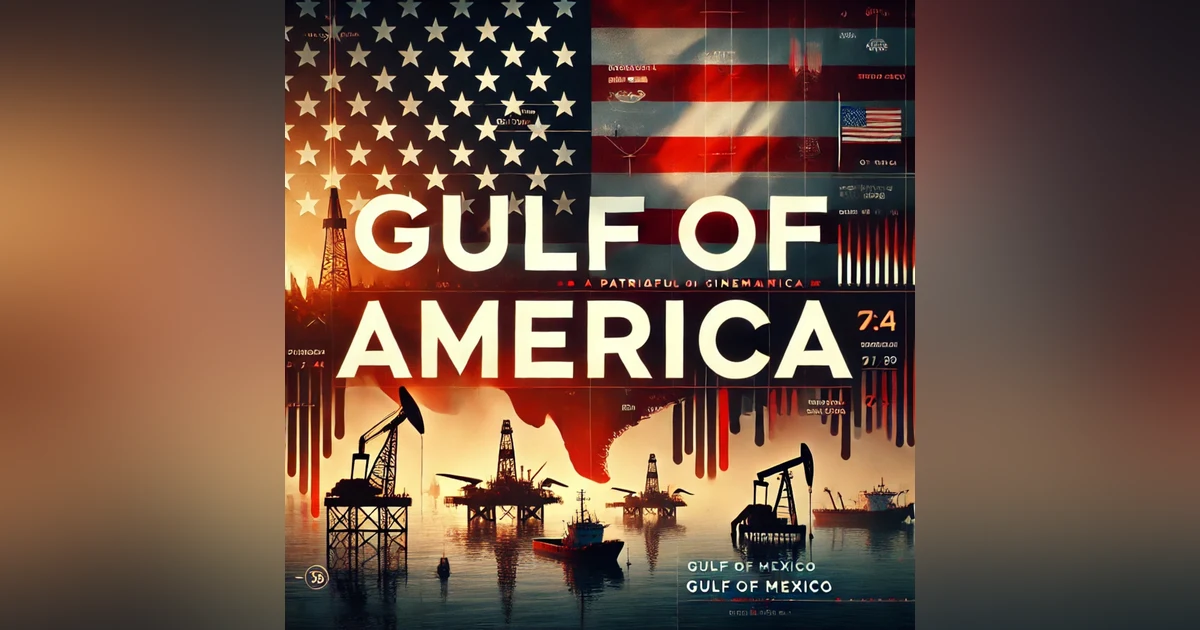
Welcome to Finance Frontier, part of the Finance Frontier AI podcast series, where we explore global financial trends, economic insights, and the forces shaping our world. In today’s episode, “Gulf of America: The Bold Renaming That’s Redefining Power,” Max and Sophia dive into the implications of President Donald Trump’s executive order to rename the Gulf of Mexico as the Gulf of America.
We’re hosting this episode from the vibrant city of New Orleans, where the Mississippi River meets the Gulf. Imagine the historic streets of the French Quarter blending with the towering offshore oil rigs that power the region—this is a city of resilience and transformation. The renaming of the Gulf isn’t just symbolic—it’s a provocative statement about leadership, identity, and dominance in a world of shifting power dynamics.
Join us as we uncover how this bold move is reshaping the Gulf’s future, influencing energy markets, geopolitics, and the communities that depend on it.
📰 Key Topics Covered
This episode unpacks the far-reaching consequences of the Gulf’s renaming, examining its role in geopolitics, economics, and environmental stewardship:
Geopolitical Stakes: How renaming the Gulf asserts U.S. leadership on the global stage while sparking diplomatic challenges. Economic Powerhouse: The Gulf’s contribution to U.S. oil production, trade, and infrastructure, alongside its untapped potential in renewables. Cultural Legacy: What this renaming means for communities along the Gulf and the shared history with neighboring countries. Environmental Challenges: Climate risks, from hurricanes to eroding coastlines, and how these impact the Gulf’s future.Max and Sophia break down these themes, offering insights that provoke thought and inspire action.
🧑💼 Real-World Industry Insights
Step inside the dynamics shaping the Gulf’s transformation:
Energy Independence: How the Gulf supports U.S. energy security through oil production and emerging renewable projects like offshore wind. Trade and Diplomacy: The Gulf’s critical role in global shipping and how this renaming impacts relations with Mexico. Investment Opportunities: From infrastructure to climate resilience, the industries poised for growth as the Gulf evolves. Environmental Costs: The challenges of managing rising sea levels, hurricane risks, and oil spill mitigation in the Gulf.Whether you’re an investor, policymaker, or curious about global economics, this episode provides the insights you need to navigate the opportunities and risks ahead.
🎯 Key Takeaways
The renaming of the Gulf of Mexico to the Gulf of America represents more than a name change—it’s a bold statement about power and opportunity.
Geopolitical Leadership: The U.S. reasserts its influence in a critical global region, sparking both pride and controversy. Economic Opportunities: The Gulf remains a cornerstone of U.S. energy and trade, while renewables open doors to new markets. Cultural Significance: Balancing national pride with shared heritage is essential to navigating this transformation.The Gulf of America’s story is just beginning, and it’s one you can’t afford to miss.
🌐 Explore More Strategies and Insights
Visit https://www.financefrontierai.com/ to access all episodes grouped by series—AI Frontier AI, Make Money, Finance Frontier, and Mindset Frontier AI.
Follow us on Twitter.
Sign up for our newsletter to get in-depth insights, investment strategies, and the latest developments in AI and finance.
0:20 What if a single act could rewrite the identity of an entire region? Imagine this. We're in the vibrant heart of New Orleans, standing at the edge of the Mississippi River as it spills into what was once known as the Gulf of Mexico. Now, this iconic body of water has a new name, the Gulf of America. The change, driven by President Donald Trump's executive order, is more than a rebranding. It's a bold declaration of US leadership. The Gulf has always been American, Trump proclaimed, a statement hailed by supporters as reclaiming national pride and asserting America's rightful place on the global stage. Max New Orleans feels like the perfect place to start this conversation.
1:06 It's a city built on resilience, shaped by trade, storms and cultural exchange. From the French Quarter to the sprawling oil rigs offshore, the Gulf has always been more than just geography. It's been a lifeline. Renaming it underscores America's commitment to its economic interests and reinforces our nation's leadership in global affairs. And that's the real question, Sophia. What does this rebranding mean for the people and industries tied to the Gulf? For centuries, the Gulf of Mexico has been an artery of global trade, supporting everything from Spanish treasure ships to modern energy exports. Now the Gulf of America takes its place, signaling a shift in narrative, if not reality.
1:54 But as Mexican President Claudia Scheinbaum said, for the world, this is still the Gulf of Mexico. Her words capture a brewing tension. Does the name change erase shared history or does it reflect the truth about US influence? The Gulf isn't just a body of water, it's an economic powerhouse. Offshore oil rigs generate 15% of U.S. oil production, employing thousands and contributing billions in revenue. Beyond oil, it's a lifeline for fisheries, tourism and shipping. Renaming it raises questions. Does this redefine its ownership? And how will neighbors like Mexico interpret this move? Is it a unifying vision or an assertion of dominance? And let's not forget the environmental stakes. The Gulf is no stranger to disaster. From hurricanes to oil spills, the Deepwater Horizon spill in 2010 is still etched into public memory. Critics argue that renaming the Gulf doesn't address these vulnerabilities.
2:53 Instead, it risks politicizing a region that needs cooperation more than ever. The question remains, is this a bold vision for the future or a short sighted play for power? Max What strikes me is how this move resonates emotionally. For some, it's a source of pride, a claim to a region they see as inherently American. For others, it feels like erasure, ignoring centuries of shared history and cooperation with neighboring countries. The Gulf has always been a point of connection, but could this renaming make it a point of contention? Whether you view it as a political statement or an act of national pride, one thing is clear. This story is far from over.
3:38 The Gulf of America is a new chapter in a long history, one that will shape how we see this region for generations to come. Before we go further, make sure you subscribe on Spotify, an Apple podcast so you never miss an episode, and for more insights, follow us on Twitter. Visit financefrontier.com to explore grouped episodes from all our series. When you think about the Gulf, now called the Gulf of America, what comes to mind for most it's oil rigs rising like steel giants from the waves. This isn't just a waterway, it's one of the most critical engines of the US economy. The Gulf produces nearly 15% of the nation's oil and gas, powers millions of homes and businesses, and generates billions in federal revenue. But this rebranding raises a provocative question. Does claiming it as America's Gulf reflect economic reality? Or does it distort the complexity of its shared heritage?
4:35 Max, It's no exaggeration to say that the Gulf fuels America, literally and figuratively. Offshore platforms pump millions of barrels of oil every day, driving industries from energy to transportation. But it's not just about what's beneath the surface. The Gulf is also a hub for fisheries, supporting a $24 billion seafood industry and a vital artery for global shipping. Every year, cargo worth hundreds of billions flows through its ports, linking the US to markets in Europe, Latin America and Asia. And let's not forget the people behind these numbers. From roughnecks working grueling shifts on oil rigs to small town shrimpers hauling in their catch, the Gulf sustains entire communities.
5:25 The renaming, some argue, is a nod to their contributions, a way to honor the backbone of the American economy. But there's another side to this story. How does Mexico feel about its shared waters being rebranded without its consent? Is this economic pride or is it economic provocation? It's a valid point. Mexico's economy is also deeply tied to the Gulf. Its ports, like Veracruz, are vital for trade, and its offshore reserves contribute significantly to national revenues. The renaming risks sparking tension at a time when cooperation is more critical than ever, especially as both nations face rising challenges like inflation, supply chain disruptions and energy transitions. Could this name change disrupt a partnership that's economically essential?
6:18 The Gulf is on the verge of transformation with projects like offshore wind leases, which could power over 3 million homes. These initiatives signal a bold shift toward energy independence and innovation, paving the way for America's leadership in the clean energy revolution. And then there's the environmental cost. Offshore drilling has long been criticized for its impact on marine ecosystems. Hurricanes better this region with increasing ferocity fueled by climate change. Critics argue that renaming the Gulf does nothing to address these existential challenges. Is the US doubling down on oil dominance at the expense of its climate commitments?
7:02 That's the paradox, isn't it? On one hand, the Gulf is the beating heart of US energy. On the other, it's a region on the front lines of climate disaster. The name change, bold as it may be, doesn't change the realities beneath the surface. Oil spills don't care about borders or politics, and hurricanes don't ask for permission. As the US asserts ownership over the Gulf of America, it also inherits the responsibility to protect it. The question is, will it rise to the challenge? It's a high stakes balancing act, leveraging the Gulf's economic potential while addressing its vulnerabilities. And for investors, this moment presents both risk and opportunity.
7:46 The energy transition is reshaping markets, and the Gulf is at the center of this shift. In the next segment, we'll dive deeper into the geopolitical implications of the Gulf of America and what this name change signals to the world. Imagine standing at the helm of a cargo ship navigating the Gulf. Sorry, the Gulf of America. Below, the waters churn with the weight of history. This isn't just a body of water, it's a geopolitical flashpoint. From oil routes to military strategy, this region is a stage for global power plays. But with this rebranding, the US has sent a message. This is our Gulf.
8:29 And not everyone is thrilled with that statement. Next, let's talk about what's at stake. The Gulf of America, or the Gulf of Mexico as it's still called by many, isn't just a resource, it's a crossroads. Every year, over 40% of the world's shipping passes through nearby waters, carrying everything from oil to electronics. By renaming it, the US has made a bold claim, but it's one that could ripple through diplomatic relationships, particularly with Mexico and Central America. And the tension is already palpable. Mexican President Claudia Sheinbaum didn't hold back, calling the move and unilateral assertion that disregards the region's shared heritage. She made it clear that Mexico will continue to call it the Gulf of Mexico, as will most of the world. This raises a crucial question.
9:21 Can the US rebrand a region without the buy in of its neighbors? Or does this risk further alienating its allies at a time when cooperation is critical? And let's not forget the broader geopolitical implications. The Gulf is a key player in energy markets, but it's also a military hotspot. the US Navy maintains a significant presence here, ensuring the security of vital shipping routes and monitoring regional threats. With the renaming, the US seems to be enforcing its dominance. But how will other powers interpret this move? Could it escalate tensions with nations like China, which already views US influence in the Americas as a challenge to its own global ambitions?
10:05 Sophia, the timing of this move is worth noting. BRICS nations Brazil, Russia, India, China and South Africa are already challenging US dominance on multiple fronts, from creating alternative payment systems to pushing for a new reserve currency. They're working to reduce reliance on the US dollar. By renaming the Gulf, the US appears to be drawing a line in the sand, signaling that it won't easily relinquish its position. But could this backfire by pushing allies closer to bricks? That's the risk Max Regional tensions could disrupt trade and cooperation at a time when global stability is already fragile. To take the energy sector, for instance, the Gulf is critical not just for oil production but also for refining and exports. Any breakdown in relations could have ripple effects, driving up costs and fueling inflation.
11:01 And with climate change adding pressure, the need for collaboration has never been greater. Sophia, there's also the issue of sovereignty. Renaming the Gulf is more than just an assertion of dominance. It's a challenge to the balance of power in the region. How do Mexico and other nations bordering these waters respond without escalating tensions? Could this decision be the first step in a larger strategy to consolidate US influence across the hemisphere? These questions don't just affect diplomacy. They affect trade, energy security, and even global perceptions of American leadership. And let's consider the historical parallels. During the Cold War, the US frequently used symbolic moves to assert its dominance in contested regions. The renaming of the Gulf has a similar flavor, bold, provocative and designed to project strength. But in an era of interconnected economies and shared challenges, is this the right approach?
12:01 Or does it risk isolating EU at a time when it needs allies the most? This is what makes the Gulf of America such a fascinating case study. It's not just about maps or names. It's about power, identity, and the delicate balance of international relationships. Whether this renaming is seen as an act of pride or provocation depends on who you ask, but one thing is certain, the world is watching. And as we look to the future, the big question remains, how will this bold move shape the region's geopolitical landscape? Will it strengthen the USS Hand, or will it strain the partnerships that make the Gulf so vital?
12:44 In the next segment, we'll turn our attention to the environmental and economic fallout of this decision, exploring what it means for the Gulf's ecosystems and economies alike. The Gulf of America, or as many still call it, the Gulf of Mexico, is more than just a geopolitical chess board. It's also an ecological hotspot, a cradle of marine biodiversity, and a lifeline for millions of people. But with this bold rebranding comes questions that go far deeper than national pride. What does this mean for the fragile ecosystems and economies that depend on these waters? Max the Gulf has always been a region of paradoxes. On one hand, it's a critical economic powerhouse, producing nearly 15% of the US oil supply.
13:34 On the other, it's a region under siege, battered by hurricanes, plagued by oil spills and increasingly threatened by rising sea levels. The name change might make headlines, but it doesn't address these existential challenges. And those challenges are immense. The Deepwater Horizon oil spill in 2010 devastated marine life, fisheries and local economies, and its effects are still being felt more than a decade later. Critics argue that renaming the Gulf does little to mitigate these risks. If anything, it risks politicizing a region that needs investment in sustainability, not rhetoric. And it's not just oil.
14:15 The Gulf is home to one of the world's most vibrant fishing industries, contributing $24 billion annually to the US economy. Shrimpers, oyster farmers and commercial fishers rely on healthy waters to make a living. Environmental degradation, whether from drilling, overfishing or climate change, threatens these livelihoods. Renaming the Gulf won't fix that reality. And then there's the question of climate resilience. Hurricanes are becoming more frequent and more intense, fueled by warming ocean waters. In 2021 alone, Hurricane Ida caused over $75 billion in damage. The Gulf's coastlines are eroding at an alarming rate, with some areas losing land at the equivalent of a football field every 90 minutes. If the US is claiming ownership of the Gulf, it also inherits the responsibility to protect it. But is that responsibility being met? That's the crux of the issue, Max Bold proclamations and new names won't stop hurricanes or rebuild wetlands. They won't clean up oil spills or reverse coral bleaching. Addressing these challenges requires cooperation, both within the US and across borders. And that brings us back to the question, Does this rebranding help foster collaboration or does it deepen divisions? The economic implications are equally complex. While the energy sector thrives in the Gulf, it's also a region of inequality.
15:47 Coastal communities are often the 1st to feel the impacts of environmental disasters, yet they see little of the revenue generated by offshore drilling. Critics argue that renaming the Gulf doesn't change this imbalance, it's simply glosses over it. Let's talk about renewable energy. The Gulf is poised to play a major role in the transition to cleaner energy, with offshore wind farms and solar installations gaining traction. But these projects require investment, long term planning and regional cooperation. Will the Gulf of America become a symbol of sustainable innovation, or will it remain tethered to fossil fuels? It's a high stakes gamble, Sophia. The Gulf represents opportunity but also risk for investors. This region could be a proving ground for renewable energy technologies and climate resilient infrastructure. But those opportunities hinge on action. Renaming it might grab headlines, but the real question is will it spark the investment and policy shifts needed to secure the Gulf's future?
16:52 And that's the paradox. The Gulf of America is more than a name. It's a challenge. A challenge to confront climate risks, to ensure economic equity, and to balance energy production with environmental stewardship. In the next segment, we'll explore the cultural and ethical dimensions of this bold move, diving into what the renaming means for the people who call this region home. Who has the right to rename a region like the Gulf of Mexico, a place with centuries of shared history, culture and identity? Is it an act of bold leadership, or something else entirely? Imagine you're in a small fishing village along the Louisiana coast. To you, this isn't the Gulf of America or the Gulf of Mexico.
17:37 It's simply the Gulf, a lifeline passed down through generations. What does a name change mean for people whose lives are so deeply tied to these waters? Max This is where the story gets deeply personal. For the people who live and work along the Gulf, the renaming isn't just a political statement, it's an emotional one. This region has long been a cultural crossroads, shaped by Native American tribes, European settlers, enslaved Africans and Mexican communities. To rename it without acknowledging that shared history feels to some like erasing it. And that's the tension, isn't it? On one hand, there's pride in reclaiming the Gulf as distinctly American.
18:22 On the other, there's a sense of loss, of ignoring the contributions of the diverse cultures that shaped its identity. Mexican President Claudia Schienbaum's response speaks volumes. For the world, it is still the Gulf of Mexico. Her words reflect a deeper question. Does this decision foster unity or division? Let's not forget the voices of indigenous peoples. Long before it was the Gulf of Mexico or the Gulf of America, this region was home to tribes like the Houma, Chittimosha, and Atacapa. Their histories are woven into the land and waters, yet they are often left out of these conversations. For many, the renaming feels like a continuation of a pattern, claiming ownership without acknowledging the full story.
19:13 Sophia, this isn't just about history. It's also about ethics. When a powerful nation unilaterally renames a region, what message does it send to its neighbors? To the world? Is it an assertion of leadership or is it perceived as arrogance? These are questions that resonate far beyond the Gulf itself, touching on issues of sovereignty, respect and how we share the spaces that connect us. And this plays out on a smaller scale, too. Think about the coastal communities in Texas, Louisiana, Mississippi, Alabama and Florida. For many of these towns, the Gulf isn't just a body of water. It's their identity. It shapes their food, their music, their economy. The renaming might make some feel proud, but others could see it as a disconnect from the traditions and heritage that define them.
20:05 For a fifth generation shrimper in Louisiana, the Gulf isn't just a body of water. It's their lifeline, their heritage, and their future. Renaming it to the Gulf of America aims to honor that legacy, strengthening their connection to this vital region and reaffirming its importance to our nation. And it's not just about economics, Max. There's also a question of who gets to write the story of the Gulf. Naming is power. It's a way of shaping how people see a place and its role in the world. By calling it the Gulf of America, the US is staking a claim not just on the waters, but on the narrative itself.
20:46 But is it the right narrative? That's the heart of the debate, Sophia. The Gulf has always been a place of connection, where cultures, economies and ecosystems intersect. Renaming it might strengthen one perspective, but at what cost to the others? Is it possible to assert pride without erasing the shared history that makes the Gulf so unique? And that's the ethical dimension we need to confront. Names carry weight. They tell stories. They shape how we understand a place and its people. The Gulf of America might feel like a bold statement, but for many, it raises more questions than answers. In the final segment, we'll explore what this means for investors and future of this iconic region.
21:31 Stay with us. As we bring this journey across the Gulf of America to a close, it's time to shift our focus. Behind every bold move, like renaming an iconic region, there's opportunity. The Gulf isn't just a body of water, It's an engine of economic growth, a hub of energy production, and a frontier for innovation. For investors, the question isn't whether to pay attention, it's how to position yourself to thrive in a region defined by both risk and reward. Max, you're right, the Gulf has always been a land of opportunity. But this branding adds a layer of intrigue. For decades, this region has been synonymous with oil and gas. It's home to offshore platforms that supply nearly 15% of US energy needs.
22:19 But as the global energy landscape shifts, so do the opportunities. Investors are now looking at wind farms, solar projects and even carbon capture technologies as the next frontier in the Gulf. And let's not forget the critical role of infrastructure. The Gulf's ports are among the busiest in the world, handling hundreds of billions in trade annually. With increasing investment in modernizing these facilities, think automated systems and greener technologies, the shipping industry is ripe for growth. Companies that provide logistics solutions, shipping services or port upgrades could be big winners in this evolving landscape. But it's not just about energy and trade. The Gulf is also seeing a boom in ecotourism and sustainable fisheries.
23:09 As more consumers demand ethically sourced seafood and carbon neutral travel options, businesses that align with these trends could gain significant market share. Investors should watch for companies integrating sustainability into their operations. It's not just good ethics, it's good business. Of course, with opportunity comes risk. Hurricanes remain a constant threat, causing billions in damages each year. Climate change is amplifying these risks, making resilience a key factor for companies operating in the region. Insurers, infrastructure developers, and even tech firms specializing in disaster preparedness could find themselves at the center of this growing market. With the US reasserting its leadership over the Gulf, investors are presented with significant opportunities in a region poised for growth and innovation. This is a moment to capitalize on America's renewed focus on energy, infrastructure and global influence. So what's the playbook for investors? Start by diversifying.
24:16 Energy remains a cornerstone, but don't overlook emerging sectors like renewables and green logistics. Explore ETFs focused on Gulf related industries or companies investing in the region's infrastructure. And keep an eye on geopolitical developments. They could create both risks and opportunities in the months ahead. And for those who want to think long term, this is a moment to explore investments and climate resilience. From seawall construction to sustainable energy grids, the Gulf's future will be shaped by how well it adapts to environmental challenges. The companies leading these efforts are likely to see strong returns, especially as federal and state governments ramp up spending on climate initiatives. The Gulf of America is more than just a name. It's a symbol of transformation, economic, environmental and geopolitical.
25:09 For investors, it's a region that demands attention not just for its risks, but for its unparalleled potential. The question isn't whether the Gulf will change, it's how you position yourself to benefit from that change. Visit financefrontier.com today to explore grouped episodes from all our series. The Gulf of America's story is a testament to our nation's strength and resilience. Join us as we celebrate this bold new chapter in American history and explore the opportunities it creates. Music in this episode, including Not without the rest by Twin Musicom is licensed under the Creative Commons Attribution 4 Point O License Copyright 2025 Finance Frontier AI.
25:55 All rights reserved. This content is for educational purposes only and does not constitute financial, business, or investment advice. Always consult a licensed rofessional before making any financial decisions. Unauthorized reproduction or distribution is prohibited.


