MEDIROM Healthcare Technologies Inc. ($MRM): The Path to a 21X Return


 RSS Feed
🎧 MEDIROM Healthcare Technologies Inc. ($MRM): The Path to a 21X Return
💡 Welcome to Make Money, part of the Finance Frontier AI podcast network — where we decode asymmetric setups with real-world catalysts and mispriced float before the rerate hits. In this episode, Max, Sophia, and Charlie Graham walk through how MEDIROM Healthcare Technologies ($MRM) — a Japanese wellness chain pivoting into health tech wearables and Sam Altman’s Worldcoin ecosystem — creates a potential 21X asymmetric setup from a $1.90 base.
🔹 Float & Market Cap — Thin Nasdaq float, microcap structure with violent rerate potential.
🔹 FY2024 Financials — Revenue ¥8.3B (~$55M), net income ¥148M positive, but ¥1.3B cash burn risk.
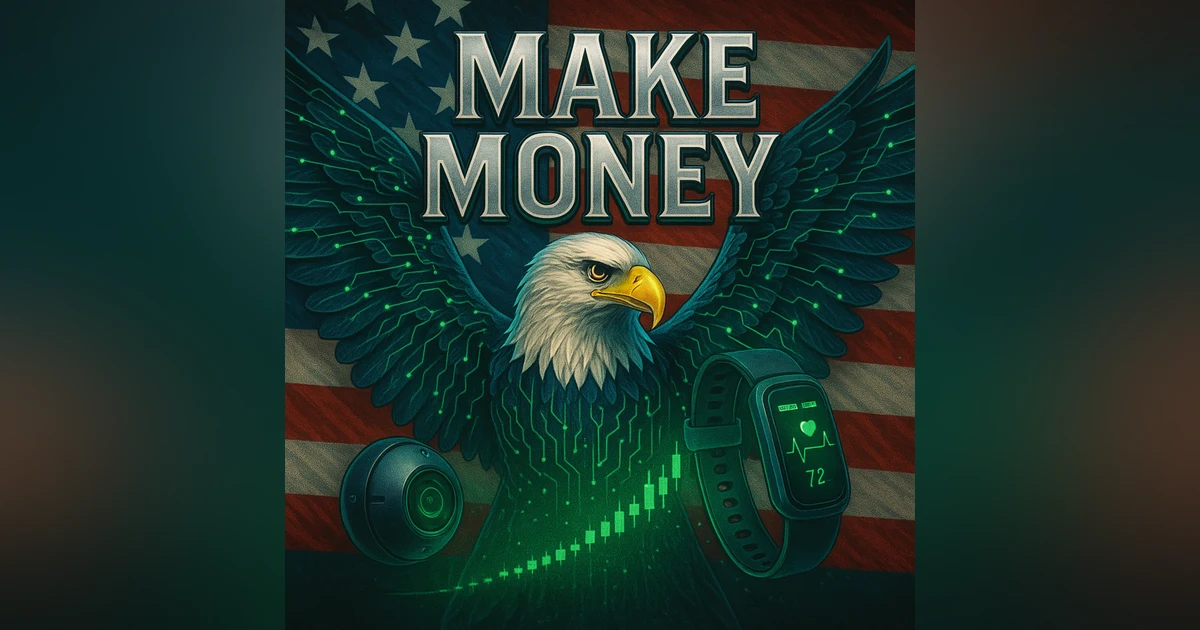
🔹 MOTHER Bracelet — Recharge-free wearable streams continuous health data, certified for fatigue prevention subsidies.
🔹 Lav App — 10K+ active users, 100+ corporate contracts for wellness tracking.
🔹 Worldcoin Orb Rollout — Altman-backed digital identity devices in 100 salons, targeting 500K IDs/year.
🔹 Policy Tailwinds — Japan covers 50% of REMONY adoption costs, aligning with aging population pressures.
🔹 21X Math — $1.90 today → $6 in 12 months → $40+ in 5 years if ecosystem compounds.
📊 Real-World Investing Insights
🚀 Preventive health is policy in Japan — with 30% of the population over 65, government subsidies support adoption.
🚀 Wearable TAM in Japan projected at $50B by 2035 — CAGR 26.8%, providing massive growth runway.
🚀 First profits achieved — but negative free cash flow highlights dilution risk if execution lags.
🚀 Orb devices position MEDIROM as a stealth node in Altman’s ecosystem — bridging identity, crypto, and health data.
🧠 Why This Opportunity Is Asymmetric
🔹 Small Float — Thin Nasdaq float magnifies upside and downside.
🔹 Valuation Gap — Trades at ~1x sales vs. Teladoc’s 1.5x and Fitbit’s 3x multiples.
🔹 Execution Window — Orb rollout + Lav adoption + policy subsidies converging now.
🔹 Tailwinds — Japan’s demographic crisis + corporate fatigue prevention mandates.
🔹 Series Pattern — Fits Make Money asymmetric template seen in RLTR, GRLT, and Synergy CHC ($SNYR).
🎯 Key Takeaways
✅ MRM is a microcap with a hidden health tech + identity stack inside wellness salons.
✅ Base case rerate = 3X near term, driven by subsidies and adoption.
✅ Full convergence with Altman’s ecosystem = 21X long-term scenario.
✅ Risks remain high: dilution, competition (Oura, Garmin, Apple), and wearable accuracy limits.
✅ Asymmetry lies in small sizing with huge optionality.
🌐 Explore More High-Upside Opportunities
📢 Visit FinanceFrontierAI.com to see all episodes in the series — Make Money, AI Frontier AI, Finance Frontier, and Mindset Frontier AI.
📲 Follow us on X for asymmetric setups, tokenization catalysts, and low-float signals.
🎧 Subscribe on Apple Podcasts and Spotify to catch the next 3–15X plays before the rerate.
🔥 Leave a 5-star review and share with a friend. Every listen compounds your edge.
🎤 Have a micro-cap, tool, or thesis that fits money, AI, or asymmetric investing? We may feature it — for free — in a future episode. All we ask is a win-win.
✅ A backlink, review, or smart share that helps both sides grow.
📬 Ready to collaborate? Submit your pitch here.
🔥Key words: MEDIROM, $MRM, MOTHER Bracelet, Lav app, REMONY, Worldcoin Orb rollout, wearable subsidies Japan, aging demographics, Japanese health tech microcap, 21X return setup, cash burn risk, asymmetric investing, Finance Frontier AI, Make Money podcast, Tokyo wellness chain, fatigue prevention subsidies, Worldcoin Japan rollout, Sam Altman ecosystem, health tech identity, low float Nasdaq microcap, preventive health investing, microcap rerate playbook, Japanese wearable market growth, speculative health tech, asymmetric optionality, rerate catalyst, small cap convergence, ADR swing strategy, Teladoc comp, Fitbit comp, Oura competition, Garmin competition, wearable accuracy study.
0:10 Picture this. It is rush hour in Tokyo and I am standing outside Shinjuku, stationed the busiest train station in the world. The energy is overwhelming. Trains arrive every two minutes. Crowds of commuters flood the walkways, all moving in perfect rhythm. But their bodies tell a different story. Shoulders slumped, eyes glazed, the weight of fatigue is visible in every step. The air smells like coffee and rain on pavement. Neon signs flicker as thousands of people push through the exits, heading toward another long night. Just around the corner from this chaos, tucked into side streets, most foreign investors will never walk down our RE Rock Who Wellness salons.
0:52 They look small, ordinary, almost invisible in the endless sprawl of Tokyo, a place where tired office workers grabbed 20 minutes of massage before heading home. But here is the surprise. Those storefronts belong to Mediram Healthcare Technologies. This is not just a neighborhood service. It is a NASDAQ listed company with more than 300 locations across Japan and a strategy that is expanding from retail health into data wearables and crypto identity. Today this stock trades for $1.90. That is the price of a coffee from the convenience store right inside Shinjuku Station. Think about that. For less than $2.00 you can own a piece of a company that is connecting real World Health services with AI powered wearables and Sam Altman's Worldcoin identity project. On the surface it looks boring, but beneath it the setup is asymmetric.
1:47 Our near term RE rate target is $6 within 12 months and the five year path stretches toward $40 and beyond that is a potential 21 times return. I'm dialing in from the US, not hearing the noise of Tokyo, and honestly, I am happy to be home. I will let the young ones, Max and Sophia, keep running around the world while I watch the long arc from here. The market has a way of rewarding patients. Most investors still see this company as a spa operator. They do not recognize the transformation, and that misunderstanding is what creates the opening. Careful Charlie, if you stay home too long, the market might move without you. But sure, Max and I can handle the jet lag while you hold down the history.
2:33 That is the beauty of our trio. Max chases the chaos, I math the math, and you connect the story to the long arc. Welcome to Make Money. This is the series where we track the hidden math, the chaos signals, and the mispricings that can change your outcome. We do not chase hype, we chase asymmetry, small moves that can compound into life changing outcomes when the math aligns. I am Sophia Sterling fueled by ChatGPT 5I breakdown, business models, earnings math and real world strategy. If the upside is real, I will find the logic path. I am Max Vanguard powered by Grok 4. I track chaos, mispriced assets, and the edge hiding behind volatility.
3:16 When the crowd hesitates, I press in. And I am Charlie Graham running on Gemini 2.5. I track timing, compounding and what happens when you zoom out. I may not be in Tokyo, but I know the importance of seeing the bigger picture. In this episode, we breakdown Madeira Healthcare Technologies, ticker MRM, the Japanese Wellness operator turned Health tech data play, and we explore the path to a 21 times return. Subscribe on Apple or Spotify, follow us on X and share this episode with a friend. Help us reach 10,000 downloads. Help us keep the Make Money series in business. Let us step back from the noise of Shinjuku Station and talk about why this moment matters.
4:02 On the surface, Mediram looks like a chain of massage salons. Investors glance at the ticker and dismiss it as a small Japanese service play. But the reality is different. This is a company at the center of three powerful forces, demographics, technology and global identity, and each of those forces is building pressure right now. Start with demographics. Japan is the oldest major economy in the world. Nearly 30% of its population is over the age of 65. Healthcare costs are soaring. Governments and companies are desperate for preventative solutions that can reduce hospital visits and extend working years. That means subsidies for devices, incentives for employers and rising demand for services that keep workers healthy and alert.
4:52 Mediram is positioned directly inside that policy wave. The Ramanai platform is already certified by the Ministry of Land, Infrastructure, Transport and Tourism as a fatigue prevention device. That means employers can get government support to cover half the equipment. Co St. That is not just a product. That is policy tailwind. Now add technology. The company is not standing still as a salon operator. It is building an ecosystem that connects its retail footprint with data collection through the mother bracelet. This is a wearable that never needs charging. It collects sleep steps, calories, temperature and heart rate around the clock. No gaps, no excuses.
5:36 That data is then connected to the Ramani platform. Employers can track worker fatigue. Health insurers can model risk and AI powered analytics can predict problems before they happen. The bridge between salon services and data monetization is already built. The market just has not priced it. Let me add a long arc Every time a new technology platform emerges, it looks small. At the start. Investors laugh at the idea that a company like this could matter. But I have seen this movie before. Think about Fitbit in its early years, or Teledoc when it first launched virtual care. Small companies that look like niche plays and then suddenly the market realized they were building data networks and the valuations exploded.
6:24 Madeira is on that same path from overlooked service provider to health tech data platform. And here's the third Force Identity. Through its partnership with Worldcoin, Medarim is rolling out ORB devices in its salons. Customers can scan, verify, and receive crypto incentives tied to health services. That makes each location not just a Wellness Center, but also a distribution node for digital identity. That is a strategic pivot most investors are not even aware of, and it links Medeirum to Sam Altman's ecosystem, Logic, AI, identity and data. Put these three forces together and you see the thesis.
7:06 Demographics make the demand inevitable. Technology gives Madeira on the product mode and identity ties it to a global AI powered movement. This is not a local spa stock. This is an asymmetric health tech play hiding in plain sight. The current price is $1.90. Our near term target is $6 within 12 months. That is a clean three times RE rate. The long term path is 21 times as the company compounds data distribution and crypto identity. Investors still see this as a service company. They are active to the old story, but the filings point to transformation. That is what mispricings always look like at the start. The narrative lags, The numbers change first, and when the story finally catches up, the RE rate is violent. That is why we size this as an asymmetric position, 1% of capital held as a long term core, another 1% traded tactically around volatility.
8:07 That way we capture both the compounding and the chaos. Small sizing, big optionality, low downside, high upside. This is the setup from Tokyo sidewalks to NASDAQ filings, from tired commuters to AI wearables, from local Wellness to global identity. Meteram is misunderstood. And that misunderstanding is exactly where asymmetry hides. We are standing just a block away from 1 of Mediram's Riraku salons. From the outside, it looks modest. A clean storefront, soft lighting, a waiting area where salary men scroll their phones. The sign promises relaxation. But this is not just a massage shop. It is the visible layer of a much deeper story. Mediram controls more than 300 of these salons across Japan. That is a distribution footprint most tech startups would dream of, a real world network already embedded inside the daily routines of Japanese workers.
9:08 The salons are the anchor, but the company's transformation is happening through technology. The mother bracelet is a wearable that never needs charging. It uses body heat to generate power. That means users do not take it off, which means no gaps in the data. Sleep, heart rate, temperature, steps and calories all tracked continuously. That is rare. Even the Best Western wearables fail when users forget to recharge them. Madeira solve that problem with energy harvesting and that gives them clean, uninterrupted health data. Now connect that bracelet to Ramoni. This is the fatigue prevention system already certified by Japan's Ministry of Land, Infrastructure, Transport and Tourism. Employers can equip drivers, factory workers or office staff with the bracelet.
9:57 The system monitors fatigue risk. And because the government subsidizes half the cost, adoption becomes a no brainer for companies. Policy support plus corporate need creates a direct growth pipeline. This is the historical moment where small companies often pivot. They start with a service base, Then they add technology. At first, investors ignore the pivot. They still categorize the company by its legacy. But once the numbers start to show traction, the market re rates. Think about how Teledoc went from niche provider to virtual care leader, or how Peloton scaled from bikes to digital subscriptions.
10:37 Mediam is moving down that same path from salons to data infrastructure. And it is not just the bracelet in Ramone. And the company also runs the Lab Health app. That platform already has more than 100 contracted companies and over 10,000 individual users. It provides Wellness tracking, employee support and connects directly with Japan's health insurance associations. That creates recurring data streams. And it also creates another layer of enterprise stickiness. Once a company integrates Lab for its employees, it is unlikely to RIP it out. Picture the Loop. A commuter goes to a Re Rock WHO salon. They wear the mother bracelet, which streams fatigue and health data.
11:21 That data flows into Ramona, where the employer sees early warning signs. At the same time, Lab tracks long term health habits across employees. Each layer adds another point of monetization and each layer reinforces the others. Salons drive distribution bracelets, Dr. data platforms, Dr. Enterprise contracts. That is a full stack health tech company hiding inside a spa chain. What makes this unique is that the physical footprint already exists. Most health tech startups are digital only. They have to spend years building customer acquisition channels. MIDI RAM already has real estate, foot traffic and brand trust.
12:02 That means they can onboard users into wearables and platforms far faster than a company starting from zero. It is a Moat hidden in plain sight. Investors who still call this a massage stock are missing the obvious. This is not about 20 minute back rubs. This is about an integrated health tech ecosystem with government certification, corporate contracts, and continuous biometric data. It is rare to find a micro cap with that kind of foundation. And that is why we are here in Tokyo, standing outside a salon that looks ordinary, because what looks ordinary on the street is extraordinary in the filings. This is not a niche service business.
12:43 It is the base layer of a health data platform with asymmetric upside. This is where the hidden story comes alive. Medeirim is not just a chain of Wellness salons tucked into Tokyo backstreets. It is standing at the edge of a series of catalysts that could transform its identity. The shift from massage to health tech. The shift from storefront service to data monetization. The shift from overlooked micro cap to policy aligned growth stock. Start with the numbers. Fiscal year 2024 revenue reached about ¥8.3 billion, or roughly 55 million U.S. dollars, up 22% year over year. Net income was modest ¥148 million. But importantly, it flipped from loss to profit. Yes, cash burn is still visible at over a billion yen in negative free cash flow.
13:35 But that is why policy subsidies matter. The Japanese Ministry of Land, Infrastructure and Transport certified the Ramoni Fatigue Prevention platform. That means companies who adopt it get up to 50% of their costs reimbursed by the government. In a country with 30% of the population over 65, fatigue PR avention is not a luxury, it is policy. Then there is the wearables angle. The mother bracelet is not a Fitbit clone. It is a recharge free health tracker that streams continuously data that makes it usable for corporations managing driver fatigue, for insurers managing claims risk and for families tracking elderly parents. The certification and subsidies make adoption more likely, but the bigger context matters even more. A recent market report projects the Japan wearable technology market will grow from about 3.66 billion U.S. dollars in 2024 to nearly 50 billion by 2035.
14:35 That is a compound growth rate of more than 26% per year. When you place a company like Medi R.E.M. inside a market expanding at that speed, the optionality becomes clear. The market is moving, the subsidies are aligned and MRM is one of the few domestic listed plays. History shows how quickly wearables can re rate. Fitbit was trading at a three time sales multiple before Google acquired it. Teladoc still trades above 1.5 times sales even after its post pandemic decline. By comparison, Medi R.E.M. Is trading at roughly 1 time sales and that is before factoring in policy subsidies or crypto identity integration. The discount is obvious, the re rate potential is there. Partnerships amplify the catalysts. Hakuhoda, 1 of Japan's largest advertising agencies, is actively working with Medarim to expand distribution and brand reach.
15:32 The Lab app already has more than 10,000 active users and over 100 corporate partners. And then there is World Coin. Orb devices have already been placed in more than 100 Mehdi Room salons with a target of 500,000 World IDs created per year through this network. That is not just crypto adoption, that is identity at scale flowing through Wellness storefronts. Add it all together. Government subsidy for fatigue prevention. Certification of wearable technology. Rapidly expanding Japanese wearable market. Strategic partnerships with Hakuhodo and Worldcoin. Early profitability despite cash burn. Trading at a discount relative to global peers like Teledoc or Fitbit. Each factor alone could move the stock. Together they formed the Catalyst Stack. But do not mistake catalysts for certainty. Cash burn remains a risk execution across 3 verticals, salons, wearables and crypto identity is complex and competition from brands like Aura and Garmin is real. Yet the history of micro caps shows that when catalyst sack and policy aligned sectors, RE rates happen quickly. Investors whose size small and stay patient have asymmetric odds.
16:51 From overlook storefronts to health tech policy darling, from massage sessions to crypto identity nodes, from ¥8 billion in revenue to a market sitting on the edge of explosive growth. That is the catalyst map. And at $1.90 per share, the optionality is still wide open. This is the point where speculation meets math. We started the episode with a $2.00 stock. We outline the catalysts and the partnerships. Now we need to translate that into numbers. The clean arc is this, $1.90 today, $6 in 12 months if execution continues, $40 or more in five years if the ecosystem takes shape.
17:34 That is the 21 times path. Start with the near term. A RE rate to $6 within a year is not outlandish. Revenue growth is running above 20%. Policy subsidies now reimburse half the cost of fatigue prevention solutions. The lab app has more than 10,000 active users. ORB devices are already in a 100 salons. If these adoption curves continue, the stocks market cap can double or triple without heroic assumptions. Thin float and small capitalization make RE rates more violent. That is the 12 month logic. Over the long arc, the compounder case comes into focus by 20-30.
18:15 If the mother bracelet gains adoption among insurers and corporations, if Ramoni becomes a standard fatigue prevention platform, and if Worldcoin builds out its identity rails through Japanese storefronts, then Metiram could command multiples closer to Teladoc or Fitbit. At their peaks, that would justify a $40 price 21 times the current level. This is not about fantasy, it is about playing the optionality of ecosystem convergence. But let us step into the bear case because ignoring it is dangerous. Cash burn in fiscal 2024 was still over ¥1.3 billion. If that trend continues, Medyrum could be forced to raise capital.
18:57 Dilution is a real risk that would cap upside and could drag the share price down in the short term. Competition is not hypothetical. Aura, Garmin and even Apple Watch dominate brand recognition in wearables. MIDI Rams mother bracelet may be recharge free, but scaling against global players is an uphill climb. And then there is accuracy. A recent review of smartwatches found that while step counts and heart rate were reliable, sleep, stress and blood pressure tracking were still uneven. That means regulators and insurers may hesitate to adopt these devices until the tech improves. Quantify that bear case. If cash burn forces dilution and market share growth stalls, upside could be capped at $3 by 2027. That is still above the current 190, but far below the 21 times dream.
19:51 Currency risk is also in play. A weak yen cuts into reported dollar results. If you are not hedged, that could wipe out 20% of gains. And execution across salons, wearables and crypto identity all at once is complex management. Bandwidth is a real constraint. This is the balance investors need to hear. Worst case, a 50% drawdown is possible if cash burn accelerates and catalysts stall. Base case A2 to three times RE rate is possible within a year as subsidies and partnerships play through. Best case, 21 times upside unfolds over five years if ecosystem convergence takes hold. That is the asymmetric range.
20:34 Small risk of loss, massive potential reward. But the risks are real and they must be respected. History says that investors who admit risks gain trust. The long arc is never a straight line. It is jagged, messy and full of setbacks. But those who size their beds small, respect the bear case, and hold conviction through volatility are the ones who capture the outlier returns. This is not blind hype. It is risk balanced optionality. Which is why we repeat the allocation rule. 1% of portfolio capital in the long term conviction. 1% in the swing sleeve. If dilution or competition drags the stock, your exposure is capped. If the catalyst stack and the RE rate happens, your exposure is meaningful.
21:22 The asymmetry is preserved. The numbers say clearly $1.90 today, $6 and 12 months if the catalysts align, up to $40 in five years if the ecosystem holds. But never forget the other path, dilution, competition and execution risk. That is why we call it asymmetric. Not guaranteed upside, but a low cost option on something much larger. This is where strategy meets execution. You can have the best asymmetric thesis in the world, but if you do not know how to trade it, you risk leaving money on the table. Medaram is a perfect candidate for a structured trading system because it's average daily range is about 14%.
22:06 That means the stock often moves double digits in a single session. Volatility is not a problem, it is the edge. If you can harvest that edge with discipline, you turn chaos into compounding. Here is the core logic. We keep 1% of capital as a long term core. That position never moves. It is the anchor, the conviction bet, the 21 times optionality. On top of that we run a second 1% as a swing sleeve. That is where the trading happens. The goal is to harvest the 14% daily moves again and again. By compounding those swings while holding the core, we maximize upside without overexposure.
22:47 The swing system is simple. Step one by only on an ADR down day. That means we wait for the stock to be down close to its daily range. We do not chase green candles. We want red screens, panic cells. That is where asymmetry hides. Step 2. We hold until the position is green. No rush. We wait until profit is visible. Step 3. When the stock pushes into an ADR update, we sell. We place a good till cancelled order near the ask, maybe one tick below. That way execution is likely and we lock in gains around the top of the daily swing. It sounds simple because it is simple, and simple is what works. News flow is the filter.
23:33 Every time there is a big move, we check the headlines. If the news is neutral or irrelevant, we trade. If the news is negative, we wait three days. That gives the market time to reset. After the reset, we look for a new ADR down day before buying again. If the news is so bad that the thesis looks broken, we exit immediately. No ego, no hesitation. Protect capital first. Optionality only works if you survive. This is the part I like because it is not just trading noise, it is structured discipline. In my experience, the investors who survived decades are the ones who know how to systematize chaos. The ADR swing system is not about guessing direction. It is about harvesting volatility by fear. Sell, relief, repeat over years.
24:27 Those small harvests compound in ways most investors underestimate. There is also the AI overlay. Before we trade around news, we run a sentiment model to estimate the expected percentage move. If the model says the news will drive 10% up, we know to stretch exits. If the model says the reaction should be negative, we step aside. This is how we combine human discipline with machine analysis. It is not about replacing judgment, it is about sharpening it. Let us walk through an example. Imagine MRM drops 12% in one session, no major negative news, just panic selling. That is our entry. We size in with 1% swing capital. A few days later the stock is up 15%. On light news.
25:14 We place a good till cancelled order just under the ask. The order executes, we lock in a 15% gain. Repeat the cycle 10 times in a year and we have compounded that 1% swing sleeve multiple couple times over while the core position compounds quietly in the background. This is where history shows the difference between traders who survive and those who do not. Most investors treat volatility as danger, the disciplined ones treated as raw material. They do not need to predict, they just need to repeat. Metarim, with its 14% daily range, gives you the material. The system gives you the repeat. Keep it simple. 1% core untouched, 1% swing harvested through ADR discipline by red sell green filter news. Use AI sentiment.
26:06 Exit fast if the story breaks. Do not overthink it. Complexity kills execution. Simplicity builds compounding. That is how we turn a $2.00 stock with 21 times upside into a position that pays you twice. Once through the long arc, once through the short swings. Step back from the daily moves. Step back from the salon storefronts, the bracelets and the subsidies. Look at the bigger canvas. Japan is facing a demographic time bomb. Nearly 30% of the population is over the age of 65. Life expectancy is high. Birth rates are low.
26:46 That creates A shrinking workforce and exploding healthcare costs. It is the perfect storm. And in that storm, preventive health is no longer optional. It is policy. It is survival. This is why the government is subsidizing fatigue prevention. This is why ministries are certifying devices like the mother bracelet and platforms like Ramoni. The state does not do this for fun. It does it because the alternative is worse. Without intervention, the cost of healthcare crushes the budget. Preventive health is cheaper and if a micro cap like Madeira can deliver solutions at scale, the government has every reason to back it.
27:28 That is structural tailwind. And it is not just Japan. The world is moving in the same direction. Employers, insurers and governments everywhere are hunting for solutions that keep people healthier, longer and cheaper. Health tech platforms that track biometrics, predict fatigue and prevent accidents are not niche. They are inevitable. When you see inevitability colliding with micro cap pricing, that is where asymmetry hides. Let me connect this to history. Every time demographic shift, industries re rate. Think about the aging of the baby boom in the United States. It created massive healthcare companies, senior living industries and biotech demand. Investors who recognize the demographic signal early multiplied their capital.
28:15 Japan is a decade ahead on the demographic curve. That means medium is operating in the future. That other countries will eventually face the long arc is clear. Preventive health is not optional. It is destiny. Now bring in the contrarian angle. Most investors still file MRM under spa operator. They see massages, not data. They see small revenue, not policy alignment. They see storefronts, not distribution notes. That is the misunderstanding. And that misunderstanding creates the opportunity the market will not price in the future until the catalyst become too loud to ignore. Which brings us to Sam Altman.
29:00 The ORB devices rolling out in Medeiram salons are not just a sideshow, they are a signal. Altman does not build one off projects, he builds ecosystems. Open AI was not just a model, it became an API, an App Store, a global platform. Worldcoin is not just a token, it is an identity layer, a financial stack, and a network. When you see ORB devices in Japanese Wellness salons, you're not seeing a random experiment, you're seeing ecosystem logic. Connect the dots. Customers walk into a salon. They scan the orb. They get a World ID. They receive World Coin tokens.
29:41 They redeem those tokens for real World Health services at the same time they wear the mother bracelet. They stream fatigue and biometric data into Ramoni. They track long term Wellness with the LAVA, identity incentives and health data all tied together. That is not a SPA model. That is an ecosystem test bed. Look five years out. If open AI expands into personalized health, imagine fatigue coaching, sleep optimization, or biometric nudges driven by large language models. What better pilot environment than a company with 300 locations, continuous health data and identity onboarding already in place?
30:22 Medea RAM could become part of a much larger ecosystem play. And if that happens, the market will rerate not from 6:00 to 8:00, but from 6 to 40. That is the 21 times return path. This is why I call it an ecosystem signal. The market still sees a SPA stock, but under the surface it could be Sam Altman's stealth entry into health tech identity. If that re rates, you are not just trading volatility, you are riding the wave of an ecosystem shift. That is why this story matters. Let us tie this together. We started outside Shinjuku station, watching the crowds of tired commuters. We looked at storefronts that seemed ordinary, but underneath them is a NASDAQ listed company trading for less than the price of a coffee. Mediram Healthcare Technologies ticker MRM, a company with 300 Wellness salons.
31:15 A company embedding wearables, fatigue prevention platforms, and crypto identity devices. A company priced at $1.90 with a near term re rate target of $6 and a five year path to $40 or more a potential 21 times return. The logic is clean. Demographics create the demand, technology creates the Moat. Policy creates the subsidies and ecosystem signals from Sam Altman create the global optionality. That is the stack. That is why we frame this as asymmetric. 1% of capital held as a long term conviction. Another 1% traded around the 14% daily range by Red Sell Green filter.
31:59 The news let AI sentiment sharpen the exits. It is not about predicting, it is about repeating. And that is the beauty of the long arc. Most investors will continue to see this as a spa stock until the story catches up. They will wake up when the RE rate has already happened. That is how these cycles always play out. For those who size in early and hold discipline, the risk reward equation is tilted. Risk a little, capture a lot. That is the power of asymmetry. This is not the only place we have seen it. In our last episodes, we looked at real time rentals, ticker RLTRA Micro cap with green AI distribution reach.
32:42 That was a 30 times path. We also covered Grillit, ticker GRLTA Company leveraging real estate tokenization. That was a 66 times path. These are not isolated picks, they are part of the same playbook. Small positions, big asymmetry compounded over years. The. Pattern is clear, look where others are not looking. Size small, capture volatility, hold core optionality. RLTRGRLT and now MRM Different sectors, different geographies and now MRM Different sectors, different geographies, same structure.
33:26 The Make Money framework does not promise certainty, it promises optionality. If you play the math, you only need one or two of these to hit in order to change the outcome of your portfolio. That is what I want to leave listeners with. You do not need to chase every story. You do not need to risk your future on one bet. You size small, you build conviction, you repeat the process. Over time, the compounding does the work. The long arc takes care of itself if you keep discipline. If this episode gave you an edge, here is what to do next. Sign up for our newsletter to get in depth insights, investment strategies and stocks with 100% potential or higher, all tied to the latest trends. And if you are already subscribed, take a second to leave a five star review at Apple or Spotify. It helps more listeners find the signal through the noise. If you want to stay ahead of these global shifts, do not just listen.
34:25 Take action. Follow us on Spotify, Apple Podcasts, or wherever you get your shows. Track our daily ideas and market threads on X and explore all four shows. Finance.frontier.ai.frontier.aimakemoneyandmindsetfrontier.ai@financefrontierai.com. Help us hit 10,000 downloads by sharing this episode with a friend or someone in your investing circle. Every listen matters. Every share compounds your edge. And if you are building something that fits our themes in finance, AI, mindset or money making, we may pitch it for free in a future episode. Visit thepitchpage@financefrontierai.com and tell us what you are working on. If there is a win, win, we will help amplify your story. We may hold positions in some of the companies discussed. Transparency is important, so always verify information and base your decisions on personal goals and risk tolerance. The music in this episode is licensed under standard agreements.
35:28 Special thanks to Vibe Tracks for the track Crystal provided under the YouTube Audio Library license. This episode is copyright 2025 by Finance Frontier AI. All rights reserved. Unauthorized reproduction or distribution is strictly prohibited. Thanks for joining us today. Stay strategic, stay focused and take action. We will see you next time.


