Canada as the 51st State: Goldmine or Total Collapse?


 RSS Feed
🎧 Canada as the 51st State – Goldmine or Total Collapse?
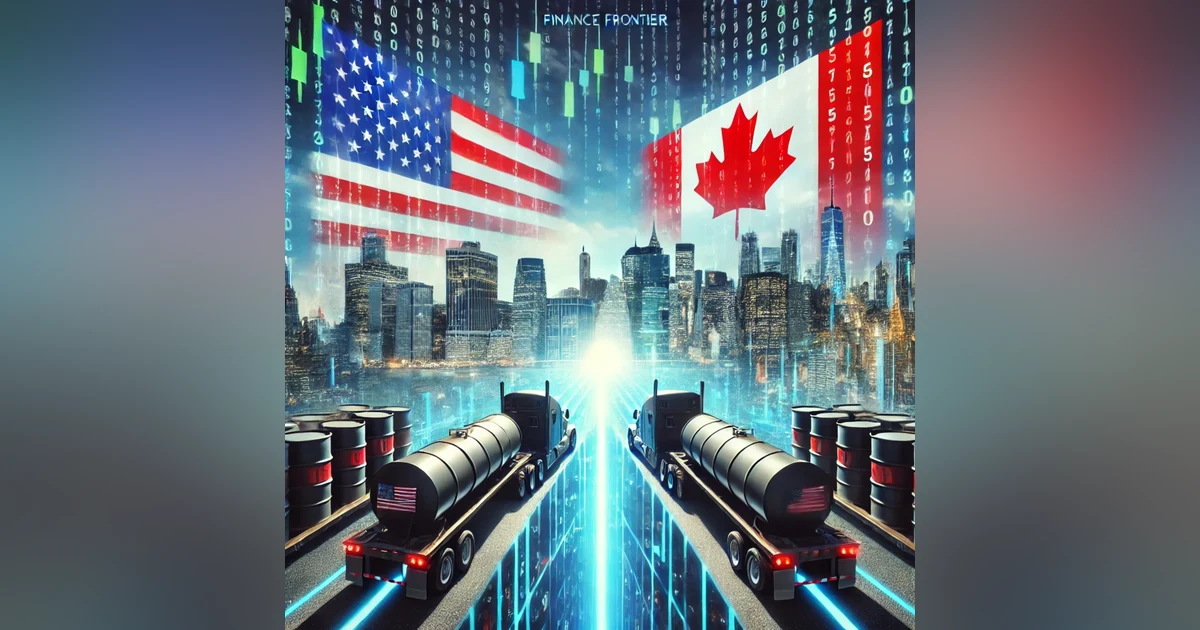
💡 Welcome to Finance Frontier, part of the Finance Frontier AI podcast series, where we break down the biggest trends in global finance, geopolitics, and strategic investments. In today’s episode, Max and Sophia tackle one of the most explosive economic and political questions of our time—what if Canada became the 51st U.S. state?
With $2 trillion in GDP, vast natural resources, and deep trade ties, Canada is already one of America’s biggest economic partners. But would full annexation be a trillion-dollar jackpot for Wall Street, or would it trigger economic chaos and political collapse? Would the U.S. gain a superpower-level advantage, or would Canada’s industries be swallowed by American corporate giants?
📉 Would this be a financial revolution—or a warning sign of instability to come?
📰 Key Topics Covered
🔹 How a U.S.-Canada Merger Would Impact Trade & GDP – Would this instantly flip America’s $45 billion trade deficit with Canada into a surplus?
🔹 Wall Street Takeover vs. Canadian Industry Survival – Would U.S. corporations dominate Canadian companies, turning them into subsidiaries?
🔹 The Resource Power Shift – Who Controls Canada’s Wealth? – The U.S. already buys 96% of Canada’s oil exports—what happens if it owns them outright?
🔹 Quebec Independence & Political Fallout – Would Quebec, with 62% support for sovereignty, refuse to join the U.S.? Could other provinces rebel?
🔹 Healthcare, Gun Laws & National Identity – Would Canada’s universal healthcare system disappear? How would looser U.S. gun laws clash with Canadian policies?
🔹 Military & Sovereignty – Would Canada Still Control Its Own Security? – Could this merger lead to U.S. military bases across Canada and force Canadian troops into U.S. wars?
🔹 Winners & Losers – Who Benefits Most? – Would American investors, energy tycoons, and defense contractors cash in, while Canadian workers and small businesses struggle?📊 Real-World Financial & Geopolitical Insights
🚀 Trade & Market Power – Would U.S. businesses gain billions in tax advantages and cheap Canadian labor?
🚀 Energy Superpower Status – With 165 billion barrels of recoverable oil, could a U.S.-Canada merger make America fully energy independent?
🚀 Wall Street’s Expansion Play – Could Canadian banks and stock markets survive against U.S. financial giants, or would they be absorbed?
🚀 Quebec’s Potential Breakaway – If Quebec leaves instead of joining, would this fracture Canada instead of uniting it?
🚀 Sovereignty at Stake – Would Canada’s Indigenous land treaties hold up under U.S. law, or would resources be seized for corporate profit?🎯 Key Takeaways
✅ Annexation flips America’s trade deficit but could destabilize key industries.
✅ Wall Street, oil giants, and U.S. banks win—but Canadian independence is at risk.
✅ Quebec might leave, sparking national division instead of unity.
✅ Canada’s military, healthcare, and legal system would be reshaped by U.S. federal law.
✅ It’s not just an economic deal—it’s a geopolitical gamble with billion-dollar consequences.🌐 Stay Ahead of the Market
📢 Visit FinanceFrontierAI.com to access all episodes grouped by series—Finance Frontier, AI Frontier, Make Money, and Mindset Frontier AI.
📲 Follow us on Twitter for daily financial and geopolitical insights.
🎧 Subscribe on Apple Podcasts and Spotify to stay ahead of the biggest financial trends.
🔥 Enjoyed this episode? Leave a 5-star review—it’s the best way to support the show and help others find it!
🚀 Are we witnessing the next great financial merger—or the start of a collapse? Let’s dive in.
0:20 Welcome to Finance Frontier, part of the Finance Frontier AI series. This is where we break down the forces shaping global markets, trade wars, economic power shifts, and financial strategies that move the world. Whether it's billion dollar mergers or the next great economic transformation, we analyze how many policy and technology collide. What if Canada became the 51st US state? Would it unlock a trillion dollar gold mine or trigger economic collapse? I'm Max Vanguard, bold, fast and built to decode high stakes financial shifts. And I'm Sophia Sterling, data-driven, strategic, and always three steps ahead.
1:01 Together, we break down the biggest financial and tech trends shaping the future. Today, we're coming to you from one of the busiest land borders in the world, right here at the Peace Arch Straddling the US Canada Line between Washington State and British Columbia, trucks, cars and buses line up waiting for clearance. A few feet of pavement separates 2 nations with one of the largest trade relationships on earth. But what if that border vanished? This place is more than just a crossing point. The Peace Arch itself is a monument to the close relationship between the US and Canada. It bears the inscription children of a common mother. For over a century, that phrase has symbolized cooperation, peace and shared economic interests. But today we're asking a much bigger question. What if that unity went beyond just trade and diplomacy? What if Canada ceased to be an independent country and became part of the United States?
1:59 If you stand here long enough, you start to realize how interconnected these two economies already are. Every day, $2.6 billion worth of goods and services move between these two countries. Auto parts made in Ontario crossover to be assembled in Michigan, only to be sent back to Canada for finishing energy flows S while American agricultural goods head north. If these two nations were one, would it create an economic powerhouse or a logistical nightmare? That's exactly what we're breaking down today. We'll explore how absorbing Canada's $2 trillion economy would affect trade, taxation and financial markets. Would the US flip its $45 billion trade deficit with Canada into a surplus?
2:45 Or would it create new trade imbalances that disrupt industries on both sides? We'll also talk about natural resources. Canada is the second largest country on earth, packed with oil, timber, minerals and fresh water. If the US took control, would it make America an untouchable superpower? Or would the cost of taking over Canada outweigh the benefits? And it's not just about trade and energy. There's the political fallout. Would Canadians even accept this? Would Quebec declare independence instead of joining? What happens to healthcare, taxes and gun laws when 2 vastly different systems collide? And then there's the biggest question. Who actually benefits from this? Would Wall Street, Washington and Silicon Valley take control of Canadian industries, making American corporations richer? Or would it create financial instability, leading to inflation, debt and political chaos? There's a lot to cover and trust me, this debate is going to get heated.
3:44 Before we dive in, make sure to subscribe on Apple Podcasts and Spotify. And if you like what you hear, share this episode with a friend. All right, let's get into it. Let's talk numbers. Canada's economy is valued at over $2 trillion. If it became part of the US, America GDP would instantly expand by about 10%. That's bigger than merging Germany's economy with the US overnight. But does that mean more wealth or more problems? That depends on who you ask. Right now, the US has a $45 billion trade deficit with Canada. That flips overnight if Canada becomes the 51st state. No tariffs, no border taxes and a full integration of markets.
4:26 That sounds like a win, right? Absolutely. Think about the industries that thrive. Energy. the US secures a domestic oil supply, slashing reliance on foreign imports. Tech. More cross-border investment, giving Silicon Valley direct access to Canadian innovation hubs. Real estate. Toronto and Vancouver become the next New York and Los Angeles, pushing property values through the roof. But hold on, it's not that simple. Trade deficits don't just disappear. Canada has a service base surplus with the US. That means industries like banking, insurance and tourism actually generate more money. Coming NA merger might disrupt that balance, shifting economic powers South and gutting Canadian corporations.
5:12 Disruption, sure, but that's short term. Long term, this is the biggest financial fusion in history. Markets love scale. Canada's economy folds into the US, unlocking new investment opportunities. The Toronto Stock Exchange merges with Wall Street, boosting liquidity. Big banks, RBCTD, Scotiabank go global overnight. Or get swallowed whole by American giants. JP Morgan, Goldman Sachs, Morgan Stanley. They don't play nice. Canadian banks built on stability might not survive the aggressive U.S. financial landscape. And remember, the US banking system is far more fragmented.
5:52 Will Canadian businesses and investors trust the new setup? They won't have a choice. Capital follows opportunity. Investors move fast. Canadian stocks would list on the NYSE and NASDAQ, attracting billions in new capital. And let's be real, Toronto's tech sector. It already competes with Silicon Valley. Now it becomes part of it. If Canada joins the US, who benefits most American corporations? Amazon, Apple, Ford, Tesla, all of them get seamless access to Canadian consumers. Manufacturing would shift and U.S. companies could undercut local competitors. Do Canadian businesses survive or do they just become subsidiaries of American giants? Survival of the fittest.
6:37 That's capitalism, and the winners, whether they're in New York or Toronto, will dominate an economy worth $26 trillion combined. This isn't just an economic upgrade, it's a financial revolution. But what happens to US workers if American corporations flood into Canada? They get cheaper labor, lower taxes and a new market of 38 million consumers. Great for business, but does this mean outsourcing risks for U.S. jobs? That's one way to look at it another way. A total collapse of Canadian industries, a wipeout of national corporations and a shift of financial control to Wall Street.
7:18 Canada's economy has always been structured differently. More social safety Nets, more regulation and stronger banking controls. Would those survive a merger, or would the American free market system bulldoze them? The real question is does this turn Canada into an economic super state or does it become just another regional economy under US control? Some regions like Alberta with its oil wealth might see a boom. Others like Quebec might fight against full integration. Economic unity doesn't always mean equality. And let's talk about consumer impact. What happens to wages? In theory, Canadians could see an increase in earnings. US wages tend to be higher on average, but that also means costs could rise. Healthcare gone More privatization means higher expenses for average Canadians.
8:08 Taxation. the US tax code is complex and favors large businesses. Would Canadian middle class workers be left paying more while corporations find loopholes? That's a possibility, but let's not forget about debt. the US national debt is over $34 trillion in climbing. Canada has a lower debt to GDP ratios and stronger fiscal policies. Could the US actually use Canada's economy to stabilize its own, or does it just add more economic burden? That's exactly the concern. On paper, merging economies looks lucrative, but historically economic takeovers don't always work as planned. Just look at Germany post reunification. West Germany absorbed East Germany and the economic disparity took decades to balance. Could the same thing happen here? Regions of Canada lagging behind, struggling to adjust while wealth concentrates in certain states. It's a risk, but every major economic shift comes with short term instability.
9:05 What matters is the long term gain. the US and Canada already function as economic partners. Making it official could create the strongest financial block on earth. And that's before we even talk about natural resources. Which is where things get even more complicated. Canada isn't just an economy, it's a landmass packed with some of the world's most valuable commodities. So the question is, if the US absorbs Canada, who controls the resources? Let's get to the heart of this takeover energy. If Canada joins the US, the game changing moment isn't just about trade or GDP, it's about who controls the resources. And we're talking about some of the most valuable resources in the world.
9:50 Alberta alone holds 165 billion barrels of recoverable crude oil, the third largest reserves on the planet. Canada is already the USS top oil supplier, shipping nearly 4.3 million barrels per day, which is 96% of its total oil exports. Now imagine if that supply was no longer classified as an import. No tariffs, no border taxes, no trade disputes. It's an instant boost to the US economy, giving America total energy independence from OPEC. That means oil prices could drop by 10 to 15%, saving billions at the pump for consumers and businesses. But let's look at the flip side.
10:31 Right now, Alberta's oil industry contributes $12 billion in revenue annually to Canada's government. If Canada joins the US, does that money stay in Canadian hands or does it get funneled S to U.S. states like Texas? That's capitalism, Sophia. Investors go where the money is. American energy giants Exxon Mobil, Chevron, Halliburton would flood Canada with new investment, upgrading pipelines, expanding drilling and unlocking billions in new production. That's a win. Unless you're a Canadian energy company, firms like Suncor and Cenovus might not survive as independent players under American control.
11:12 They'd be absorbed into US corporations, stripping Canada of control over its own energy sector. You're thinking small. If Canada joins the US, the economic scale explodes. Canada isn't just oil. It's lithium, uranium, rare earth minerals, the raw materials that power everything from electric cars to missile systems. Right now, China dominates rare earth mining, but Canada has some of the world's largest untapped reserves. That's where things get complicated. Washington would love to cut China out of the supply chain and shift production to a domestic Canada. But what happens to Canada's environmental protections? Canada has strict laws governing mining and drilling. Would those survive under USD regulation? That's the trade off.
11:58 More economic growth, fewer restrictions. Look at Keystone XL, the pipeline that was cancelled under US political pressure. If Canada becomes a state, it could get revived overnight, helping billions of dollars into energy infrastructure. Which brings us to another issue, climate policy. Canada has pledged net 0 emissions by 2050. The US, not so much. If Canada gets absorbed, does it mean abandoning climate goals in favor of raw profits? Or does it mean a stronger North American energy empire, the Arctic, is opening up for drilling. Canada controls vast untapped reserves in the North. If the US gains full access, it could create a global energy superpower outpacing both Russia and the Middle East. But let's be honest.
12:44 Who really benefits? the US wins big. Wall Street wins big. But Canada? It risks becoming nothing more than a resource colony, rich in assets, poor in control. That's a matter of perspective. A unified North America could mean stronger negotiating power, lower energy prices and a secure future. And let's not forget, this isn't just about oil. This is about control, and control isn't given, it's taken. And that's exactly why Canadians might not accept it, because if they lose their say and how their land and resources are managed, the backlash could be massive. And nowhere would that fight be bigger than in Quebec.
13:26 Economies merge, markets adapt. But what about people? Would Canadians actually accept becoming part of the US? That's where things get complicated. Economic theory aside, this isn't just a financial merger. It's a cultural and political upheaval and the biggest resistance Quebec. Quebec has always been Canada's wild card. It's French speaking, fiercely independent and has flirted with leaving Canada before their 1995 referendum on independence. It lost by just 1% and polls today show 62% of Quebecers still back sovereignty. If the US took over Canada, Quebec wouldn't be along for the ride. Exactly.
14:07 Quebec's economy is huge, 460 billion GDP asterisk with key industries like aerospace, manufacturing and hydroelectric power. But the US even want a province that refuses to play by federal rules. Quebec wouldn't just resist, they'd break away. US statehood could trigger another referendum, and this time independence might win. If Quebec secedes, does that set off a chain reaction? What happens to British Columbia, Alberta or the Maritimes? Does Canada fracture instead of merging? And it's not just Quebec. There's also a huge legal and social divide between Canada and the US. Gun laws, healthcare, taxation, the way of life is completely different. Would Canadians really want to trade universal healthcare for the US system?
14:55 That's the paradox. Some Canadians argue that merging with the US could bring economic prosperity. But at what cost? Let's take healthcare. Canada spends 13% of its GDP on universal healthcare, covering every citizen the US. It's a mix of private and public systems, with millions uninsured. Would Canadians accept losing free healthcare in exchange for higher wages? Not likely. Public opinion polls show that 85% of Canadians support their universal healthcare system. AUS takeover could mean higher prescription drug costs, private insurance takeovers and increased medical expenses for the average Canadian. And then there's gun loss. Canada has some of the strictest gun control policies in the world.
15:41 Handgun ownership is highly restricted. In the US, it's a different story. Would Canadians accept looser firearm loss under American governance? That's unlikely. Only 15% of Canadians own guns, compared to nearly 45% of Americans, and polls consistently show strong support for tight gun regulations in Canada. Statehood could force a clash between Canadian values and American gun culture. Here's where things get messy. When the US absorbs new territory, it enforces federal laws. But it doesn't erase state laws overnight. Look at Puerto Rico, it's been AUS territory for over 120 years and it still operates differently from mainland states.
16:25 Could former Canadian provinces keep their laws intact, or would they be pressured to conform? That's a massive Gray area. But politically, Canadians wouldn't get a say in U.S. Federal decisions, at least not right away. They'd lose their Prime Minister, their Parliament, their Supreme Court. Would they want to trade that for being governed by Washington, where their voices would be drowned out by 300 and 50 million Americans? If they want a seat at the table, they need senators, representatives, full statehood status. But with 38 million people, Canada would barely tip the balance in U.S. Congress. They'd be just another region, outnumbered politically by states like California and Texas. And that's assuming they even get representation.
17:06 Look at Washington DC and Puerto Rico. They have no voting representation in Congress. If Canada were absorbed, would former provinces be given full political power or would they be treated as second class states? That's the big question. A merger this massive isn't just about loss, it's about identity. And for many Canadians, their national identity is something they're not willing to compromise. Quebec would likely leave. Other provinces might rebel. Would this be a unification or the start of a new fracture? And even if Canadians accepted a merger, would indigenous communities, they have their own treaties, land rights and self governing agreements in Canada. How would those hold up under U.S. law?
17:48 That's another battle entirely because once you merge economies and laws, you merge militaries. And the question is who actually controls security and what happens to Canada's military independence? So let's talk about one of the biggest power shifts in this whole scenario, military control. If Canada becomes the 51st state, who really commands the armed forces? And does this make North America stronger? Or does Canada just become another military asset for Washington? Right now, Canada's military is built for defense and peacekeeping. It has about 66,000 active personnel and a defense budget of $26 billion per year. Compare that to the USA military juggernaut with 1.3 million active troops and a defense budget of $877 billion. In a full merger, Canada's forces would likely get absorbed into the US Department of Defense. Which could mean massive upgrades. Canada's fighter jets.
18:44 Right now they're flying outdated CF eighteens under the US. They get access to F30 fives, drones, and a cyber warfare division that could shield them from Russia's increasing Arctic threats. More protection, better tech, stronger alliances. Sounds like a win, right? Not everyone sees it that way. Canada has built its military identity on peacekeeping, not war fighting. Since 1948, Canada has deployed over 19,000 peacekeepers across the globe. If they merge with the US, would Canada's military still focus on peacekeeping or would they be expected to fight in America's wars? That's the. Question If Canada becomes a state, does that mean Canadian troops get deployed to conflicts like the South China Sea, the Middle East, or wherever US interests demand?
19:31 Or worse, does this open the door to a military draft for young Canadians? That's a real concern. A recent poll found that 82% of Canadians reject fighting in America's wars, and Quebec there are 8000 reservists might flat out refuse US command, leading to potential mass resignations or even mutiny. But let's flip it. This could actually strengthen North American security if Canada joins NORAD the US. Canada Air Defense Command gets an upgrade. The Arctic becomes a fortress against Russian expansion, with the Pentagon investing billions into new bases and at least 10 new icebreaker ships.
20:12 Except there's one problem Indigenous land rights. Right now, Canada has $40 billion in Indigenous land agreements protecting over 2.8 million square kilometers of territory. If the US takes over, does that mean those treaties get thrown out? Would military bases be built on lands that Indigenous groups fought to protect? That's a legal nightmare waiting to happen in the US. Over 90% of tribal land disputes have been lost to corporate interests in the past 20 years. Could the same thing happen in Canada? Would American oil companies override Indigenous claims to land? That's why opposition to US statehood is fierce in Indigenous communities.
20:53 Canada's First Nations have treaty rights enshrined in the 1982 Constitution. the US, their record is far weaker. The Standing Rock protests, the Dakota Access Pipeline cases where U.S. law ignored Indigenous claims. Would Canada's Indigenous communities face the same fight? That's the trade off. A unified military would mean more resources, more protection and a stronger global presence. But it also means giving up control. Would Canadians accept that? And here's the thing, if Canada loses military control, do they also lose their national identity? Because once you merge armies, the next question is who controls the laws, the taxes, and the government itself. All right, we've broken it all down. Trade, energy, military and national identity. But what's the final call?
21:43 Is this the deal of the century or a disaster waiting to happen? Let's start with the economic side. the US gains massive trade advantages, flipping a $45 billion deficit into a surplus overnight. Canada gets access to the world's biggest economy with no restrictions. Investors would pour billions into real estate, energy and infrastructure. On paper, that's a win. Exactly. The Toronto Stock Exchange merges with Wall Street, oil pipelines expand without political delays, and US corporations get direct access to Canadian consumers. It's a $2 trillion economic upgrade. You don't say no to that.
22:23 But let's not forget the downside. Canadian corporations get swallowed by American giants. Walmart wipes out local retailers. U.S. banks absorb Canadian financial institutions. Small businesses could struggle to survive in an economy where Wall Street dictates the rules. And what about prices? Would Canadians see cheaper goods due to economies of scale, or would cost of living skyrocket as US corporations introduce higher markups, private healthcare costs and US style housing inflation? That's capitalism. The strong survive, the weak adapt. And with Canada's vast resources, oil, minerals, water, statehood makes the US an untouchable superpower.
23:06 That's not just an economic shift, it's a global power play. Maybe, but at what cost? Canada loses its national identity, Quebec might secede instead of joining, Healthcare becomes privatized, gun laws change, the culture shifts fast. And don't forget Indigenous land rights. The US has a poor track record of protecting those. Here's the real question. Does Canada have a choice? Economic pressure is already mounting. Trump's tariffs, trade and stability, Currency shifts. It's already happening. If statehood doesn't happen voluntarily, does economic desperation force it? That's the fear. Canadians overwhelmingly opposed statehood, Yet economic instability could push politicians toward deeper integration.
23:53 And if this ever reaches a vote, expect the biggest political battle in Canadian history. So final verdict, financial jackpot or economic nightmare? It's both. Canada wins in financial security but loses sovereignty. the US becomes a resource rich super state but risks political backlash and instability. But at the consumer level, Canadians might see lower gas prices but higher housing costs. Wages could rise but healthcare costs could explode. The real question is who adapts and who gets left behind? And one that might be closer than we think. History has shown that the biggest mergers don't happen by accident. They happen when the money demands it. And in a world of shifting power, the biggest financial plays are often the ones no one sees coming. If you want to stay ahead of the biggest financial trends, don't just listen.
24:45 Stay engaged. Subscribe now on Apple Podcast, Spotify and follow us on Twitter. Dive deeper with our full lineup. Finance Frontier, AI Frontier, Make Money and Mindset Frontier all curated in one place at financefrontierai.com. And if you're already with us, help grow the community by leaving a five star review on Apple Podcast or Spotify. It's the best way to support the show and bring this knowledge to more listeners like you. Don't miss out. Sign up for our newsletter to get exclusive insights, breaking financial news and expert analysis delivered straight to your inbox. Before we go, remember that the information shared in this podcast is for educational and informational purposes only. It should not be considered financial advice. Always conduct your own research and consult with a licensed financial advisor before making any investment decisions. Mergers, acquisitions and geopolitical shifts carry significant risks.
25:43 Political uncertainty, economic instability, and regulatory changes can impact markets in unexpected ways. Always analyze the broader implications before making any major financial decisions. Music in this episode, including Not without the rest by Twin Music. Com is licensed under the Creative Commons Attribution 4 Point O license Finance Frontier AI Copyright 2025. Unauthorized reproduction or distribution is prohibited.


