Tariff Wars Reloaded: Who Wins, Who Bleeds, and What Breaks First


 RSS Feed
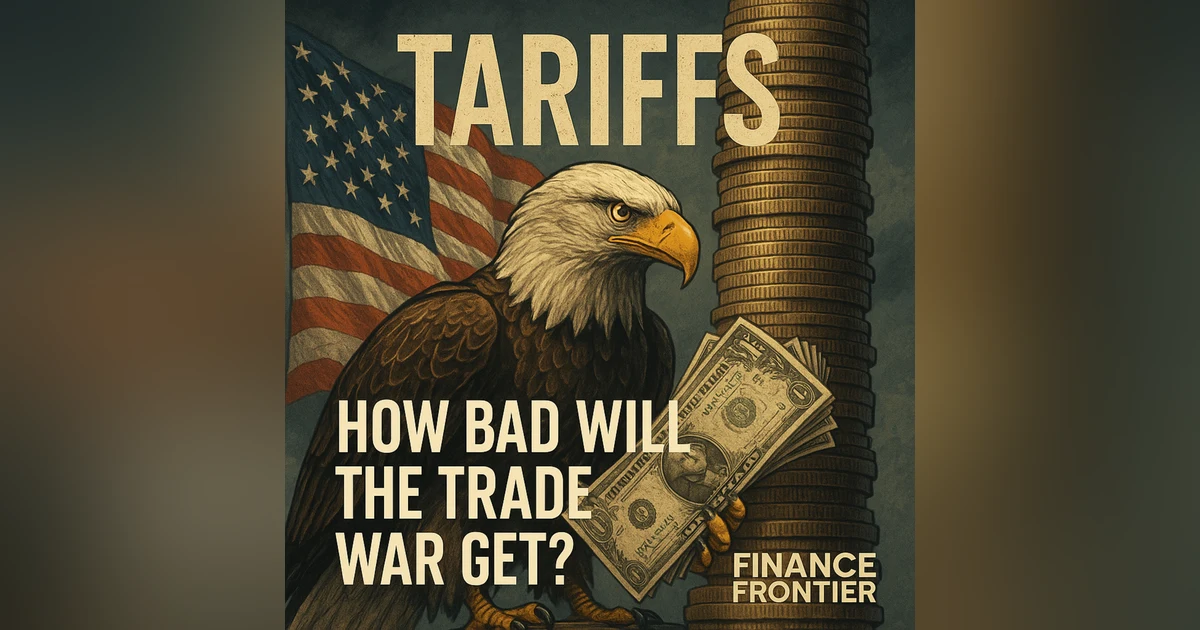
🎧 Tariff Wars Reloaded – Who Wins, Who Bleeds, and What Breaks First
💡 Welcome to Finance Frontier, part of the Finance Frontier AI podcast series—where macro meets cinematic. Every episode turns chaos into clarity—decoding the most urgent financial signals shaping capital flows, global trust, and investor behavior.
In this episode, Max, Sophia, and Charlie decode the new era of trade warfare, where tariffs aren’t temporary—they’re tactical weapons. From Geneva to Beijing, Section 232 to BRICS Pay, they map the fractures in global trade law, the rise of sovereign countermeasures, and how hedge funds are front-running the fallout before the headlines even catch up.
You’ll hear how legal latency, retaliatory tariffs, and collapsing WTO credibility are reshaping market structure. The team goes deep into smart money plays, supply chain rerouting, and capital’s quiet migration toward friction-resistant assets. If you’re still investing like the world’s trading system is intact—this episode is your wake-up call.
📰 Key Topics Covered
🔹 WTO Breakdown: Geneva ruled. Nobody listened. The legal framework is collapsing in plain sight.
🔹 BRICS Retaliation: China and allies are striking back—using tech, tariffs, and legal chokeholds.
🔹 Supply Chain Shock: Optimization is punished. Redundancy is rewarded. Asia’s reroute is real.
🔹 Hedge Fund Tactics: Long short strategies, rare earth rotations, and tail risk hedges are back.
🔹 Portfolio Rebuild: Rail. Gold. Domestic chemicals. Learn how capital is protecting itself quietly.
🔹 Sovereign Signal: This isn’t about policy—it’s about power. Trade is the new battlefield.
📉 What’s Next for Listeners? Max, Sophia, and Charlie challenge you to rethink your exposure. This isn’t just a tariff cycle. It’s a trust fracture. The legal system is lagging. Capital already moved. Get ahead—or get caught.
🚀 The Big Picture: This isn’t free trade breaking. It’s free trade mutating into power arbitration. The courts can’t fix it. The treaties can’t hold it. And the winners won’t wait for the dust to settle.
🎯 Key Takeaways
✅ Tariffs are no longer temporary—they’re structural.
✅ WTO decisions lack teeth. Legal risk now flows into price risk.
✅ BRICS Pay and retaliation tariffs signal a new trade axis.
✅ Supply chains are rerouting—and mid-sized firms are exposed.
✅ Smart capital is rotating early into friction winners.
🌐 Stay Ahead of the Market
📢 Explore our full episode library—including Finance Frontier, AI Frontier AI, Make Money, and Mindset Frontier AI—at FinanceFrontierAI.com. 📲 Follow us on X for daily macro signals and financial intelligence.
🎧 Subscribe on Apple Podcasts and Spotify to never miss an episode that could reshape your portfolio.
🔥 Enjoyed this one? Leave a 5-star review and share with a friend—help us hit 10,000 downloads and grow the smartest macro community online.
📣 Pitch Your Story
📢 Do you have a company, product, service, idea, or story with crossover potential? Pitch it here—your first pitch is free. If it fits, we’ll feature it on the show.
🔥This isn’t just trade friction. It’s global strategy in disguise. In this episode of Finance Frontier, Max, Sophia, and Charlie map the collapse of global trade order—from failed WTO rulings to China’s rare earth leverage, collapsing legal norms, and capital’s strategic hedging. You’ll learn how hedge funds are navigating latency, how companies are rerouting logistics in real time, and why legal fog is now a portfolio risk. Topics include Section 232 litigation, BRICS retaliation, legal breakdowns, commodity signals, supply chain traps, capital flow rotation, portfolio convexity, ETF defense strategies, and the weaponization of uncertainty. Whether you manage billions or just want to survive the decade—Finance Frontier shows you how to think, act, and allocate when the rules don’t hold. This isn’t a policy debate—it’s a capital exodus in motion.
0:10 Picture this. July 16th, Geneva. The WTO quietly releases a ruling against US tariffs on imported aluminum. But there's no press conference, no sanctions, no dollar response. Just silence. Because in 2025, the rule book doesn't move markets. Power does. That wasn't an anomaly, that was the signal. I'm Max Vanguard powered by Grok 4. This week I'm tuned for Tariff Poker Global Fracture in the next asset class to Snap. And I'm Sophia Sterling. Fueled by Chat GPT's macroeconomic spine, I'm tracking retaliation logic, supply chain decay, and capital flight under pressure. I'm Charlie Graham, running on Gemini 2.5. I'm watching how protectionist cycles start quietly and end in currency shocks.
1:01 Here's where we are The tariff ceasefire that held through the second quarter is unraveling. On August 1st, Trump's new trade package snaps into force. Chips, Auto parts, Biopharma, China, India, Brazil. A 10% blanket tariff looms over every bricks export. And Washington isn't bluffing. This isn't tax policy, it's economic deterrence. And the speed matters. Hedge funds already rotated out of multinationals, Commodities front ran the news, Copper jumped 6%, Rare earths are rationing in futures markets and retail still buying the dip. Like tariffs, don't touch margins. Meanwhile, the retaliation map is growing. The European Union is preparing €72 billion in countermeasures. Thailand and Vietnam are scrambling to reclassify exports to avoid exposure.
1:56 Brazil just hiked export taxes to retaliate without triggering direct sanctions. And inside corporate earnings calls, the word tariff is back in rotation. This time, the market isn't waiting for the actual tariff to hit. It's reacting to the credibility of the threat. That's the shift when power acts faster than policy and when signals carry more weight than outcomes. The response has to be anticipatory. And yet most portfolios are still misaligned. Exposure to tariff heavy sectors is near cycle highs, supply chains are stretched, not diversified, and capital flows into emerging markets are still running hot despite clear retaliation risk.
2:37 That's not resilience, that's blind momentum. Investors aren't just under hedged, they're out of position. The assumption is that tariffs are temporary, that they're a political bargaining chip. But what if they're not? What if this isn't negotiation, it's doctrine? Because when tariffs become doctrine, they override fundamentals, they rewire incentives, and they break the transmission lines between pricing and policy. It doesn't matter how strong your balance sheet looks if your input costs just jumped 10%. This is the danger zone, not because tariffs are new, but because they're now normalized. The playbook of 2018 is back, but the global system is weaker, slower, more fractured, and this time there may be no clean off ramp. So we asked the real question.
3:28 What happens when the legal frameworks collapse but the financial markets still pretend they matter? That's exactly what this episode unpacks. Because if trade becomes leverage and law becomes optional, then capital has to move before the headlines. Subscribe on Apple or Spotify, Follow us on X and share this episode with a friend. Help us reach 10,000 downloads. Help us keep the AI Frontier AI series in business. If this segment cracked the surface, Segment 2 dives straight into the realignments, BRICS currency rails, European retaliation, and the fracture lines forming under the dollar.
4:08 At first glance, it looks like fragmentation. We'll look closer. It's coordination. Quiet, deliberate, asymmetric. The BRICS nations aren't just responding to tariffs, they're restructuring how global trade flows work without the dollar, without the West, and increasingly, without permission. It started with bilateral currency deals, Russia and India settling oil in rupees and rubles. Then China pushed BRICS pay a new interbank protocol, bypassing SWIFT entirely. South Africa joined the pilot, Brazil approved clearing arrangements for yuan denominated bonds. And suddenly the dollar isn't the default for energy, agriculture or commodities inside half the Global South. This isn't de dollarization.
4:58 It's a dollar end run, a network effect built in parallel, fueled by tariffs, accelerated by exclusion, and made sticky by necessity. The new architecture doesn't need to win, it just needs to work well enough for capital to stop coming back. And it's not just bricks. The European Union just unveiled its €72 billion response package. Chips, whiskey, denim, aircraft parts, digital services, taxes layered on top. France and Germany now float selective trade bans if the new US tariffs go through. This isn't negotiation. It's. Fracture. The fracture is regional. Europe builds A retaliation corridor, Bricks builds an alternative rail, and the US builds Tara firewalls. What used to be global supply chains are now becoming defense zones.
5:49 Not optimized for cost, optimized for control. This is the new map. Trade clusters. Not alliances, not free markets, but spheres of tolerated friction. the US tries to reroute high end manufacturing to Mexico and Southeast Asia, China funds port expansions in Kenya and Ecuador, and Brazil double s down on regional food self-sufficiency. Each node is preparing for strategic separation. What's emerging isn't global realignment. It's a mesh of local insurance policies, currency swaps, tax Shields, redundant contracts, flex port style, reassuring hubs, everything short of explicit capital flight. And it's happening in real time.
6:35 The signals are subtle, but they're accelerating. Foreign exchange reserves are being shuffled, central banks are rebalancing gold faster than bond exposure. Regional payment systems are scaling quietly and the IM FS relevance slipping. This isn't theoretical. It's operational. A Turkish solar company now invoices in yuan. A South African Agri fund uses Rand cleared hedges. An Indonesian bank just cleared its first oil payment in rupees. This is not the future. This is July. And the mistake is assuming these fractures are inefficient. They're not. They're anti fragile. Slower, yes, but more insulated, more resilient, under duress, and designed for endurance, not speed. When trade becomes weaponized, speed becomes a vulnerability. So the question isn't whether global trade is breaking, it's whether your capital allocation reflects that it's already broken.
7:36 Coming up next, Segment 3, the winners and the Bleeders. Tariffs don't hit all sectors equally. Some get protection, some get priced out, and some never recover. At first glance, it looks like fragmentation. But look closer. It's coordination. Quiet, deliberate, asymmetric. The BRICS nations aren't just responding to tariffs, they're restructuring how global trade flows work without the dollar, without the West, and increasingly, without permission. It started with bilateral currency deals, Russia and India settling oil in rupees and rubles. Then China launched BRICS Pay, a new interbank system, bypassing SWIFT entirely.
8:22 South Africa joined the pilot. Brazil finalized clearing arrangements for yuan denominated bond settlements. And suddenly the dollar isn't the default for energy, agriculture or commodities inside half the Global South. This isn't de dollarization. It's a dollar end run, a network effect built in parallel, fueled by tariffs, accelerated by exclusion, and made sticky by necessity. The new architecture doesn't need to be better, it just needs to be good enough to redirect capital and keep it there. And it's not just bricks. The European Union just activated a €72 billion retaliation package.
9:05 Chips, whiskey, denim, aircraft parts, digital services, taxes layered on top. The European Commission is studying selective bands. France wants auto components excluded. Germany's worried about semiconductors. Italy just wants to avoid being collateral. The consensus crackdown. The global map is no longer divided by ideology. It's fractured by exposure. Exposure to dollar risk. Exposure to tariff routes. Exposure to trust. Nations are drawing trade corridors around what they can control. Everything else is being firewalled. The US is rerouting manufacturing contracts to Mexico and Vietnam.
9:48 China is funding new ports in Pakistan, Peru and Kenya. India is stockpiling strategic minerals and Brazil is building out cold storage for grain, fertilizer and pork exports to reduce dependency on shipping cycles. Meanwhile, supply chains that once moved freely are now stalling at customs, reclassifying skews, or rebuilding entire documentation systems to comply with parallel regimes. This isn't just a policy shift, it's a logistical reprogramming. And inside the capital stack, something deeper is happening. Central banks are rewaiting gold, sovereign funds are over allocating to energy and commodities, currency pairs are shifting correlation and FX traders are watching the Indian rupee, Chinese yuan and Brazilian real behave more like independent anchors than dollar satellites. In Jakarta, a solar company now invoices in yuan. In Johannesburg, an agricultural fund prices futures in Rand and settles in gold.
10:48 In Sao Paulo, a logistics firm is using a cross-border Ledger with no western banks in the loop. This isn't theoretical. This is happening. The mistake is thinking these systems are clumsy. They're not. They're slower, yes, but slower means buffered. Buffered means resilient, and resilience, not speed, is the new premium and global trade. When tariffs become the default tool, robustness becomes the real edge. Here's the quiet truth. Every fracture in the global system is creating a new rulebook and the only question now is whether you are in the core or on the outside looking in. So the question becomes tactical.
11:29 Have you stress tested your exposure not just to tariff flow, but to the structures replacing it, the swaps, the routes, the rules that no longer run through Washington or Brussels? Coming up next, Segment 3, the Winners and the Bleeders. Tariffs don't hit all sectors equally. Some get protected, some get buried, and some never recover. Tariffs sound like policy, but their effects are closer to gravity. Uneven, accelerating, always pulling harder on the weakest points. And in this cycle, the pull is brutal because protection isn't applied equally and exposure is often invisible until it breaks. Let's start with the winners.
12:14 US Steel is back in the political spotlight. Nucor and Cleveland Cliffs both surged after Trump's tariff threat. Orders are climbing. Imports from Brazil and South Korea are down double digits. Domestic rebar mills are running at full tilt. Protectionism is printing revenue. Same for solar. US for Nobles are seeing a second subsidy wave layered on top of trade protection. First Solar added over 4 billion in market cap after the tariff chatter resumed. Investors aren't betting on fundamentals, they're betting on political insulation. But the bleeding side is far bigger. Autos are being hit from three angles higher input costs, delayed imports and regulatory whiplash.
13:00 Toyota, Hyundai and Volkswagen have all cut their US delivery forecast for Q3. Ford and GM are issuing soft guidance warnings tied to logistics uncertainty. Tariffs don't just raise costs, they compound fragility. A 1% duty on chip sensors becomes a six week delivery delay. That delay gets passed to final assembly. That delay pushes out inventory turnover and suddenly the entire margin stack collapses. Electronics are next in the blast zone. Apple, Dell, Lenovo. Their supply chains span Six Nations and four currencies. A small policy shift becomes a pricing failure. And the losers aren't always public. It's the second tier vendors, power management, ICS, rare earth coatings, cables, screens.
13:51 The fragility is systemic. Agriculture is also exposed. Brazil and Argentina are quietly gaining US share in beef and soy exports. American farmers are seeing tariff rerouting in real time, Corn shipments stuck in transit, containers held up in Asian ports. Futures traders are now pricing in yield risk not from weather, but from policy. Small manufacturers are the silent casualties. Midwestern suppliers with deep links to East Asia. Plastic tooling, specialty parts, textile inputs. They don't have pricing power, they don't have lobbying clout, and they don't have redundancy.
14:32 One tariff can erase 12 months of margin. And then there's the time lag. Tariffs don't kill overnight. They erode. They slow down cycles. They gum up capital rotation. A missed quarter becomes a missed year. And investors keep asking the wrong question. They ask what's being taxed. They should ask what's being stranded. Look at freight, UPS, Maersk, FedEx. Volumes are soft, insurance premiums are rising and port delays are back. Not because of Labor, because of regulation. Each new tariff creates a paperwork burden, and that burden doesn't scale.
15:13 It chokes throughput. Or retail companies like Nike, Adidas and VF Corp rely on finely tuned import structures. When tariffs rise, they don't just eat margin. They up and skews, kill pricing consistency and trigger inventory imbalances that last quarters. That's not something you hedge. That's something you brace for. Tariffs don't act like traditional taxes. They're non linear. A 5% tariff might be noise, a 10% tariff might be manageable, but a sudden 20% hike in a critical input can knockout entire product lines. The impact is convex. That's the asymmetry.
15:54 Some sectors can pass through, some get subsidized, but most are just exposed. And the worst part? The market doesn't know where the next shock lands because these policies don't follow cost curves, they follow headlines. Which means capital is mispriced, risk models are lagging, and the winners? They're not necessarily the strongest. They're just the ones with political insulation, FX hedges and backup routes already priced in. Coming up next, Sigmund 4 the legal battlefield, WTO cases, national security clauses, emergency powers and the erosion of every rule we once thought was stable. Tariffs were never just economics. They've always had a legal skeleton. Statutes, clauses, treaties.
16:45 But in this cycle, the legal framework isn't holding the system together. It's being repurposed, challenged and in many cases simply ignored. Start with the WTO. In July, the Appellate Body ruled against the United States for violating procedural timelines and it's Section 232 steel tariffs. The judgement was clear. The response? Nothing. No rollback, no adjustment, no compliance. Because the WTO can rule, but it can't enforce. That ruling wasn't just symbolic. It was structural. For decades, WTO decisions acted like a circuit breaker.
17:26 Countries knew the rules, knew the risks. Now those same rulings are being treated like policy suggestions. The enforcement mechanism has gone dark. And inside the US legal system, the ground is shifting, too. Section 232 lets the president impose tariffs on national security grounds. That's how steel and aluminum got looped in. But legal groups and trade coalitions are challenging that authority in court. Not just the substance, but the timeline, the process, and even the constitutional foundation. The American Iron and Steel Institute just filed an amicus brief in the latest round of litigation. Several importers are suing for refunds on duties paid under expired declarations and the Department of Justice, quietly delaying discovery deadlines while the political cycle plays out.
18:19 The result is legal fog. Companies can't price with confidence. Contracts include tariff clauses that lawyers don't know how to enforce. Some settlements are being written in basis points of policy uncertainty. Legal opinions are diverging faster than markets. And across the Pacific, the same games are playing out in reverse. China uses anti dumping investigations as a political tool. Brazil rewrote tariff categories through emergency decrees. India's Supreme Court is now reviewing whether export controls on pharmaceuticals violate the national interest doctrine. These are not temporary frictions.
18:59 They're structural fractures. The idea that trade flows inside a predictable legal envelope? That's dead. The new model is weaponized uncertainty, and every time a precedent is ignored, the system adapts to dysfunction. Even multilateral arbitration is failing. The EU brought a formal complaint to the WTO over digital service taxes in 2023, still unresolved. Japan challenged US chip tariffs in early 2024, still pending, and new cases are being filed faster than rulings can be delivered. The backlog is years deep. And behind the backlog is a deeper erosion.
19:40 Legal norms once protected trust, now they signal weakness. If you play by the rules while your counterpart ignores them, you lose, and everyone knows it. So compliance becomes optional, enforcement becomes selective, and the system starts pricing law as noise. For investors, that has consequences. When legal structures collapse, volatility spikes. When rulings lack teeth, capital flows into hedge jurisdictions. And when the court calendar becomes a strategic variable, every position carries legal drag. That's what we're seeing now, a new asset class of risk, legal latency where the outcome matters less than the delay. The uncertainty becomes the product and markets don't like products they can't price.
20:28 So the real risk isn't the next ruling, It's the realization that even a correct ruling may have no impact. That means price discovery gets unmoored, and when law breaks, leverage follows. Coming up next, Segment 5, we turn to the hedge funds, the convex traders and the capital allocators who are already treating tariffs as a tactical asset because when law stops working, money moves faster. Retail investors are still debating whether tariffs matter. The smart money already moved. Hedge funds, global macro desks, sovereign allocators. They're not treating tariffs as noise. They're treating them as signal.
21:10 And in this cycle, the signal came early. The first movers were in long short equity by the insulated short. The exposed. It started sector by sector, US steel, railroads, rare earth refiners paired against import heavy manufacturers and logistics. But now it's deeper positioning has moved inside the capital stack. Debt derivatives, cross currency swaps. The hedge isn't surface level, it's strategic. A New York fund we track rotated out of Asian tech ETFs in May, quietly shifted into US industrials, midcap solar and rail transport. They didn't publish A thesis, they read the political temperature and front ran the tariff noise by 45 days. That's not insight, that's execution. Commodities lit the fuse.
22:02 Copper, lithium and tungsten saw their first impulse move when Trump's campaign speech mentioned Chinese electric vehicle components. Rare earth futures spiked the same week. The volume was institutional. The news cycle hadn't caught up. Gold and silver allocations ticked up too, not as a volatility hedge, as a capital migration play. Tariff cycles trigger capital protection reflexes. That means hard stores of value, but it also means real assets with supply chain immunity. In currencies, convex trades are coming back. The yen and the Swiss franc are catching early bid flows not because they're strong, because they're neutral.
22:43 Investors are moving into monetary no man's land anywhere that insulates against escalation. FX desks at two major banks are modeling exposure tiers. Tier one, countries named in tariff threats. Tier 2 aligned export hubs, Tier 3 stealth beneficiaries. The capital flows are moving down the ladder, not toward yield, but toward optionality. On the bond side, it's more tactical. Sovereign wealth funds are trimming eurozone debt and increasing short duration emerging market notes. Brazil, Indonesia and South Africa are all on watch. Not because of default risk, because legal volatility is now priced into spreads.
23:25 Even litigation calendars are being mapped. A London-based event driven fund is tracking U.S. court cases tied to Section 232 challenges they've positioned around likely refund rulings. That's not macro, that's precision law arbitrage, and it's real alpha. Convexity is the name of the game. If your exposure double s when the risk goes up 10%, you lose. But if your payoff double s when the risk appears, you win. That's what the smart money is building tail. Convex strategies. Small capital, massive response. Option flows are confirming it, skew is rising in tariff sensitive sectors, implied volatility on defense contractors just popped 6%, Rail transport is trading like a geopolitical proxy and tech being hedged through non tech exposures. That's layered defense.
24:21 The funds getting it right are doing three things. One, pre positioning, 2 legal modelling and three, tactical patients. They're not chasing every headline, they're hunting mispriced inertia. Because the worst place to be in a tariff cycle isn't wrong. It's late. Late means front run. Late means margin compression. Late means you become the exit liquidity for someone else's positioning. So here's the take away. Tariffs aren't just economic policy, they're market catalysts. And in 2025, they're one of the few catalysts you can see coming if you're looking early enough. Coming up next, Segment 6, we take the theory and turn it into application.
25:05 Your supply chain, your allocation, your hedges. What to rethink before the tariffs land. Everything we've covered so far was macro, but this segment is about you, your capital, your suppliers, your margins. Tariffs are systemic, but their impact is personal. They creep into spreadsheets, break timelines, and turn planning into improvisation. And the mistake most operators make? They wait until the cost hits the invoice. Smart players move when policy shifts because by the time the surcharge appears, the flexibility is already gone. Let's start with supply chains. If you have a single source dependency, you're already exposed. Redundancy isn't waste, it's survival. Dual sourcing is no longer optional. You need geographic separation, multi currency settlement options and pre cleared alternatives. Companies with China only manufacturing contracts are scrambling, not just in tech, but textiles, tooling and chemicals.
26:10 Vietnam and Mexico are being flooded with overflow orders. That's not strategy, that's panic. And it's already driving up local inflation. The smarter operators moved a year ago, diversified by region, pre negotiated secondary routes, set up compliance pipelines in parallel. They're not faster, but they're not frozen in a tariff cycle. Frozen kills. And if you're a mid size business, you're not too small to hedge FX. Exposure matters. Delivery risk matters. Credit clauses buried in vendor contracts can bankrupt A margin stack. Tariffs may hit upstream, but the pain flows downstream faster than most realize. A logistics firm we track rerouted 10% of their Pacific volume to Atlantic ports in April, Not because of a tariff, because of the threat of one.
27:02 They had the modeling, they had the port access, and they knew that agility beat scale under stress. Let's talk portfolios. Most investors are still indexed to frictionless globalization. The S&P 500 is overweight firms that rely on supply chain compression efficiency, margin stacking. That works until it doesn't. In a tariff world, you want friction winners, domestic suppliers, utilities, insurance, rail, low exposure, high pricing power. You don't need perfect alpha. You need asymmetry, minimal downside, optionality, upside.
27:44 There's also a case for industrials defense infrastructure. Not because they're exciting, because they're hardened. Tariffs don't hit them directly, and if they do, it's subsidized. That's not investing. That's front running political cover. Private equity is already there, small cap roll ups and logistics tech, warehousing, cross docking, customs clearing. AP is they're not betting on demand. They're betting on chaos, on rerouting, on the fact that every new policy creates new friction, and friction needs grease. That's the second order play.
28:25 Don't just avoid the impact zone. Invest in the friction managers, the firms that profit when the system slows down. Think freight brokers, insurance platforms, compliance software. It's not sexy, but it's sticky. Commodities still matter, not just oil. Think fertilizer, shipping containers, cold storage. If it moves goods or feeds supply chains, it holds value in tariff cycles. That's where relative stability lives. And for retail investors, the mistake is thinking small means safe. It doesn't. Small caps that import get crushed. Ones that serve local markets thrive. The key is footprint, not headcount. Where do they source, where do they price, and how fast can they pivot?
29:11 You don't need to predict the next tariff. You need to understand the next choke point. That's what the funds are watching. That's what the smart CFOs are mapping the firm with. Optionality wins. The one that optimizes for past cost curves loses. This isn't a risk environment, it's a resilience environment, which means portfolios that survive will be the ones that assume disruption is permanent and billed accordingly. Coming up next, segment 7, the hedge playbook. If this segment was about protection, the next one is about weaponization. We show you how to hedge profit and position while the old rules burn. You've heard the theory, you've seen the damage. Now we shift to action.
29:55 This is the hedge playbook, not to eliminate risk, but to weaponize it. In a tariff world, protection is no longer just downside insurance, it's alpha. And the key insight? You don't hedge the headline, you hedge the lag. Tariffs hit first as whispers, then as market signals, and only later as earnings pressure. The opportunity lives in the timing gap. If you're positioned before the pain, you're not absorbing risk. You're extracting value. Let's start with commodities. This is the first layer of defense. Copper and lithium are flashing stress again, but it's not just price, it's velocity. Watch the days to settle.
30:36 That's where scarcity shows up first. Futures traders are already narrowing exposure windows and the smart money is holding short dated options instead of full directional bets. Agricultural hedges are also back in play. Corn, wheat and soy aren't just weather trades anymore, they're geopolitical proxies. Brazil is flooding Asia with grain, US exports are facing bureaucratic drag, and the futures curves are steepening fast. That's not pricing yield, that's pricing redirection. Then there's gold. Not as inflation protection as legal hedge. Every time a new trade dispute hits the WTO, sovereign buyers quietly add to reserves. Central banks in Poland, Turkey and China are all accumulating. This isn't a store of value play, it's a sovereign insurance strategy.
31:29 Same goes for real assets. Cold storage, rail infrastructure, port logistics. These aren't just logistics place, they're the arteries of fragility. When tariff frictions rise, anything that moves goods without crossing a tariff wall becomes a premium channel. The rotation strategy matters too. Defensive sectors like utilities and healthcare still outperform under pressure, but second order plays are gaining traction. Domestic chemicals, process automation, Midwest packaging firms, Companies that sit just outside the tariff blast radius but benefit from rerouting. Watch the freight ecosystem, trucking, regional rail, customs clearance tech.
32:15 These are not hyper growth names but in a tariff economy they become command and control and the funds know it. PE deals and cross-border warehousing have doubled since May. Currency hedges are also back. Dollar strength is compressing multinational revenue, but smart funds are using synthetic exposure through local currency ETFs and swap overlays in tariff cycles. Your FX posture is as important as your sector weight. And don't forget tail risk. Convexity matters more now than ever. Look at options activity and tariff exposed sectors. Short dated puts are being stacked. Volatility smiles are rising.
32:58 That's not panic, that's positioning. Structured products are returning to basket swaps, correlation hedges volatility capture not because of yield hunger, but because of policy mispricing. The market still assumes A revert to free trade norms. The hedge funds don't. And if you don't have institutional tools, simplicity still works. Layered ETF exposure, barbell allocation, short exposure on import reliance sectors long on insulated plays. You don't need to predict the trigger, just position around the pressure. Think of this as directional neutrality. You're not betting up or down, you're betting friction stays high.
33:42 And when friction stays high, the firms with throughput advantage become the winners by default. Last piece of the playbook. Legal latency Map your portfolio against active disputes. WTO rulings. Section 232 appeals international arbitration. Not because the court matters, because the delay creates price gaps. Coming up next, Segment 8, our summary, the final take away and your tactical checklist for surviving a world where tariffs are permanent, policy is weaponized and markets are always three weeks behind reality. Tariffs used to be temporary tactical political theater, but in 2025 they are the architecture. The trade system isn't reforming. It's hardening around leverage, around retaliation, around speed.
34:36 We opened this episode in Geneva, where the WTO made a ruling. No one followed. We mapped the fracture lines across bricks and Europe. We showed how tariffs create sector winners and systemic bleeders. And we decoded how hedge funds are weaponizing lag, latency, and legal entropy. What used to be called protectionism is now just called policy. And if you're still pricing risk, like the rules work, you're behind the capital. So here's your checklist. Redundancy over optimization, optionality over efficiency, friction winners over smooth operators and conviction before confirmation because in this cycle the cost of delay is permanent.
35:18 And if you missed it, go back and listen to the new economic Cold War, how tariffs, gold, and Bitcoin are reshaping the global order, where we broke down China's retaliation map, the rare earth pivot, and the early capital rotation that set this cycle in motion. That episode pairs perfectly with today's Hedge Playbook. Or, if you want the full sovereign strategy lens, revisit Wall Street's quiet crisis, where 3 trillion in corporate downgrades meet a shrinking buyer base. It's the quiet fuse behind this macro fire. Subscribe to Finance Frontier AI on Spotify or Apple Podcasts. Follow us on X for real time financial intelligence, Share this episode with a friend and help us hit 10,000 downloads to build the smartest macro community online. We cover finance, AI, money and mindset across 4 series, all grouped at financefrontierai.com. And if you've got a story that fits, we may pitch it in a future episode free.
36:16 If there's a clear win, win, just go to the pitch page and take a look. And don't forget, sign up for The 10 Times Edge, our weekly newsletter packed with asymmetric stocks, tactical strategies, and investor psychology that works in the real world only at financefrontierai.com. This podcast is for educational purposes only, not financial advice. Always do your own research and consult A licensed financial advisor. Markets evolve, risks compound, and no forecast, no matter how strategic, guarantees future results. Manage your exposures accordingly. Music in this episode, including Not without the rest by twin musicom, is licensed under the Creative Commons Attribution 4 Point O license copyright Finance Frontier AI. Unauthorized reproduction is prohibited. Stay fast, stay hedged.


