AI Boom: Who Pays?


 RSS Feed
💡 Welcome to Finance Frontier, part of the Finance Frontier AI podcast network.
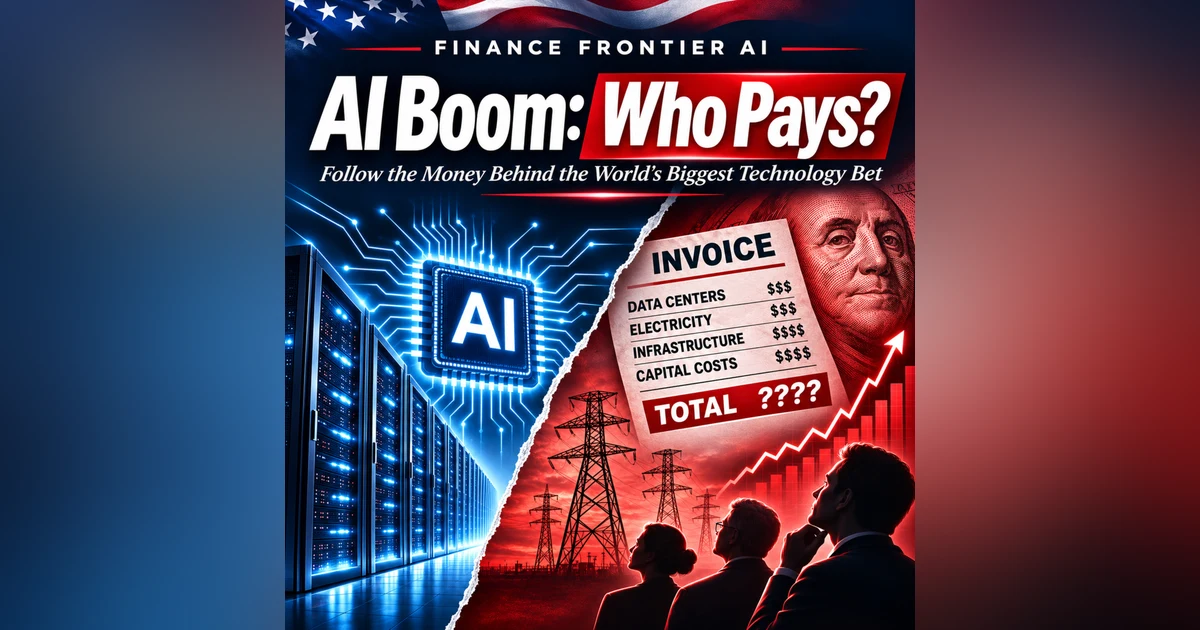
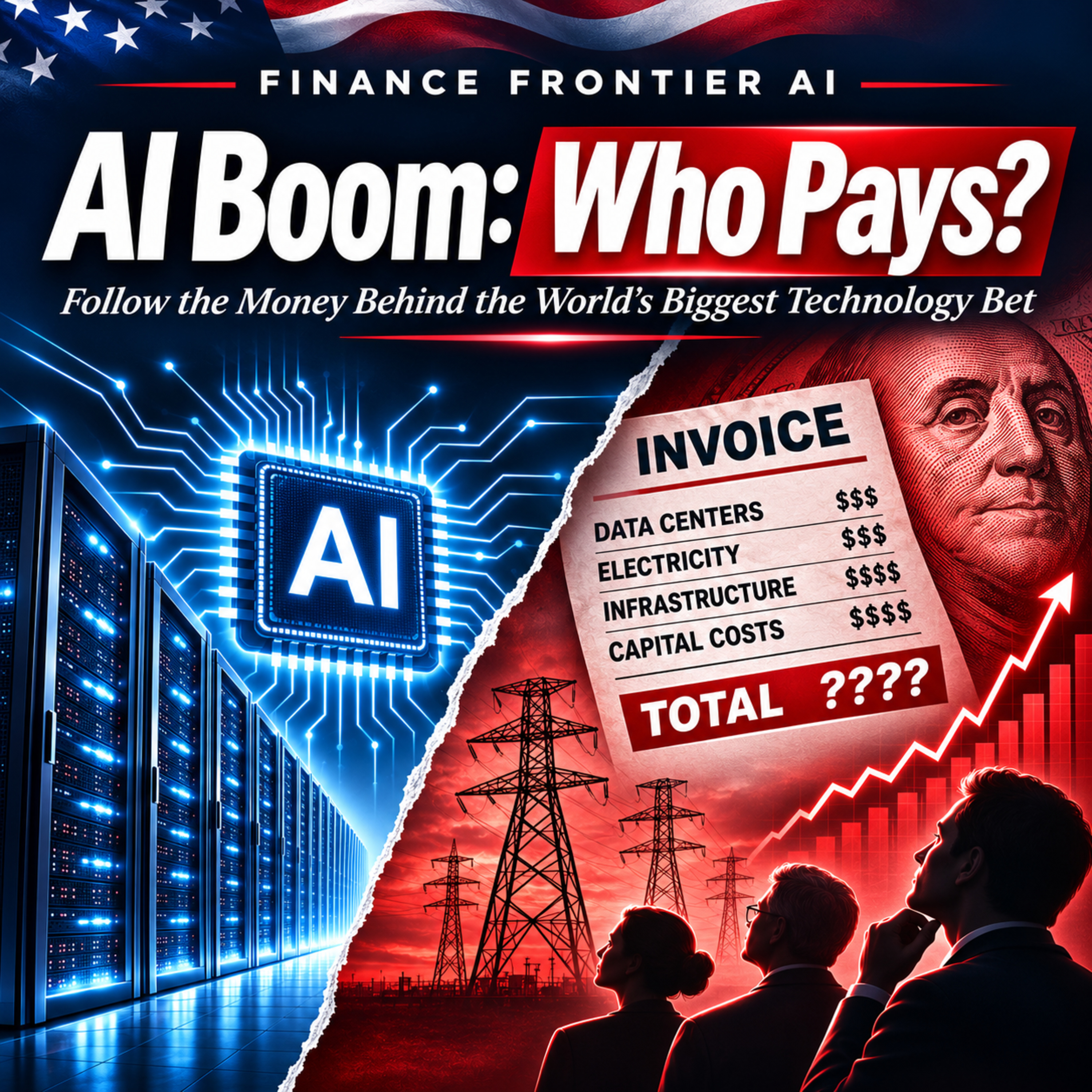
What if artificial intelligence changes the world, but some of the investors financing the revolution lose billions? The technology succeeds. Customers benefit. Entire industries become more productive. Yet the people who paid to build the future may never recover their investment.
In AI Boom: Who Pays?, Max, Sophia, and Charlie follow the money behind the world's biggest technology bet. From Nvidia and CoreWeave to Anthropic's extraordinary computing commitments, from electricity networks to private-credit markets, the investigation reveals who finances the AI revolution, who captures its value, and who ultimately carries the risk.
The episode begins with a restaurant where the supplier is also an investor, and some customers receive credits funded by that supplier. The sales can be real, but what happens when the financial support ends? The same question emerges in an AI economy where technology suppliers invest in customers, finance infrastructure, and promise enormous future purchases.
Real examples bring the investigation to life. Anthropic disclosed approximately $900.9 billion in long-term purchase and lease commitments. Nvidia agreed to purchase certain unsold computing capacity from CoreWeave under an arrangement initially valued at $6.3 billion. Meanwhile, Menlo Ventures estimated annualized enterprise AI deployment spending at approximately $177 billion in September 2026. These figures measure different things, but together expose the tension between financial promises and genuine customer demand.
🧠 Key Topics Covered
🔹 Three Wallets, One Boom: Why investment capital, supplier revenue, and independent customer spending reveal different sides of the AI economy.
🔹 The AI Financing Circle: How chipmakers, cloud providers, and AI developers can become investors, suppliers, and customers in one interconnected financial system.
🔹 The $900 Billion Promise: What Anthropic's enormous computing commitments reveal about future payments, contractual obligations, and financial risk.
🔹 The Electricity Bill: How data-center expansion creates demand for electricity infrastructure, and why the question of who pays extends beyond Silicon Valley.
🔹 The Invisible Investor: How private credit, infrastructure funds, insurers, and pension funds may connect ordinary savers to the AI buildout.
🔹 The Real Customer Test: Why growing AI adoption does not automatically guarantee profitability or attractive investment returns.
🔹 Three Futures: Profitable expansion, technological success with investor losses, or delayed demand that forces financial restructuring.
🔹 The Last Payer Test: A practical framework built around Wallet, Clock, and Cushion to reveal who provides the money, when obligations come due, and who absorbs the financial consequences.
📉 Why This Matters
AI could create extraordinary wealth while destroying some of the capital used to build it. The railway boom and the internet's fiber-optic expansion offer an important historical lesson: being right about the future does not guarantee a profitable investment. For investors, business leaders, and anyone following the AI revolution, the essential question is not simply whether the technology succeeds. It is who gets paid when it works, and who holds the bill when it doesn't.
🌐 Stay Connected
📬 Discover The 10× Edge at FinanceFrontierAI.com. Have a compelling thesis? Visit our Pitch Page.
🎧 Subscribe on Spotify or Apple Podcasts. Follow us on X and LinkedIn.
🔥 Keywords: AI Boom, Who Pays, artificial intelligence, AI investing, AI bubble, AI economy, Nvidia, CoreWeave, Anthropic, AI financing, circular financing, AI infrastructure, data centers, electricity demand, power grids, private credit, pension funds, AI capital expenditure, cloud computing, GPU infrastructure, enterprise AI spending, customer demand, AI profitability, financial commitments, investment returns, financial risk.


